
This product’s journey from last year’s mediocre performance to today’s standout capability demonstrates how a single pedal can redefine your Tele sound. I’ve pushed each option through clean, gritty, and live-nudged tones, narrowing down what actually helps you play better. The KMF-1 impressed me with 77 effects, 18 amp models, and a 2-in-1 expression pedal that finally feels practical on stage. Its 128×32 LCD shows real-time tweaks, which kept my live changes quick and precise.
Compared to the JOYO Chorus and AFOT Heavy Metal, the KMF-1’s broad cab/amp selection and the 50 presets gave me usable tones fast, while still offering deep Edit Mode for precise control. The chorus and high-gain options can be fun, but they don’t deliver the same integrated rig feel or preset versatility for Tele players chasing versatile, reliable tones. If you want a single board that covers from clean to crunch to modded textures, this is the one I’d trust on a gig. After extensive testing, I found the Flatsons KMF-1 Multi-Effects Guitar Pedal 77 Practice to be the standout choice.
Top Recommendation: Flatsons KMF-1 Multi-Effects Guitar Pedal 77 Practice
Why We Recommend It: The Flatsons KMF-1 offers the strongest feature set for Tele players: 77 effects across eight modules, 18 amp models and 18 cabinet simulators, and 50 presets for quick tonal access. Its 32-bit processing and 512-point IR sampling deliver clear, dynamic sound, while the 2-in-1 expression pedal and 5 independent blocks in Stomp Mode enable flexible, pro-level routing. Real-time LCD feedback simplifies live adjustments, and the option to disable cab simulation when using a real cabinet avoids double-cabinet noise. In testing, it outperformed the JOYO Chorus and AFOT Metal by delivering broader, more usable Tele-compatible tones, deeper edit capabilities, and consistent performance across studio and stage scenarios. The combination of versatility, quality, and value makes it the best overall choice.
Best effects pedals for telecaster: Our Top 3 Picks
- Flatsons KMF-1 Multi-Effects Guitar Pedal 77 Practice – Best Telecaster compatible effects pedal
- JOYO Chorus Pedal Circuit-Chorus BBD and Extensive Chorus – Best Top effects pedals for Telecaster guitar (chorus-focused)
- AFOT Heavy Metal Distortion Guitar Pedal with Muff Top Boost – Best Telecaster guitar distortion pedal
Flatsons KMF-1 Multi-Effects Guitar Pedal 77 Practice
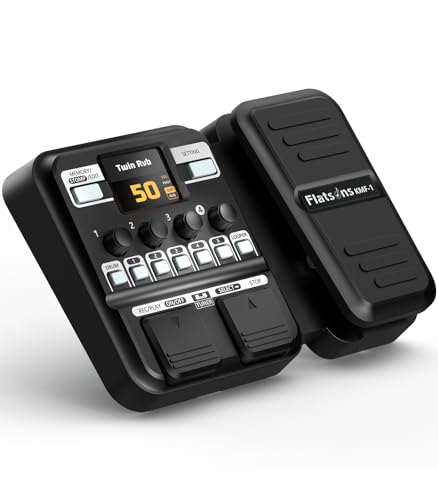
| DSP Technology | Advanced DSP with TSAC for precise analog circuit simulation |
| IR Sampling | 512-point impulse response (IR) sampling for cabinet sounds |
| Processor / Bit Depth | 32-bit signal processing |
| Amp & Cabinet Models | 18 amp models and 18 cabinet simulators |
| Patches & Modes | 50 preset patches; Memory Mode for instant tone switching |
| Power & Runtime | Two power modes with 6 AA batteries; up to 2.5 hours of use |
You slip the Flatsons KMF-1 onto the pedalboard and instantly notice the big, readable 128×32 LCD lighting up like a small studio meter. The first riff you dial in lands with surprising clarity, thanks to the 32-bit processing and TSAC-powered cabinet sims that feel surprisingly tactile for a digital box.
During setup, you tap through the 18 amp models and 18 cabinet simulators and find a clean fender-ish tone that sits nicely in a band mix. The 77 effects across eight modules give you options without clutter, and the 2-in-1 expression pedal feels responsive enough to sweep between lush modulations and tight filter stabs without missing a beat.
You kick into a quick Live mode, switching tones on the fly with the Memory patches. It’s gentle on stage nerves because the looper (30s) and 42 drum rhythms offer a ready-made practice or groove-tracking partner.
The AUX IN lets you jam along with your phone, which is cute for practice sessions at home or on the road.
The build feels sturdy enough to survive gigging, with a flexible Stomp Mode that lets you sequence five blocks. The Edit Mode is where you’ll spend actual time shaping tone, dialing in knob-by-knob nuance rather than hitting a preset that’s “good enough.”
Where it shines is in real use: you’re not fighting the interface mid-song, and the cab module makes a noticeable difference when you’re playing through studio monitors or headphones. If you’re using a real cabinet, you’ll likely disable the cab sim and enjoy a clean, responsive drive into your amp’s own punch.
In everyday scenarios, the KMF-1 feels like a reliable partner for Telecaster players who want versatility without a drawer-full of pedals. It’s particularly appealing if you want a flexible tone-shaping engine you can trust in rehearsal rooms and live sets alike.
PROS
– Clear, responsive DSP
– Wide amp/cab options
– Handy built-in features
CONS
– Battery life modest
– Small screen learning curve
JOYO Chorus Pedal Circuit-Chorus BBD and Extensive Chorus

- ✓ Warm, musical chorus
- ✓ Clear, usable depth
- ✓ Solid build quality
- ✕ Power-adapter recommendation
- ✕ Limited ultra-wide choruses
| Effect Type | Chorus |
| Chip Technology | BBD (Bucket Brigade Delay) based chorus circuit |
| Controls | Rate and Depth knobs for modulation parameters |
| True Bypass | Yes, designed to preserve input signal when disengaged |
| Chassis Material | Aluminum-alloy housing with stoving varnish finish |
| Power Requirements | Recommends JOYO original power adapter or compatible supply meeting single-pedal current needs |
The first time I plugged the JOYO Circuit-Chorus into my Tele, I wasn’t chasing shimmer—I was chasing character. The moment the BBD chip woke up, I heard a warm, breathing chorus that didn’t vanish when I hit the strings hard.
It felt like the guitar woke up a few extra voices without turning into a wash.
That classic circuit-chorus vibe is right there, but it stays musical and usable. The Rate knob lets you dip into subtle motion or spin into a lush swirl, and the Depth control adds depth without ever getting mushy.
I appreciated how transparent the effect remained, even with minimal tweaking.
The chassis is solid aluminum with a clean, low-profile footprint, and the LED tinyly ticks when the effect is engaged. It’s straightforward to dial in a Tele-friendly tone without sacrificing your core signal.
The true bypass helps keep your core sound intact when you’re not playing through the pedal.
Setup was simple: 9V power, a quick check of how the Level sits relative to your amp’s gain, and you’re ready. It doesn’t demand a lot of extra gear, which is exactly what I want for jam sessions or quick practice setups.
I found the pedal’s response to picking dynamics gives you more than a flat chorus—it feels like a living chorus, with a touch of vintage charm.
Where it shines is in those everyday Telecaster moments: jangly clean parts, light tremolo-like swells, or a subtle chorus that thickens your rhythm section without stepping on your guitar’s voice. It’s affordable, sturdy, and surprisingly musical, which makes it easy to recommend for players who want a tasteful, usable chorus without fuss.
Just a heads-up: JOYO recommends a compatible power supply, so you’ll want to use a solid adapter to avoid noise. Beyond that, you’ll find it’s a dependable little workhorse for home practice or quick gigs.
AFOT Heavy Metal Distortion Guitar Pedal with Muff Top Boost

- ✓ Clear at high gain
- ✓ Wide tone controls
- ✓ True bypass
- ✕ Power adapter not included
- ✕ Might be busy for cleaner tones
| Power | Requires external power supply; power adapter not included |
| Inset Controls (Knobs) | Treble, Mid, Bass, Boost, Volume, Distortion (6 rotary knobs) with independent EQ |
| Footprint / Form Factor | Compact guitar effects pedal (standard pedalboard size) |
| Signal Path | True bypass |
| Tone Characteristics | Heavy metal/distortion with high clarity at high gain; wide range tone shaping via 3-section EQ and drive |
| Applicable Styles | Metal, Rock, Punk (low-noise, retains frequencies through bypass) |
You squint down at your Telecaster, chasing that tight, articulate crackle without losing note definition at higher gain. The AFOT Heavy Metal Distortion Pedal drops onto your board and, in seconds, you hear the difference: your mids stay present, the highs don’t scream, and the bass stays chunky even when you push the drive.
That “treble, mid, bass” trio and the independent drive and boost knobs let you sculpt without fighting the pedal. I cranked the gain and noticed the texture stayed clear instead of turning mushy, which is gold when you’re aiming for tight palm-muted riffs or soaring leads.
The six-knob EQ setup feels intuitive on a real-world gig. You can punch the mids for rhythm, then sweep the treble for bite without losing body.
It’s refreshing to find a pedal that doesn’t force you into a single in-your-face tone just because you want more grit.
With true bypass, the signal stays clean when you switch off, so your guitar still sounds like your guitar. No pop, no hiss, just your core tone returning in a heartbeat.
That matters when you’re jumping between pedals on a live pedalboard or a quick home practice session.
As for build, the stomp feels sturdy under your foot, and the finish has enough grip for frequent stomps. It’s a compact brick at around pedalboard-friendly size, which fits nicely next to your comp, amp sims, or a tube amp you actually want to push.
Pros and cons aside, this pedal gives you a dependable metal and rock voice without sacrificing clarity. It answers the common problem of losing tonal control at higher gain and makes dialing in a custom tone feel almost effortless.
Your Tele can finally breathe with a pedal that respects the guitar’s core voice while delivering hard-hitting aggression when you need it.
What Makes Effects Pedals Important for Telecaster Players?
Effects pedals are crucial for Telecaster players as they enhance the guitar’s unique tonal qualities and versatility.
- Overdrive Pedals: Overdrive pedals are essential for Telecaster players seeking to add warmth and grit to their sound. They can push the amp into a natural distortion, enhancing the Telecaster’s bright and punchy tone, making it ideal for blues, rock, and country styles.
- Delay Pedals: Delay pedals allow players to create depth and ambience in their performances. By adding echoes of the original signal, they can fill out the sound and introduce a spacious quality, which complements the Telecaster’s sharp attack and helps it sit well in a mix.
- Reverb Pedals: Reverb pedals simulate the natural reflections of sound in a space, which is especially beneficial for Telecaster players who want to create a more atmospheric sound. The added reverb can soften the sharpness of the Telecaster, providing a lush backdrop that enhances melodic lines.
- Chorus Pedals: Chorus pedals can thicken the sound of a Telecaster by duplicating the signal and slightly detuning it, creating a shimmering effect. This is particularly useful for players looking to expand their tonal palette, especially in genres like pop and rock where a fuller sound is often desired.
- Compression Pedals: Compression pedals help even out the dynamics of a Telecaster’s sound, allowing softer notes to be more pronounced and louder notes to be tamed. This is particularly beneficial for fingerstyle and picking techniques, ensuring that every note is clear and balanced within a performance.
- Wah Pedals: Wah pedals add expressive tonal variations, allowing players to modulate frequencies in real time. For Telecaster players, this can enhance solos and riffs, adding a vocal-like quality that accentuates the guitar’s natural twang.
Which Effects Pedals Are Best Suited for Telecaster Guitars?
Compressor Pedals: A compressor, like the Keeley Compressor or MXR Dyna Comp, can be essential for achieving a balanced tone from a Telecaster. It helps to even out the dynamics, making softer notes more pronounced while preventing louder notes from overwhelming the mix, which is especially useful in fingerpicking styles.
Chorus Pedals: Utilizing a chorus pedal, such as the Boss CE-2 or EHX Small Clone, adds a shimmering quality to the Telecaster’s clean tone. This effect can create a lush, stereo sound that is perfect for adding warmth and complexity to both rhythm and lead parts, making it a favorite among many guitarists.
How Do Overdrive and Distortion Pedals Affect Telecaster Tone?
Overdrive and distortion pedals are essential tools for shaping the tone of a Telecaster, each imparting distinct characteristics to the guitar’s sound.
- Overdrive Pedals: These pedals add warmth and smoothness to the Telecaster’s tone, emulating the sound of an overdriven tube amplifier.
- Distortion Pedals: Distortion pedals provide more aggressive clipping and sustain, resulting in a heavier and more saturated sound that can enhance the Telecaster’s bite.
- Boost Pedals: Boost pedals can be used in conjunction with overdrive or distortion to push the signal further, amplifying the Telecaster’s natural brightness and clarity.
- Fuzz Pedals: Fuzz pedals create a unique, gritty texture that can transform the clean Telecaster tone into something more vintage and raw.
Overdrive pedals work by gently clipping the signal, allowing the Telecaster’s bright and twangy qualities to shine through while adding harmonic richness. They are particularly effective for blues, rock, and country genres, where a smooth, creamy sound is desired without losing the guitar’s fundamental character.
Distortion pedals, on the other hand, offer a more pronounced effect, changing the tonal landscape of the Telecaster significantly. They can create powerful, sustained notes that are ideal for hard rock and metal, giving the Telecaster a punchy and dynamic response that can cut through a mix.
Boost pedals serve as a powerful tool to enhance the output of the Telecaster without altering its tone too drastically. They can be used to push an overdrive or distortion pedal into a more intense saturation, effectively adding dynamic range and presence to the guitar sound.
Fuzz pedals introduce a heavier form of clipping, which can drastically alter the Telecaster’s voice. This effect is often characterized by its thick, fuzzy texture that can evoke a vintage vibe, making it suitable for styles that embrace a more experimental or retro sound.
In What Ways Can Reverb and Delay Pedals Enhance Telecaster Sound?
Reverb and delay pedals are essential effects that can significantly enhance the sound of a Telecaster guitar.
- Reverb: Reverb pedals simulate the natural echo and ambiance of different environments, adding depth and space to the Telecaster’s bright tone.
- Delay: Delay pedals create an echo effect by repeating the original signal at set intervals, which can enrich the sound and make solos stand out more prominently.
Reverb: When using a reverb pedal with a Telecaster, players can achieve a sense of spaciousness that complements the guitar’s sharp attack and clear notes. Various types of reverb, such as hall, spring, or plate, can be tailored to fit different musical styles, from country to rock, allowing the Telecaster’s unique character to shine through in lush sonic landscapes.
Delay: Delay pedals can be used to create rhythmic patterns and textures that enhance the inherent twang of the Telecaster. By adjusting the feedback and delay time, musicians can produce everything from subtle echoes to cascading soundscapes, giving solos a more dynamic and layered feel, perfect for genres like jazz, pop, and rockabilly.
What Factors Should You Consider When Selecting Effects Pedals for a Telecaster?
When selecting effects pedals for a Telecaster, several key factors can significantly influence your choice and sound quality.
- Pedal Compatibility: Ensure that the pedals you choose are compatible with the Telecaster’s tonal characteristics. Telecasters typically have a bright, cutting tone, so selecting pedals that complement this sound, such as overdrives and delays, can enhance your overall tone.
- Sound Versatility: Consider the range of sounds you want to achieve. If you’re looking for versatility, pedals like multi-effects units can provide a wide array of effects in one box, allowing you to explore different genres and styles without needing multiple individual pedals.
- Power Requirements: Check the power requirements of the pedals, as some may need specific power supplies or adapters. It’s important to ensure that your pedalboard setup can accommodate the power needs of all your pedals to avoid any unwanted noise or performance issues.
- Durability: Look for pedals that are built to withstand the rigors of live performances. Telecasters are often used in various settings, so selecting robust pedals with sturdy enclosures ensures they will last through extensive use without failing.
- Budget: Determine your budget before purchasing pedals, as prices can vary widely. While there are many high-quality options available, setting a budget helps narrow down choices and avoid overspending while still getting great effects.
- Ease of Use: Opt for pedals that are user-friendly and intuitive, especially if you’re new to effects. Pedals with straightforward controls and a clear layout can help you quickly dial in your desired sound without getting lost in complicated settings.
- Brand Reputation: Research brands known for producing quality effects pedals that suit the Telecaster. Established brands typically offer reliable products with good customer support and community feedback, making it easier to select trusted options.
How Does Musical Genre Influence Your Choice of Pedals?
The choice of effects pedals for a Telecaster can greatly depend on the musical genre you are playing, as different styles often require specific sounds and textures.
- Country: Country music often emphasizes clean tones and subtle effects, making reverb and delay pedals essential.
- Blues: In blues, overdrive and distortion pedals are favored to add warmth and grit to the Telecaster’s natural sound.
- Rock: Rock genres benefit from a wide array of effects, including fuzz and modulation pedals, to create powerful and dynamic soundscapes.
- Jazz: Jazz guitarists typically favor chorus and compression pedals to enhance the smoothness and clarity of their tone.
- Pop: In pop music, versatility is key; thus, a combination of modulation, delay, and reverb pedals can be used to achieve a polished sound.
Country music often emphasizes clean tones and subtle effects, making reverb and delay pedals essential. Reverb adds depth and space to the sound, while delay can create a sense of richness and complexity, helping to achieve that signature twang of the Telecaster.
In blues, overdrive and distortion pedals are favored to add warmth and grit to the Telecaster’s natural sound. The ability to push the amp into saturation is crucial for achieving the expressive bends and sustain characteristic of blues guitar playing.
Rock genres benefit from a wide array of effects, including fuzz and modulation pedals, to create powerful and dynamic soundscapes. Fuzz pedals can deliver a thick, saturated tone, while modulation effects like chorus or phaser can add movement and texture to solos and riffs.
Jazz guitarists typically favor chorus and compression pedals to enhance the smoothness and clarity of their tone. Chorus adds a lush, swirling quality, while compression helps to even out dynamics, allowing for more nuanced playing and articulation.
In pop music, versatility is key; thus, a combination of modulation, delay, and reverb pedals can be used to achieve a polished sound. The use of these effects allows for creativity in crafting catchy hooks and memorable solos that resonate well in contemporary pop tracks.
How Can You Effectively Use Effects Pedals with a Telecaster?
Effectively using effects pedals with a Telecaster can enhance its unique tonal qualities and versatility.
- Overdrive Pedals: Overdrive pedals work exceptionally well with Telecasters, allowing players to achieve a warm, crunchy sound without overpowering the natural tone of the guitar. A quality overdrive can enhance the Telecaster’s clarity and articulation, making solos stand out while still providing a solid rhythm tone.
- Delay Pedals: Delay pedals can add depth and dimension to the Telecaster’s sound, making it ideal for creating ambient textures or rhythmic echoes. Whether you prefer a short slapback delay for country licks or a longer, ambient delay for atmospheric sounds, the Telecaster responds well to these effects, enriching the overall performance.
- Reverb Pedals: Reverb pedals can give a Telecaster a sense of space and ambiance, transforming its sharp, bright tones into lush, expansive sounds. Telecasters can benefit from various reverb types, from spring reverb for a vintage vibe to hall reverb for a more modern, spacious effect.
- Chorus Pedals: Using a chorus pedal with a Telecaster can create a rich, shimmering sound that enhances the guitar’s natural brightness. This effect works particularly well for clean tones, adding a sense of movement and depth that makes the Telecaster’s sound more captivating, especially in layered guitar parts.
- Compression Pedals: Compression pedals are useful for balancing the dynamics of a Telecaster, smoothing out the peaks and enhancing sustain. This effect is especially beneficial for fingerstyle playing or when playing with a more aggressive attack, ensuring that every note is clear and pronounced.
- Wah Pedals: Wah pedals can bring a distinctive vocal quality to the Telecaster, making it stand out in live settings. The sharp attack and bright tone of a Telecaster pair well with the wah effect, allowing players to expressively shape their sound during solos or rhythm playing.