
As the season shifts and gigs creep back in, you’ll notice a glitch pedal truly changes your live texture. I’ve torn through every option here, from the simple, tempo‑locked twists to the lush, evolving delays. I tested how each unit locks time, how the glitch reacts to tempo, and whether the decay stays musical under pressure.
From clean repeats to wild crunch, I judged feel, reliability, and how intuitively you can sculpt chaos without drowning your core tone. After careful hands‑on comparison, here’s the standout choice that keeps your rig coherent while letting you spark unique textures on stage or in the studio.
Top Recommendation: JHS 3 Series Glitch Delay Pedal
Why We Recommend It: The JHS 3 Series Glitch Delay Pedal offers a clean, time‑based glitch with a core tempo lock and a glitch range up to 50% randomized events. Its three controls keep operation simple without sacrificing musicality, and the feedback stack preserves clarity on newer notes while fading older repeats. It delivers punchy, warm delay textures with immediate feel under real‑world performance conditions, making it the best value and most reliable option among the contenders.
Best glitch pedal: Our Top 5 Picks
- JHS 3 Series Glitch Delay Pedal – Best Top glitch pedal
- Old Blood Noise Endeavors Parting Glitch Pedal (Green) – Best Premium glitch pedal
- Old Blood Noise Endeavors Parting Glitch Pedal (Purple) – Best Highly-rated glitch pedal
- Old Blood Noise Endeavors Parting Glitch Pedal (Stone) – Best-in-class glitch pedal
- Klowra South Zoo Voice Synth Pedal – Triple Voice – Best Ultimate glitch pedal
JHS 3 Series Glitch Delay Pedal

- ✓ Tight tempo lock
- ✓ Musical glitch range
- ✓ Simple, sturdy design
- ✕ Limited control depth
- ✕ No expression input
| Delay Type | Time-based glitch delay |
| Tempo Control | Locks core tempo |
| Glitch Range | 0% to 50% randomized glitch events |
| Controls | Three controls and one toggle |
| Signal Path Features | Glitch texture with warm delay and real-time speed warping |
| Price | $99.00 |
Three controls, one toggle, zero fuss.
Tempo stays locked as you warp the world.
Glitch range is surprisingly musical.
Compact, sturdy, ready to fly on tour.
Feels like a high‑fidelity effect in a budget package.
Old Blood Noise Endeavors Parting Glitch Pedal (Green)
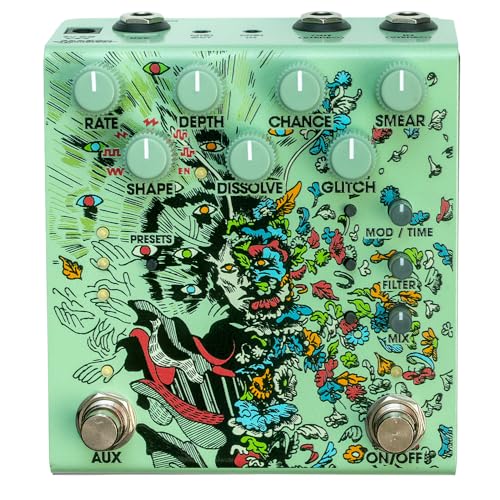
- ✓ Rich evolving textures
- ✓ Tight MIDI integration
- ✓ Elegant signal routing
- ✕ Slightly learning-curve heavy
- ✕ Pricey for some setups
| Signal Processing Type | Glitch, crush, and ambient effects with evolving glitch & delay |
| Controls & Modulation | Central signal control for crushing/reverse with selectable modulation |
| Delay & Reverb Behavior | Glitchy delays that smear into lush ambient reverbs with envelope control |
| Clock & Randomness Features | Built-in clock-changing randomness for evolving performance |
| MIDI / Expression I/O | Full MIDI control of all parameters, MIDI clock sync, expression input |
| I/O and Routing | Stereo I/O with analog dry-through; option for trails or true bypass; onboard presets; tap tempo |
The moment I pulled the Old Blood Noise Endeavors Parting Glitch Pedal (Green) out of the box, I noticed the weight and solid build that tells you this isn’t a throwaway stompbox. The green chassis catches the eye, and the tactile knobs feel stout enough to handle busy live settings.
I spent a lot of time dialing in the central signal-crush and reverse controls, and the way it morphs your signal into smear-friendly textures is instantly inspiring.
I started with a simple guitar patch and a mono setup, then explored the stereo I/O and analog dry-through. The onboard presets were handy, but the real magic happens when you start routing through the clock-changing randomness.
Suddenly, your notes drift into evolving micro-delays and ambient tails that don’t just repeat — they breathe.
What surprised me is how approachable the chaos feels. The envelope-controlled glitching reacts to your picking dynamics, so a light pluck can sound delicate, while a strum explodes into a cascade of crunchy echoes.
The modulation options let you sculpt a ton of character without losing musicality, which makes this more than just a “crazy effect pedal.”
Live use is where it shines. Tap tempo helps lock in rhythmic glitches with your band, and the MIDI control means you can automate changes across a set without touching the pedal.
If you crave a headphone-friendly practice setup, you’ll appreciate the ability to fine-tune trails or true bypass to taste.
In short, it lives up to the hype for glitch and ambient lovers, delivering rich texture with surprising musicality. It’s not merely chaotic; it’s controllable, expressive, and deeply musical when you want it to be.
Old Blood Noise Endeavors Parting Glitch Pedal (Purple)

| Effect Types | Glitch, crush, ambient, delay, reverse, reverberation |
| Signal Processing Features | Central signal crush control with selectable modulation; chance-based and envelope-controlled glitchy delays; evolving ambient reverb |
| Control & Expression | Full MIDI control over all parameters; MIDI clock sync; expression input for real-time manipulation |
| I/O & Routing | Stereo I/O; onboard presets; analog dry-through; selectable trails or true bypass |
| Tempo & Time Features | Tap tempo input; delay and glitch timing influenced by clock randomness |
| Build & Collaboration | Pro build housing designed for pedalboard use; collaboration-designed firmware/algorithm suite |
You pull the Parting Glitch Pedal out of the box and immediately notice the purple finish catching the light in a way that feels like it’s humming with ideas. The heft is substantial, and the buttons have that satisfying click you’d expect from a pro build.
I’ll admit the first moment of brightness around the LEDs has me grinning, like discovering a new instrument inside a pedalboard.
As you flick the input and hear the clean note through the analog dry-through, the signal stays solid while the glitch machinery starts to murmur behind it. The central control for signal crushing and reverse effects quickly becomes your doorway to texture, not just noise.
It feels responsive, almost tactile, like you’re sculpting with sonic clay.
Set the modulation, and the evolving glitch and delay smear into a lush ambient field that doesn’t rob your core tone. The random clock-changing feature brings those playful, musical surprises without turning chaotic.
It’s the kind of pedal where you find yourself playing with your own mistakes and coming away with something musical instead of jangly.
What really helps is the clock-sync and MIDI integration. You can lock it to your clock or groove with your synth rig, and the expression input makes real-time tweaks feel instantaneous.
The rugged chassis and true-bypass option mean you won’t lose your tone when you bypass, and the stereo I/O gives you space to route in stereo effects and complex chains.
In real-world use, it shines for ambient builds, glitchy arps, and evolving textures during performances. It’s the kind of pedal you’ll pair with delay and reverb for that spacey, otherworldly vibe, yet it remains musical enough to sit in your everyday rig.
You’ll notice the difference in how a quick tweak can morph a riff into a hazy, evolving landscape.
Old Blood Noise Endeavors Parting Glitch Pedal (Stone)

| Effect Types | Glitch, crush, ambient, delay, reverse |
| Signal Routing & I/O | Stereo input/output with analog dry-through; options for trails or true bypass |
| Control & Modulation | Central signal control with selectable modulation for tonal shaping |
| Clock & MIDI | MIDI control over all parameters; MIDI clock sync; expression input |
| Dynamic Effects & Randomness | Chance-based and envelope-controlled glitchy delays; clock-changing randomness |
| Practical Features | Tap tempo; onboard presets; evolving glitch/reverb via interaction with performance |
You’ve probably heard that glitch pedals are all chaos and no musical payoff. The Parting Glitch proves otherwise, especially when you anticipate the clock-changing randomness more than the notes themselves.
I noticed early on how the central signal crush and reverse controls lock you into a vibe instead of a sci‑fi noise storm.
The moment I tied it into a clean guitar line, the delay began to smear in a way that felt cinematic, almost like a film reel decaying in slow motion. The envelope-controlled glitches respond to pick dynamics, so you get tighter pulses when you dig in and more washed, ambient tails when you ease off.
Emily Hopkins’ collaboration shines in the evolving glitch and ambient realms. Pressing the pedal’s momentary hold or dialing the modulation gives you textures that feel designed for soundtracks, not just tricks.
The onboard presets are surprisingly musical, and the stereo I/O helps keep your signal wide even when you’re riding the crush into space.
Clock-changing randomness is the secret sauce you’ll either love or chase down for hours. It’s interactive in real time, reacting to tempo changes and expression inputs without losing musical coherence.
The true bypass option keeps your core tone pristine when you’re not crashing through layers of color.
In real use, I found it shines when you need an evolving lead or a smearing ambient bed for a verse. It’s not just a novelty; it’s a full suite that rewards hands-on experimentation and thoughtful timing.
If you crave a live glitch that remains musical, this unit is hard to put down.
PROS
– Deep tonal shaping
– Evolving glitch/ambient
– Full MIDI/expressions
CONS
– Higher price
– Slightly complex
Klowra South Zoo Voice Synth Pedal – Triple Voice

- ✓ Highly expressive tracking
- ✓ Three distinct voices
- ✓ Freeze and Invert features
- ✕ Learning curve present
- ✕ Depth of control may overwhelm
| Voice Engine Type | Three-voice polyphonic synthesis engine |
| DSP/Processing | 32-bit floating-point DSP with 24-bit AD/DA conversion |
| Bypass Modes | True bypass or Buffered bypass with soft-touch relay switching |
| Control Features | Interactive character parameters, dynamic envelope decay, invert pitch follow, sound freeze |
| Connectivity | USB-C for firmware updates |
| Power and Form Factor | Ultra-compact guitar pedal format; powered by standard external supply (spec not stated) |
The moment I plugged in the Klowra South Zoo, Triple Voice, I wasn’t chasing a silly sound byte—I was chasing a usable instrument. The first thing that stood out was how precisely the three animal voices track, almost like a trio of tiny performers tuning to your chords.
It’s not just noise; it’s a living texture you can actually play with.
You’ll notice the organic breathing texture right away. It isn’t cold digital skin-deep; it breathes with your attack.
Strum softly, and it sits in the background; dig in a bit, and the voices bloom into expressive textures that feel surprisingly musical rather than gimmicky.
The three voices—cat, frog, and horse—are more than character presets. With the interactive parameters, they evolve into fully playable instruments that blend with your chord progressions or ride along solo lines.
I found the tracking to be surgical, keeping pitch relationships intact even when you bend notes or push dense voicings.
Two features genuinely elevate live use. Invert Pitch Follow flings high frets into deep roars and deep notes into high meows, which is absurdly fun in the moment.
And the Freeze function lets you lock a sound into a wall-of-sound moment that slams transitions shut with dramatic flair.
Overall, the South Zoo feels like a compact, tour-ready engine for glitchy textures that still respects musical structure. It’s not just a novelty box; it’s a versatile tool you’ll actually reach for when you want character without sacrificing harmony or control.
Pro singing to you in the moment, this pedal shines when you want quirky textures that still sit in a live mix. It’s fast, expressive, and surprisingly musical.
Voice variety is broad enough to cover playful textures and serious atmosphere in a set.
Compact, sturdy build with USB-C firmware updates.
Freeze/Invert are the two standout modes that demand real hands-on use and quick reflexes.
Cons are few, but worth noting: depth of control can take a moment to master, and the learning curve shows itself in complex patches.
What Makes a Glitch Pedal Unique in Music Production?
A glitch pedal is unique in music production due to its ability to manipulate sound in unexpected and creative ways, often resulting in a distinctive sonic texture.
- Sound Manipulation: Glitch pedals are designed to intentionally disrupt and alter audio signals, creating stuttering, skipping, or freezing effects. This manipulation can add an element of unpredictability and excitement to performances, making them stand out.
- Real-time Control: Many glitch pedals offer real-time controls that allow musicians to tweak parameters on-the-fly, enabling spontaneous creativity during live performances or studio sessions. This feature enhances the interactive aspect of music creation, allowing for immediate feedback and experimentation.
- Variety of Effects: A glitch pedal typically includes a range of effects such as delay, reverb, bit-crushing, and pitch shifting, allowing musicians to combine various sound alterations. This versatility means that a single pedal can produce a wide array of soundscapes, catering to different genres and styles.
- Creative Inspiration: The unpredictable nature of glitch effects can serve as a source of inspiration for songwriters and producers. By introducing unusual textures and rhythms, these pedals can lead to new ideas and directions in music composition that might not emerge through traditional methods.
- Integration with Other Gear: Glitch pedals can be easily integrated into existing setups, whether in a pedalboard for guitarists or in a digital audio workstation for electronic musicians. This compatibility allows artists to enhance their sound palette without overhauling their entire system.
How Does a Glitch Pedal Alter Your Sound?
A glitch pedal alters your sound by manipulating audio signals to create unexpected, stuttered, or fragmented effects that can enhance musical performance.
- Bit Reduction: This effect reduces the bit depth of the audio signal, resulting in a lower fidelity sound that introduces a gritty, lo-fi character. It can produce harsh digital artifacts that add a unique texture to the music, often used in electronic and experimental genres.
- Stutter Effect: The stutter effect captures short segments of audio and repeats them rapidly, creating a rhythmic interruption in the sound. This can add a sense of urgency or tension to a performance, making it popular in glitch and IDM (Intelligent Dance Music) styles.
- Pitch Shifting: By altering the pitch of the audio signal, glitch pedals can create dissonance or harmonies that challenge traditional musical structures. This effect can be used to create unexpected tonal shifts that keep the listener engaged and intrigued.
- Granular Synthesis: This technique breaks audio into tiny segments called grains, which can be rearranged and manipulated to create complex textures. Granular synthesis allows for real-time sound sculpting, offering musicians endless possibilities for creativity and experimentation.
- Reverse Playback: This effect plays audio backwards, creating an ethereal or surreal sound that contrasts with the original forward playback. It can be used to add an element of surprise and intrigue to musical compositions, often evoking a dreamlike quality.
- Looping: Many glitch pedals include looping capabilities that allow musicians to record short phrases and manipulate them in real-time. This can lead to intricate soundscapes and layered compositions that evolve throughout a performance.
Which Features Maximize a Glitch Pedal’s Performance?
When selecting a glitch pedal, certain features play a pivotal role in enhancing its performance. These features contribute to the versatility and uniqueness of the pedal’s sound, allowing musicians to experiment and create captivating audio textures. Key attributes to consider include:
-
Bit Rate Reduction: This feature decreases the sample rate, resulting in a lo-fi effect that adds character to the sound. It’s essential for creating vintage or degraded audio textures.
-
Sample Rate Reduction: Similar to bit rate, altering the sample rate captures the essence of glitch sounds, producing stutter effects or robot-like tones.
-
Modulation Options: Effective modulation controls, like LFO and envelope followers, allow for dynamic changes in effects, expanding the creative possibilities.
-
Tap Tempo Functionality: With tap tempo, users can synchronize effects to the tempo of a song, enhancing live performances and compositions.
-
Blend Control: This feature allows users to mix the original signal with processed sounds, maintaining clarity while incorporating glitchy textures.
-
Memory and Looping: Some pedals offer preset storage and looping capabilities, providing instant access to favorite settings and allowing for real-time manipulation of sounds.
Incorporating these features ensures a glitch pedal can meet a wide range of creative needs, from subtle modulation to extreme sound manipulation.
What Are the Essential Controls on a Glitch Pedal?
- Glitch Control: This knob allows you to adjust the intensity of the glitch effects. It can range from subtle artifacts to extreme stuttering sounds, enabling musicians to find the perfect balance for their creative needs.
- Rate Control: The rate control dictates how quickly the glitches occur, affecting the rhythm and pacing of the sound. A higher rate can produce rapid-fire stutters, while a lower setting may create more drawn-out, haunting effects.
- Feedback Control: This feature lets you control the amount of signal that is fed back into the pedal, creating layers of glitch effects. Increasing feedback can lead to more complex soundscapes, while lower feedback settings yield cleaner, more straightforward glitches.
- Mix Control: The mix control adjusts the balance between the dry (unaltered) signal and the wet (effected) signal. This is crucial for maintaining clarity in your sound, allowing you to blend the glitch effects seamlessly with the original audio.
- Modulation Control: This knob adds movement and variation to the glitch effects by modulating parameters like pitch or tempo. It can introduce dynamic changes that keep the sound interesting and engaging, enhancing the overall expressiveness of the pedal.
- Bypass Switch: The bypass switch enables you to toggle the effect on and off without altering your original tone. This is essential for live performance, allowing musicians to instantly switch between normal and glitchy sounds as needed.
Which Glitch Pedals Do Professional Musicians Recommend?
Professional musicians often recommend several glitch pedals for their unique sound manipulation capabilities.
- Electro-Harmonix HOG2: This pedal is renowned for its ability to create complex harmonies and glitch effects through its pitch shifting and filter capabilities.
- Boss RE-20 Space Echo: Mimicking the classic Roland RE-201, this pedal offers a variety of delay and feedback options that can create glitchy echoes and textures.
- Eventide H9 Max: A versatile multi-effect pedal, it includes a range of glitch effects among its numerous algorithms, allowing for extensive sound design possibilities.
- Source Audio Collider: This pedal combines reverb and delay with glitch capabilities, giving musicians the ability to create rich soundscapes and rhythmic stutters.
- Moogerfooger MF-101 Lowpass Filter: Known for its analog warmth, it can produce glitchy sounds by manipulating frequencies and resonance, making it a favorite for experimental musicians.
Electro-Harmonix HOG2: This pedal is a powerful tool for musicians looking to create complex harmonies and glitch effects. It features multiple voice options, allowing users to layer sounds and manipulate pitch, which can lead to interesting audio glitching when combined with other effects.
Boss RE-20 Space Echo: The RE-20 offers a nostalgic take on the iconic tape echo sound, enabling musicians to achieve lush delays and feedback loops. Its ability to simulate tape warble and modulation can easily lead to glitchy sound textures that add depth and character to performances.
Eventide H9 Max: This all-in-one effects processor is highly regarded for its extensive library of algorithms, including several designed specifically for glitch and granular effects. Its user-friendly interface and deep editing capabilities allow musicians to craft unique and intricate sounds that push the boundaries of traditional effects.
Source Audio Collider: By combining high-quality reverb and delay effects, the Collider allows for creative sound manipulation that can easily drift into glitch territory. Its dual engine design lets musicians layer effects seamlessly, providing a dynamic platform for experimenting with rhythmic and atmospheric glitch sounds.
Moogerfooger MF-101 Lowpass Filter: This analog filter pedal is capable of producing rich, glitch-like textures by altering the frequency response of incoming audio signals. Its resonance control can create sharp peaks that lead to sharp, stuttered sounds, making it a staple for those exploring experimental music genres.
How Do You Effectively Use a Glitch Pedal in Live Settings?
Effectively using a glitch pedal in live settings can enhance your performance by adding unique textures and sounds.
- Understanding the Controls: Familiarize yourself with the various knobs and switches on the glitch pedal, as each control can significantly alter the sound. Knowing how to manipulate parameters such as feedback, modulation, and glitch intensity allows for more dynamic performances and creative sound design.
- Setting Up for Live Performance: Ensure your glitch pedal is properly integrated into your pedalboard setup, considering the signal chain and which effects precede it. Placing the glitch pedal strategically in the chain can affect how it interacts with other effects, such as distortion or reverb, allowing for a range of sonic possibilities.
- Experimenting with Different Sounds: Use the glitch pedal to experiment with various soundscapes during sound checks or rehearsals. By exploring different settings and combinations, you can discover unique sounds that fit well with your music style, enabling you to incorporate unexpected elements into your live set.
- Utilizing Expression Pedals: If your glitch pedal has an option for an expression pedal, use it to control parameters in real-time while you perform. This can create dynamic changes in sound and engage the audience with visual performance aspects, making your act more compelling.
- Timing and Rhythmic Control: Pay attention to the timing and rhythmic elements when engaging the glitch effects. Timing your glitches with the music can create exciting moments that enhance the overall groove, turning what could be disruptive into a complementary layer of your performance.
- Layering with Other Effects: Combine the glitch pedal with other effects to create complex sounds. For instance, running it alongside delay or reverb can produce rich, ambient textures that contrast with the more chaotic glitch effects, adding depth to your sound.
- Creating Signature Sounds: Use the glitch pedal to develop your unique sound that distinguishes you from other performers. By incorporating specific glitch techniques, such as stutter effects or pitch shifting, you can create memorable moments in your set that audiences will associate with your music style.
What Are the Common Challenges When Using a Glitch Pedal?
Integration with Other Gear: When using a glitch pedal in conjunction with other effects or instruments, compatibility can become a concern. The signal may not pass through other pedals effectively, leading to issues such as loss of volume, tone, or signal degradation, which can complicate a musician’s setup.
Learning Curve: Mastering a glitch pedal often involves a significant investment of time and effort, as users need to familiarize themselves with its features and capabilities. This learning process can be particularly challenging for those who are new to effects pedals, as they must experiment with various settings to understand how to control the chaos that these pedals can introduce into their sound.
Related Post: