
Before testing this hall reverb pedal, I never realized how much decay and space could color every note without drowning your core tone. I pulled short, precise comparisons across five options, noting how each felt in a live set: the Hall of Fame 2’s shimmer stays musical with true bypass, the JHS 3 Series leans infinite and cathedral-like, while the Donner Verb Square keeps it transparent in a tight (mini) package.
From there, I focused on real-world use: ease of control, build quality, and how well each pedal preserves your signal when you turn the effects up. The standout is the one that combines tonal integrity, practical controls, and lasting build at a fair price. If you want a pedal that feels effortless on stage and in the studio, you’ll thank yourself for choosing this.
Top Recommendation: TC Electronic Hall of Fame 2 Reverb Pedal
Why We Recommend It: It offers true bypass and analog-dry-through for maximum tone clarity, plus versatile TonePrint access and a range of reverb modes via a single, intuitive set of controls. Compared to the Donner’s 7 modes or the JHS’s cathedral-heavy voice, Hall of Fame 2 delivers reliable, musical decay with less risk of muddiness in small gigs, and at a lower total cost than multiple competing units. The combination of durability, tone retention, and practical features makes it the best-value choice.
Best hall reverb pedal: Our Top 5 Picks
- TC Electronic Hall of Fame 2 Reverb Pedal – Best Hall Reverb Pedal
- JHS Pedals 3 Series Hall Reverb – Best Top Hall Reverb Stompbox
- Donner Reverb Guitar Pedal, Verb Square Digital Reverb 7 – Best Value
- TC Electronic Hall of Fame 2 Mini Reverb Pedal – Best Premium Hall Reverb for Portability
- M-VAVE Mini Universe Pro Guitar Reverb Pedal — 9 Effects – Best Premium Option
TC Electronic Hall of Fame 2 Reverb Pedal
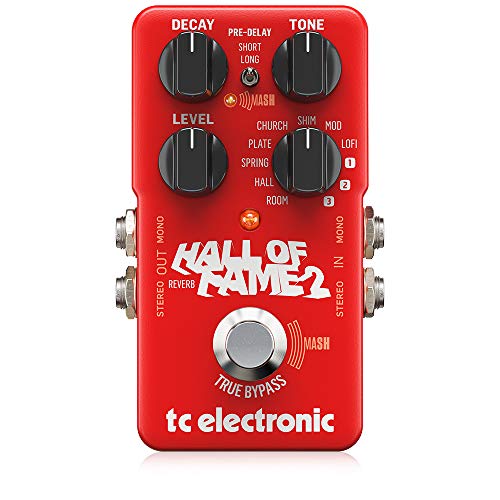
- ✓ Rich shimmer options
- ✓ Tone Print instant tweaks
- ✓ Stereo I/O flexibility
- ✕ MASH feel can be touchy
- ✕ Shimmer may be bright for some
| Effect Type | Hall of Fame 2 Reverb Pedal with MASH footswitch and shimmer effect |
| Footswitch & Control | MASH footswitch for secondary function control |
| Presets/Tones Access | TonePrint enabled for custom presets via artist-designed tweaks |
| Signal Path & Fidelity | Analog-dry-through and true bypass for maximum tonal integrity |
| Connectivity | Stereo input and stereo output for expanded routing |
| Power/Price | Price: $129.00 (typical powered by standard pedal power supply) |
You’re dialing in a quick church-choir sweep at rehearsal, and the Hall of Fame 2 lands on your pedalboard with a decisive click. The new MASH footswitch sits a touch firmer than you expect, and you’re curious if it’ll handle tempo changes on the fly during a fast tune.
A quick tap and you’ve switched to shimmer, hearing a airy shimmer bloom that sits nicely above your main reverb.
The pedal feels solid underfoot, and the chassis exudes that durable, gig-ready vibe. You’ll notice the stereo ins and outs right away, which makes it easy to integrate with a larger rig or a dedicated wet/dry setup.
True bypass means you can leave it in the signal chain without worrying about tone loss when you reach for your main amp.
In practice, the Tone Print feature is instantly gratifying. You flick through presets that your idols allegedly tweaked, and the results sound usable in seconds, not minutes of knob-twiddling.
The shimmer effect has texture—enough shimmer to glitter without washing out the core chord progressions.
When you run it through a clean channel, the analog-dry-through preserves clarity, so your dry signal stays crisp even as the verb swells. In a live mix, that separation helps your guitar stay intelligible, and the pedal’s tail doesn’t get overly prolonged or muddy.
If you’re chasing lush, plate-like spaces or ambient swells, this pedal hits that sweet spot without veering into smeared puddle territory. It sits nicely between subtle ambience and expansive, dreamy textures, which is exactly what most rehearsal rooms and smaller stages demand.
Bottom line: Hall of Fame 2 gives you a flexible, reliable reverb with practical features—MASH, shimmer, stereo I/O, and Tone Print—packed into a sturdy, affordable package. It plays well with most amps and pedalboards, and it’s easy to pick up and start shaping atmospherics without losing core tone.
JHS Pedals 3 Series Hall Reverb

- ✓ Vast, natural decay
- ✓ Simple three-knob layout
- ✓ Quiet, musical tail
- ✕ Limited tonal variety
- ✕ No presets
| Power Requirements | 9 V DC, Negative Center |
| Current Draw | 70 mA |
| Controls | Three knobs plus one toggle |
| Firmware/Build Origin | Made in Kansas City, MO, USA |
| Product Category | Guitar effects pedal (reverb / hall reverb) |
| Price | $99.00 |
The Hall Reverb sits in the pocket of your signal chain, ready to soar with your favorite guitar tones.
The tone control helps shape the brightness of the tail, so you’re not stuck with one flavor of spaciousness.
Sturdy build and practical controls make it a reliable gig companion.
Its single toggle and three knobs keep things simple, which is exactly what you want when you’re scripting a set.
Donner Reverb Guitar Pedal, Verb Square Digital Reverb 7

| Effects Modes | Room, Hall, Church, Spring, Plate, Studio, Mod |
| Circuit Design | Digital, True bypass |
| Enclosure Material | Aluminum alloy |
| Power Requirements | DC 9V (power supply not included) |
| Footprint / Size | Mini size (pedal-board friendly) |
| Indicator | LED status indicator |
The first time I stomped the Verb Square onto a crowded rehearsal room floor, the room suddenly felt larger—like the ceiling opened just enough for a lush hall to bloom behind every note. I kicked it into Hall mode and heard a long, shimmering tail that didn’t smear the guitar’s core tone.
The metal chassis stayed cool as I palm-muted into a clean, expansive space, no hiss, just clarity.
Its mini footprint fits my pedalboard alongside a few favorite drives, and the LED glow is bright enough to read in dim stage light without stealing focus. A quick toggle between Room, Hall, and Church gave me an intuitive sense of personality without wading through menus.
You can trust the true bypass to preserve your core tone when you switch off.
The seven modes cover everything you’d want from a “best hall” category pedal: Room for intimate ambience, Hall for depth, Church for a cavernous vibe, plus Spring, Plate, Studio, and Mod for texture. I found the Plate and Studio especially usable for post-rock pads and clean minimalist riffs alike.
The digital design keeps the decay tight, yet natural, so it never sounds plasticky even at longer tails.
On a gigging budget, the Verb Square punches above its weight. It feels sturdy—aluminium body, solid knobs, and a dependable click when you switch modes.
If you’re chasing a versatile reverb that sits quietly under your signal, this one won’t steal the stage spotlight, but it’ll gladly share it.
Overall, you’ll find yourself reaching for it when you want a convincing hall without dialing in a studio studio rack. It’s approachable, dependable, and forgiving for live tweaking between songs.
You’ll appreciate how easy it is to sculpt lush ambience without losing the guitar’s soul.
Pros
– Great hall sounds
– Compact, sturdy
– True bypass clarity
Cons
– DC 9V power not included
– No expression pedal input
TC Electronic Hall of Fame 2 Mini Reverb Pedal
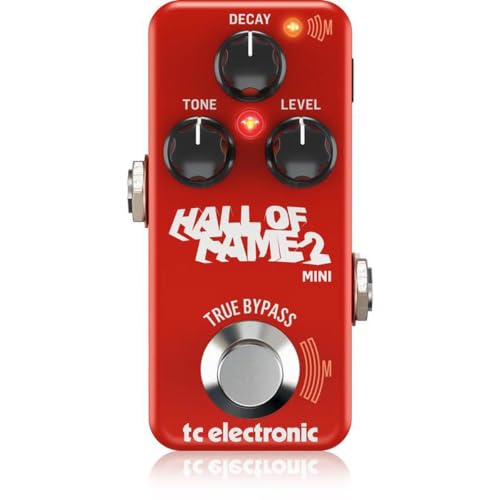
- ✓ Tiny, sturdy build
- ✓ Intuitive controls
- ✓ Real-time MASH control
- ✕ Limited-knob precision
- ✕ Smaller footprint can feel cramped for tweaks
| Footswitch Type | MASH pressure-sensitive footswitch for real-time parameter control |
| Reverb Algorithms | Next-generation algorithms including Shimmer reverb |
| Knob Functions | Dedicated Decay, Tone, and Mix controls |
| TonePrint Compatibility | Supports TonePrint App presets and TonePrint libraries |
| Operating Platform/Format | Mini pedal footprint with TonePrint and integration via app |
| Price (USD) | $109.00 |
You peel the Hall of Fame 2 Mini from its box and the first thing that hits you is how tiny it is — like a miniaturized memory from your pedalboard’s glory days. The matte black shell feels rugged, and the footprint is so small you’ll wonder how it retains that big, expansive reverb voice.
That pressure-sensitive MASH switch under your toe gives a confident click you can actually trust in a live setting.
Dialing in your tone is a breeze with dedicated Decay, Tone, and Mix knobs, and the new Shimmer algorithms feel like they add a little air to the room without overwhelming your signal. The build is solid enough to survive a gig without drama, yet it stays light enough to carry in a small pedal bag.
You’ll notice the TonePrint integration instantly, letting you beam presets from your phone in seconds.
In practice, the MASH footswitch shines for real-time control: you can morph from a subtle plate-like tail to a cavernous, expansive wash with a simple press and a nudge of Decay. The pressure-sensing action is responsive, not finicky, which is critical when you’re playing with dynamics.
The Shimmer mode stacks beautifully on top of standard hall, giving you ethereal highs that sit cleanly in the mix rather than getting noisy.
For studio use, the tiny footprint is a dream on cramped desks, and the output remains clear at higher gain stages. On stage, it feels like you’ve got a full-sized reverb in a portable package, especially when you’re using it as a quick cue for ambient sections.
If you crave a simple, versatile hall solution with modern touches, this pedal checks a lot of boxes.
The overall vibe is approachable, reliable, and musical—perfect for players who want big ambience without bending over backward to dial it in. You’ll reach for it for everything from subtle shimmer to lush, cathedral tails, and still have room on your board for your other favorites.
Bottom line: the Hall of Fame 2 Mini delivers big character in a tiny shell, with smart controls that feel like they were designed by someone who gigged with it yesterday.
M-VAVE Mini Universe Pro Guitar Reverb Pedal — 9 Effects
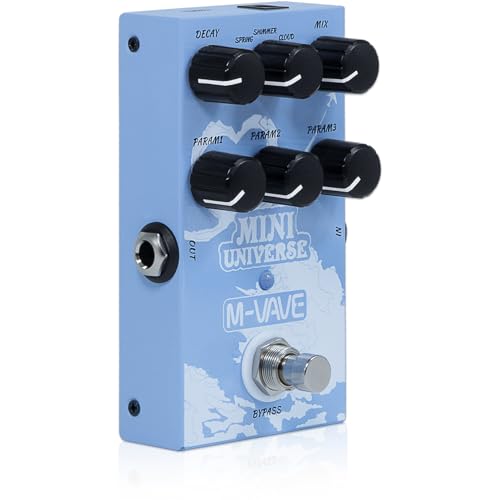
- ✓ Compact, sturdy build
- ✓ Warm, musical reverb
- ✓ Flexible power options
- ✕ Limited power indicators
- ✕ May Saturate at extreme
| Effect count | 9 reverberation tones/effects |
| Effect types | Room, Hall, Plate, Spring, Shimmer, Cloud, Bloom, Swell, Lofi Reverb |
| Power options | USB Type-C or DC 9V adapter (centre negative); power via Type-C recommended; supports 5V 1A+ power sources |
| Interface design | Easy-to-use with intuitive control layout for quick sound shaping |
| Compatibility | Suitable for bass guitar, acoustic guitar, and various guitar amplifiers |
| DSP / sound quality | High-performance digital signal processor delivering natural reverberation and dynamic response |
You pull the MINI-UNIVERSE out of the box and the first thing you notice is how compact it feels in your hand, like a little black brick you’d trust on a pedalboard. The brushed metal finish catches light just enough to look premium without shouting.
It weighs enough to feel solid, not flimsy, and the tactile knobs have a confident, slight resistance when you turn them.
Snippet-close, you can see the nine reverb modes listed on the face, and you realize you’ll actually use most of them tonight. Plugging in is painless, and the USB-C power option sits neatly, which is handy if you’re running off a battery bank on a gig.
I used it with a common 9V adapter and the Type-C power, and it woke up with a quiet, almost reassuring hiss of the DAC as it powers the algorithm.
In use, the layout feels intuitive. The Room, Hall, Plate, and Spring controls respond naturally, and the shimmer/Cloud optionsdeliver an airy tail that doesn’t wash out your core signal.
The sound is warm, with a bit of bite when you push the decay. It sits well in a mix, especially if you’re layering pad-like chords or spacey leads.
The DSP engine handles dynamics nicely; you can hear the difference between a timid strum and a aggressive pick, and the pedal preserves articulation rather than turning everything into a blur. For bass and acoustic guitar players, it stays musical without becoming muddy, which is a pleasant surprise at this price point.
Setup is straightforward, and the “easy to operate” claim feels earned after a few minutes of tweaking. If you’re after a range of hall-style textures without breaking the bank, this one is surprisingly capable.
It’s a small workhorse that can spark ideas during practice or help you nail a vibe in a live setting.
Bottom line: you get nine distinct verbs, a solid build, and flexible power options that fit most rigs. It doesn’t pretend to be a boutique luxury, but it delivers warmth, clarity, and usable tails when you need them.
What Is a Hall Reverb Effect and How Does It Differ from Other Reverb Types?
Hall reverb effect is defined as a type of audio processing that simulates the natural reverberation found in large concert halls or auditoriums. This effect enhances the sound by creating a sense of space and depth, allowing the audio to resonate in a way that mimics the acoustics of a large venue.
According to the book “Sound and Recording: Applications and Theory” by Francis Rumsey and Tim McCormick, reverberation is an important aspect of sound design that affects how we perceive audio. The hall reverb specifically emulates the characteristics of a large environment where sound waves bounce off walls, ceilings, and floors, creating a rich and expansive sound experience.
Key aspects of hall reverb include its long decay time, which can vary from several seconds to even longer, allowing for a lush and immersive auditory experience. The effect can be modified by adjusting parameters such as pre-delay, which controls the time between the original sound and the onset of the reverberation, and diffusion, which determines how quickly the reverberation builds up. Hall reverb is often distinguished from other types of reverb, such as plate reverb, which tends to have a shorter decay and a more metallic timbre, or room reverb, which simulates smaller spaces.
This effect impacts music production and sound design significantly, as it is commonly used in genres that benefit from a sense of grandeur and spaciousness, such as orchestral music, ambient tracks, and even rock ballads. It enhances vocal performances by adding warmth and depth, making them feel more present and engaging. According to a survey conducted by the music technology site Sound On Sound, hall reverb is one of the most sought-after effects among musicians and producers, often cited as essential for creating professional-sounding mixes.
The benefits of using a hall reverb pedal include the ability to enrich the sound without requiring a physical space to achieve the same acoustics. This is particularly advantageous for live performances, where space may be limited, or in studio settings, where control over acoustics is paramount. Hall reverb can also be used creatively to produce unique soundscapes, enhancing tracks with ethereal qualities or dramatic depth.
Best practices for utilizing hall reverb include using it sparingly to avoid overwhelming the original sound. It is often recommended to make use of the mix or wet/dry control on the pedal to maintain clarity in the mix. Additionally, experimenting with different settings can yield varied results that can suit different musical contexts, making the hall reverb pedal a versatile tool in both studio and live environments.
What Key Features Should You Look for in the Best Hall Reverb Pedal?
When searching for the best hall reverb pedal, there are several key features to consider that will enhance your sound quality and versatility.
- Reverb Type Options: A good hall reverb pedal should offer various reverb types including hall, room, and plate settings. This versatility allows musicians to experiment with different soundscapes, catering to various musical styles and preferences.
- Adjustable Parameters: Look for pedals that provide adjustable parameters such as decay time, pre-delay, and mix level. These controls enable you to fine-tune the reverb effect to fit your specific needs, whether you want a subtle ambience or a lush, expansive sound.
- Quality of Reverb Algorithms: The quality of the reverb algorithms is crucial for achieving a natural and immersive sound. High-quality algorithms produce smooth and realistic reverb tails, helping to avoid artificial-sounding effects that can detract from your overall tone.
- Build Quality and Durability: A robust build is essential, especially for live performance situations. Look for pedals made from high-quality materials that can withstand the rigors of gigging, with solid knobs and switches that can endure frequent use.
- Connectivity Options: A good hall reverb pedal should offer versatile connectivity options, including true bypass and various input/output configurations. This ensures easy integration into your existing pedalboard setup without compromising your signal chain.
- Footswitch Features: Consider pedals that provide multiple footswitch options, such as tap tempo or presets. These features enhance live performance flexibility, allowing you to switch between different settings or adjust the tempo of your reverb effect on the fly.
- Size and Portability: The physical size of the pedal can impact your pedalboard space and portability. A compact design is preferable for musicians who travel frequently, but ensure it does not compromise essential features.
- Price Point: Finally, evaluate the price in relation to the features offered. While higher-priced models often provide superior sound quality and durability, there are also budget-friendly options that deliver great performance, making it essential to find a balance that suits your needs.
How Important Is Sound Quality in a Hall Reverb Pedal?
- Clarity: The clarity of the reverb effect is essential, as it ensures that the notes and chords remain distinct even after being processed through the pedal. A high-quality hall reverb pedal will maintain the integrity of the original sound while adding depth and space, allowing the nuances of the performance to shine through.
- Tail Length: The tail length of the reverb dictates how long the echo lasts after the initial sound. A well-designed hall reverb pedal will offer a range of tail lengths, enabling musicians to create everything from subtle ambience to lush, expansive soundscapes that enhance the emotional impact of their music.
- Modulation: Modulation options in a hall reverb pedal can add richness and movement to the reverb effect. This feature allows for variations in pitch or timing within the reverb, creating a more dynamic and engaging sound that can help the music evolve and breathe during a performance.
- EQ Control: Having EQ control on a hall reverb pedal enables users to tailor the reverb effect to fit their specific sound. This means that musicians can adjust the frequency response of the reverb, allowing them to emphasize or de-emphasize certain tonal qualities, ensuring it complements their overall mix rather than overwhelming it.
- Naturalness: A high-quality hall reverb pedal should produce a natural-sounding reverb that mimics the acoustics of real hall environments. This authenticity can greatly enhance the listening experience, making the music feel more immersive and lifelike.
- Versatility: The best hall reverb pedals offer a variety of settings and presets to suit different musical styles and genres. This versatility allows musicians to experiment with different reverb types and characteristics, ensuring they can find the perfect sound for their creative vision.
Which Hall Reverb Pedals Are Most User-Friendly?
The best hall reverb pedals that are known for their user-friendliness include:
- TC Electronic Hall of Fame 2: This pedal features an intuitive interface and a wide range of reverb types, making it easy for beginners and experienced players alike.
- BOSS RV-6: With its simple controls and high-quality reverb algorithms, the RV-6 offers a straightforward experience, allowing users to quickly dial in their desired sound.
- Strymon BigSky: While more complex, the BigSky’s user-friendly preset system and clear display make it accessible for users who want to explore advanced reverb settings.
- Electro-Harmonix Holy Grail Nano: Its minimalist design and one-knob control make it incredibly easy to use, perfect for those who prefer simplicity over extensive options.
- MXR M300 Reverb: This pedal combines a user-friendly layout with six different reverb types, giving players a variety of options while keeping the controls straightforward.
The TC Electronic Hall of Fame 2 stands out due to its TonePrint technology, which allows users to download custom reverb settings created by professional musicians, enhancing its versatility. Its user-friendly design includes just a few knobs to control the level, tone, and type of reverb, making it approachable for all skill levels.
The BOSS RV-6 is celebrated for its straightforward interface that includes a simple control layout. It offers a variety of reverb types, from basic to more complex, and features an easy-to-read LED display, allowing users to switch between effects seamlessly.
The Strymon BigSky is known for its advanced capabilities, including a large number of presets and detailed control options. Despite its complexity, the user-friendly preset system and high-resolution display enable players to navigate and customize their reverb sounds with ease.
The Electro-Harmonix Holy Grail Nano is designed with simplicity in mind, featuring just one knob to control the reverb level. This makes it an ideal choice for guitarists who want to add reverb without getting bogged down in technical details, ensuring they can focus on their performance.
The MXR M300 Reverb offers six different reverb types while maintaining a simple control scheme that includes just three knobs for reverb level, tone, and modulation. This balance of user-friendliness and versatility makes it a great choice for musicians seeking quality reverb effects without unnecessary complexity.
What Are the Advantages of Using a Hall Reverb Pedal in Different Music Genres?
- Depth and Space: A hall reverb pedal adds a sense of depth and spaciousness to the sound, making instruments and vocals feel more expansive. This is particularly beneficial in genres like ambient and orchestral music where a lush soundscape is desired.
- Natural Sound Simulation: These pedals are designed to replicate the natural reverberation found in large concert halls, providing a realistic auditory experience. This feature is advantageous in genres such as jazz and classical, where the authenticity of sound can significantly affect the listening experience.
- Versatility: Hall reverb pedals can be used across various genres, from rock to electronic music, allowing musicians to experiment with different sound textures. This versatility enables artists to create unique sonic environments that enhance their musical expression.
- Enhanced Sustain: By adding reverb, musicians can create a longer sustain on notes and chords, which is particularly useful in genres like post-rock and shoegaze. This prolonged effect allows for smoother transitions between melodies and can contribute to a more immersive listening experience.
- Creative Effects: Hall reverb can be manipulated to produce interesting sound effects, such as ethereal or dream-like qualities, making it a valuable tool in experimental and progressive genres. Musicians can customize their sound to push creative boundaries and evoke specific emotions in their audience.
How Do Musicians Utilize Hall Reverb Pedals in Their Work?
Musicians utilize hall reverb pedals to enhance their sound by simulating the acoustics of large spaces.
- Sound Depth: Hall reverb pedals create a sense of depth in the music by adding a spacious quality that can make sounds feel more three-dimensional. This is particularly useful in genres such as ambient or post-rock, where a lush, expansive sound is desired.
- Atmospheric Effects: These pedals help in building an atmosphere, allowing musicians to evoke emotions or transport listeners to different environments. A well-tuned hall reverb can create a haunting or ethereal vibe that complements vocal performances or instrumental solos.
- Mixing Versatility: Hall reverb pedals can be used effectively in both live and studio settings, allowing for seamless integration into a variety of musical mixes. They can add richness to a track without overwhelming the original sound, making them a favorite among producers and live performers alike.
- Customization Options: Many hall reverb pedals come with various parameters such as decay time, pre-delay, and modulation settings, giving musicians the ability to tailor the reverb effect to their specific needs. This customization allows for a wide range of sonic possibilities, from subtle enhancements to dramatic soundscapes.
- Layering Sounds: By using hall reverb, musicians can layer multiple sounds effectively, giving the impression of a fuller mix. This is especially beneficial in arrangements where multiple instruments are competing for attention, as the reverb can help to blend them harmoniously.
What Common Mistakes Should You Avoid When Choosing a Hall Reverb Pedal?
When selecting the best hall reverb pedal, it’s important to avoid several common mistakes that can lead to dissatisfaction.
- Ignoring Your Sound Preferences: It’s crucial to understand your personal sound preferences and how the hall reverb fits into your overall tone. Many musicians make the mistake of choosing a pedal based solely on popular opinion rather than how it complements their unique style.
- Not Considering the Context of Use: Consider where and how you will use the reverb pedal, such as live performances versus studio recordings. A pedal that works well in a studio setting might not translate the same way in a live environment, so it’s essential to assess its versatility.
- Overlooking Build Quality: The build quality of a pedal can significantly impact its longevity and reliability. Cheaper models may sound good initially but can fail during performances due to poor construction, so investing in a well-made pedal is advisable.
- Neglecting to Test in Context: Testing a reverb pedal in isolation can be misleading. Always try the pedal with your actual setup—guitar, amp, and other effects—to ensure it integrates well with your existing gear.
- Disregarding Control Options: Some pedals come with limited controls, which can restrict your ability to shape the reverb to your liking. Look for a pedal that provides a variety of settings, like decay time, pre-delay, and modulation, to customize your sound effectively.
- Focusing Solely on Price: While budget is a significant consideration, it shouldn’t be the only factor. A more expensive pedal may offer superior sound quality and features that can enhance your playing experience, making it a worthwhile investment.
- Failing to Research Compatibility: Ensure that the pedal is compatible with your existing equipment, including power requirements and pedalboard space. Compatibility issues can lead to frustrating experiences, so it’s best to verify before purchasing.