
Before testing this gear, I never realized how much clumsy amp sims and noisy CAD-style pedals bugged my tone on stage. I grabbed each multi-distortion option, cranked the gain, and pushed real-world riffs through them—tuning, switching, and comparing how they feel live. I looked for punchy high-gain, clear mids, simple preset management, and reliable build under live conditions.
From quick preset recall to robust cabinet/mic-like sims, the standout here is LEKATO Multi Effects Guitar Pedal, IR Loading 9 AMP Models, but I’ve weighed all angles: Mooer’s vast 80 presets, Flatsons’ deep DSP and 18 amp models, Donner’s economical trio, and the analog Triple Threat vibe. The critical wins go to tone integrity, ease of editing, and real-world performance under pressure. If you want one pedal that covers versatile distortion tones without fuss, you’ll thank yourself after you try this one.
Top Recommendation: LEKATO Multi Effects Guitar Pedal, IR Loading 9 AMP Models,
Why We Recommend It: It offers 9 amp preamps and 8 IR cabinets for authentic tones, supports third-party IR imports via Cube-Suite, and provides flexible Preset/Edit/Live modes with clear switching. Its built-in battery and 6–8 hour runtime support practice anywhere, while 3.5mm output and Bluetooth/PC recording improve practice and delivery on stage, making it the best balance of tone, flexibility, and portability among the options.
Best multi distortion pedal: Our Top 5 Picks
- MOOER GE100 Multi-Effects Guitar Pedal 80 Presets, 66 – Best all-in-one distortion pedal
- LEKATO Multi Effects Guitar Pedal, IR Loading 9 AMP Models, – Best Value
- Flatsons KMF-1 Multi-Effects Guitar Pedal 77 Practice – Best 7-in-1 distortion pedal
- Donner Alpha Cruncher 3 Multi-Effects Guitar Pedal – Best multi-effect distortion pedal
- Donner X Third Man 3-in-1 Multi-Effect Pedal (Analog) – Best Premium multi distortion pedal
MOOER GE100 Multi-Effects Guitar Pedal 80 Presets, 66

- ✓ Quick tone saving
- ✓ Expressive controls
- ✓ Built-in looper/drum
- ✕ Screen could be brighter
- ✕ Limited pedalboard footprint
| Preset Patches | 80 preset patches and 80 user patches |
| Effect Modules / Types | 8 effect modules including 66 effect types |
| Expression Pedal Assignments | 6 assignable expression pedal parameters |
| Output / Connectivity | Unique adjustable output mode with line-out capability |
| Looper / Drum Machine | 180-second looper and built-in drum machine with rhythm patterns |
| Additional Learning Features | Scale and chord learning function with dedicated lesson interface |
You’re backstage, the commute home just ended, and you’ve got the MOOER GE100 blinking at you like a friendly, compact hub of chaos. You’ve just grabbed a quick riff from the 8th preset and the screen lights up with a friendly font that actually makes sense at a glance.
It’s loud in the room, but the pedal feels responsive, not clunky, and the 66 effect types are begging you to audition the next tone you’ll actually keep.
First thing you notice is the dial-driven navigation. You twist the knob above the screen and everything feels tactile, not toy-like.
Saving a tone is as easy as holding the SAVE button, which is exactly what you want when inspiration strikes between songs. The 6 assignable expression pedal parameters turn your pedalboard into a mini-venue, letting you morph dynamics on the fly without fumbling for switches.
The 180-second looper is surprisingly handy for quick ideas, and the built-in drum machine nudges you toward actual practice instead of chasing a click track. You can run line out mode to keep a strong, amp-like signal even when you’re recording direct, which is perfect for late-night jam sessions.
The scale and chord learning feature is a neat bonus, making practice feel less solo and more collaborative with the device guiding your progress.
Real-world use for gigs? It’s compact enough to slide into a backpack, yet powerful enough to cover multiple genres in one set.
If you’re balancing practice, songwriting, and small gigs, the GE100 keeps you in the moment without fighting you for control. It’s a versatile little workhorse that delivers real textures you’ll actually reach for.
LEKATO Multi Effects Guitar Pedal, IR Loading 9 AMP Models,

- ✓ Compact and portable
- ✓ Battery-powered convenience
- ✓ Solid IR/cab options
- ✕ IR loading can be limited
- ✕ Minor latency during loading
| Amp Models | 9 amp preamp models |
| IR Cab / Cabinet Simulations | 8 IR cabinet models with IR loading/deleting capability |
| Battery and Power | Built-in rechargeable battery; 6-8 hours runtime; 2-hour full charge; supports charging while in use |
| Inputs/Outputs | 3.5 mm headphone output for monitoring; USB for third-party IR import; Bluetooth for playback/recording |
| Presets and Modes | Preset modes with Lead/Rhythm/Clean default; 3 preset slots; Live editing with saveable presets |
| Recording/Connectivity | PC/phone recording via USB cable; Cube-Suite software available for IR management |
You unboxed the LEKATO Multi Effects Pedal and misplaced it for a second, then caught yourself grinning at the mini LCD screen and the red “9 AMP Models” label staring back at you. Your first tweak was to plug in a quick tempo delay and flip to Lead mode, and the tactile feel of the knobs surprised you—in a good way.
The built-in battery meant you could wander to a practice nook without hunting for a wall plug, which honestly saved your late-night jam sessions.
The boxy little unit sits compact on your pedalboard, with a sturdy footswitch and clearly labeled pots. You’ll notice the 3.5mm headphone jack, which makes late-night practice almost painless for roommates or neighbors.
Importing third-party IR files via USB felt straightforward, and the Cube-Suite software offered just enough control without turning you into a tech support call.
Live mode is where this pedal shines for you. You can chain effects, save presets, and even jump between Lead, Rhythm, and Clean without losing your edits.
The 8 IR cabinets cover a decent range, so you can dial in a punchy modern tone or a warmer, vintage vibe. Those 9 amp preamps fatten your signal before you hit the cab, giving you a real sense of gain structure without sacrificing clarity.
During practice, the built-in battery is a genuine bonus, letting you rehearse away from the desk. The USB export feature means you can grab a take and drop it into your DAW or phone for quick sharing.
It’s not perfect—you’ll notice some subtle quantization in IR loading if your computer is busy—but the feel in the moment is solid. Overall, it’s a flexible, approachable multi-effects solution that travels with you.
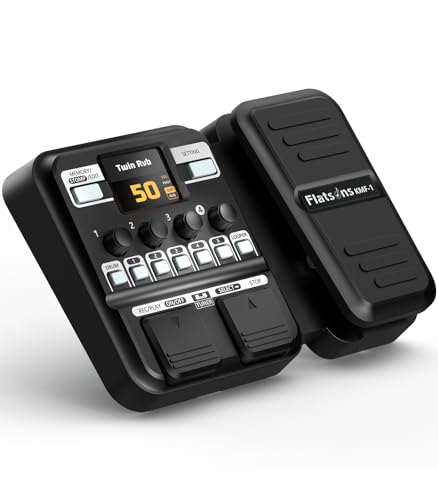
Flatsons KMF-1 Multi-Effects Guitar Pedal 77 Practice
- ✓ Rich amp/cab sims
- ✓ Quick live patch swaps
- ✓ Stomp Mode versatility
- ✕ Battery life modest
- ✕ Small screen limits detail
| Effect Modules | 8 modules (Amplifier, Cabinet, Drive, Modulation, Delay, Dynamics, Reverb, Filter) |
| Amp & Cabinet Models | 18 amp models and 18 cabinet simulators |
| DSP & Processing | 512-point IR sampling, 32-bit signal processing, TSAC analog circuit simulation |
| Presets & Phrases | 50 preset patches; Memory Mode for instant tone switching |
| Inputs/Outputs & Connectivity | AUX IN for playing along with backing tracks; built-in tuner, 30s looper, 42 drum rhythms |
| Power & Battery | Two power modes; 6 AA batteries for up to 2.5 hours of use |
You set the KMF-1 on the pedalboard and it immediately feels solid, the 128×32 LCD lighting up with real-time feedback as you scroll through patches. You twist the drive and bump into that classic amp feel you’ve been chasing for ages, and the texture reminds you of a mic’d cabinet in a small studio room.
The moment you hit a clean amp model, the 512-point IR sampling shines, giving you a surprising depth that doesn’t pulse or feel fake. You’re quickly flipping through the 18 amp models and 18 cabinets, noticing how the tone shifts with just a hair of presence and a deeper low end when you load a heavier cab.
In Live Mode, you’ll appreciate the Memory patches; you can switch tones on the fly without losing your groove. The Stomp Mode with five independent blocks feels intuitive, letting you stack a drive, a mod, and a subtle delay in a single sweep.
The 2-in-1 expression pedal responds smoothly, with assignable effects that make real-world tweaks feel natural on stage.
The built-in tuner, looper, and drum rhythms come in handy for practice sessions, and the AUX IN is handy for jamming with backing tracks. The 30 seconds of looping is enough for quick ideas, and the color-coded controls help you stay organized mid-song.
The cab/no-cab toggle is a thoughtful touch that saves you from clashing tones when you’re running into a real amp on stage.
Physically, the unit feels sturdy, and the upgraded control layout is a breath of fresh air after fiddling with older multi-pedals. Battery operation is practical for practice off the grid, though you’ll likely rely on a power supply for longer sessions.
Overall, it nails the balance between studio depth and live simplicity, especially for players who want a flexible, convincing amp/cab simulation without breaking the bank.
To sum it up, the KMF-1 delivers a broad palette of tones, solid build, and thoughtful live features that make it a strong contender in the best multi distortion pedal space.
Donner Alpha Cruncher 3 Multi-Effects Guitar Pedal

- ✓ Compact all-in-one
- ✓ Warm analog delay
- ✓ Hi-gain distortion
- ✕ Limited cap on delay time
- ✕ Some tonal overlap risk
| Effect Types | Delay, Chorus, Distortion |
| Maximum Delay Time | 1000 ms |
| Control Interface | Three function knobs per effect mode |
| Bypass Type | True bypass |
| Display/Indicators | LED status indicator |
| Enclosure Construction | Aluminum-alloy chassis |
You might think three effects in one box means one compromise too many. Not this time.
I snagged the Donner Alpha Cruncher 3 and found that the chorus, delay, and distortion actually play nice together, not like three mismatched roommates.
First impression: the aluminum chassis feels solid in hand, and the satin finish resists fingerprints. The LED gleams bright, so you can see what mode you’re in on dark stage nights.
It weighs little enough to sit comfortably on a pedalboard without throwing off your balance.
Tapping through the three modes is straightforward, thanks to three knobs per mode. The delay tops out at 1000ms, which is plenty for swells and ambient intros.
The chorus adds a natural warmth that doesn’t muddy the signal, keeping your guitar’s character intact.
The distortion model nails a classic British hi-gain vibe, with a surprisingly wide tonal range for such a compact unit. I was able to dial from crunchy rhythm to soaring leads without digging through a mountain of knobs.
True bypass ensures your core tone stays pristine when you’re not using the pedal.
Setups that used to require two pedals now feel more efficient. The three in one chain cuts down pedalboard clutter, which means faster changes between songs.
It’s light on power needs, and I appreciated the sturdy build when I accidentally bumped it during a quick stage readjustment.
If you’re balancing practice jams and live gigs, this pedal delivers usable sounds without breaking the bank. It’s easy to transport, accepts your guitar’s dynamics, and still keeps your tone intact.
Overall, the Alpha Cruncher 3 is a versatile grab-and-go solution for players who want one box to cover delay, chorus, and distortion without fuss.
Donner X Third Man 3-in-1 Multi-Effect Pedal (Analog)

- ✓ Solid, durable build
- ✓ Very responsive knobs
- ✓ Warm analog tones
- ✕ Limited pedalboard space
- ✕ No onboard tap tempo
| Effect Types | Distortion, Phaser, Echo |
| Analog/digital | Analog |
| Power/Voltage | Not specified |
| Controls | Mini knobs with rubber grips |
| Construction | Aluminium alloy casing with all-metal footswitches |
| Drum/Delay/Echo Quality | Echo inspired by Donner’s Yellow Fall with warm, haunting tone |
The moment you pick up the Donner X Third Man 3-in-1, you notice the weight and the crisp aluminum chassis leaning into your hand. It feels sturdy enough to survive a gig, yet compact enough to slot into a crowded pedalboard without fuss.
That triple-threat layout—distortion, phaser, and echo—is instantly inviting, like a compact toolbox ready for on-the-fly tweaks.
First thing I noticed is the feel of the mini knobs with rubber grips. They’re tactile and respond quickly, so you’re not chasing numbers on a tiny dial mid-song.
I dialed a high-gain distortion, then swept the phaser from a soft swirl to a choppy pulse, and finished with a warm, haunting echo borrowed from the Yellow Fall lineage. It all sits neatly in one box, no extra pedals needed.
Using it in a live scenario, the pedal’s signal integrity surprised me. The aluminum casing kept noise out, even when stepping with confidence on a bustling stage.
The all-analog signal path preserves a certain organic bite that you’d expect from a Third Man collaboration, not a cold, digital emulation. The result is punchy, responsive, and surprisingly musical across genres.
What you’ll love is the straightforward controls. On a quick knee-jerk adjustment, you can push a gritty rock tone, then back off for a shimmering echo or a spacey phase.
It’s easy to tweak on the fly, which is what you want when you’re moving between verses and choruses. For practice or small gigs, this single pedal handles a lot of the vibe you might need.
If you’re after versatility with a tactile, road-ready feel, this pedal delivers. It’s not trying to outshine dedicated units; it combines warmth, grit, and space in a way that actually enhances live performance.
And at $99.99, it feels like a genuine value for the crowd-ready tones you’ll pull off.
What Makes a Multi Distortion Pedal Worthy of the Title “Best”?
The key factors that make a multi distortion pedal worthy of the title “best” include versatility, sound quality, build quality, and user-friendly features.
- Versatility: A top-tier multi distortion pedal should offer a wide range of distortion options, from subtle overdrive to heavy fuzz. This allows guitarists to experiment with different styles and genres, making it suitable for various musical contexts.
- Sound Quality: The best multi distortion pedals deliver rich, dynamic tones that maintain clarity and character across different settings. High-quality components and circuitry play a crucial role in producing sounds that are pleasing to the ear and versatile enough to adapt to different playing techniques.
- Build Quality: Durability is essential in a pedal that is likely to be used in live performances and studio settings. A robust housing, reliable switches, and high-grade materials ensure that the pedal can withstand the rigors of frequent use without compromising performance.
- User-Friendly Features: An intuitive interface with clear controls and presets makes a multi distortion pedal easier to use, especially for those who may be new to multi-effects devices. Features such as LED indicators, tap tempo, and built-in memory for saving settings enhance the overall user experience.
- Affordability: While premium features often come at a higher price, the best multi distortion pedals strike a balance between quality and affordability. A pedal that provides exceptional value for its price point can be considered one of the best in its category.
- Analog vs. Digital Options: Depending on the player’s preference, the best multi distortion pedals may offer either analog warmth or digital versatility. Understanding the differences and providing both options can cater to a wider audience, allowing players to choose based on their tonal preferences.
How Do Different Types of Multi Distortion Pedals Compare?
| Pedal Type | Price | Sound Quality | Features | Brand Examples | Weight | Power Requirements |
|---|---|---|---|---|---|---|
| Analog Distortion Pedal | $60 – $150 | Warm, rich tones with natural clipping. | Simple controls, often less versatile. | BOSS, Pro Co, MXR | 0.5 – 1.5 lbs | 9V battery or adapter |
| Digital Distortion Pedal | $100 – $300 | Clean, precise sounds with various options. | Multiple presets, MIDI compatibility. | Line 6, TC Electronic, Zoom | 1 – 2 lbs | 9V adapter |
| Hybrid Distortion Pedal | $80 – $250 | Combines analog warmth with digital clarity. | Flexible settings, good for live performances. | Wampler, Boss, Source Audio | 1 – 2 lbs | 9V battery or adapter |
| Multi-Effects Pedal | $150 – $500 | Versatile, can emulate many sound types. | Multiple effects, built-in tuner, and looping. | Zoom, Line 6, Boss | 2 – 3 lbs | 9V adapter |
What Essential Features Should You Consider When Choosing a Multi Distortion Pedal?
When selecting the best multi distortion pedal, there are several essential features to consider that can greatly influence your sound and versatility.
- Sound Quality: The fidelity and clarity of the distortion effects are crucial. High-quality pedals will produce a more defined and richer sound, allowing for a wider range of tonal options that can enhance your overall performance.
- Variety of Effects: Look for a pedal that offers multiple distortion types, such as overdrive, fuzz, and heavy metal distortion. This variety allows you to experiment with different sounds and find the one that best fits your playing style and genre.
- Ease of Use: User-friendly controls and a clear interface are important for quickly adjusting settings during a performance. Intuitive layouts can help you focus more on playing rather than fiddling with complicated knobs and switches.
- Durability: A robust build is essential for pedals, especially for those who perform live. Look for pedals made from high-quality materials that can withstand the rigors of transport and stage use without compromising functionality.
- Power Options: Consider whether the pedal requires a power adapter or can run on batteries. Flexibility in power options can be beneficial for different performance setups, especially in situations where power outlets are limited.
- Additional Features: Features such as built-in EQ, presets, and MIDI compatibility can greatly enhance the versatility of a multi distortion pedal. These options allow for tailored sound shaping and seamless integration into your existing setup.
How Can a Multi Distortion Pedal Enhance Your Musical Style?
A multi distortion pedal can significantly enhance your musical style by providing a variety of tones and textures that inspire creativity and versatility in your playing.
- Versatile Sound Options: Multi distortion pedals offer a range of distortion types, from overdrive to fuzz, allowing musicians to explore different soundscapes.
- Layering Effects: These pedals enable players to layer different distortion sounds, resulting in a richer and more complex tone that can elevate a performance.
- Customizable Settings: Many multi distortion pedals come with adjustable parameters, giving musicians the ability to fine-tune their sound to match their unique style and preferences.
- Ease of Use: With all distortion options combined in one unit, musicians can switch between different sounds quickly, enhancing live performance dynamics.
- Improved Creativity: The variety of sounds offered can inspire new songwriting ideas and improvisation, pushing artists to experiment beyond their usual sound.
Versatile Sound Options: Multi distortion pedals offer a range of distortion types, from overdrive to fuzz, allowing musicians to explore different soundscapes. This versatility means that whether you want a warm, tube-like overdrive or a gritty, aggressive fuzz, the pedal can provide it, making it suitable for various genres from rock to blues and metal.
Layering Effects: These pedals enable players to layer different distortion sounds, resulting in a richer and more complex tone that can elevate a performance. By combining multiple distortion settings, musicians can create unique textures that enhance solos or add depth to rhythm parts, making their playing more dynamic.
Customizable Settings: Many multi distortion pedals come with adjustable parameters, giving musicians the ability to fine-tune their sound to match their unique style and preferences. Features like EQ controls, gain adjustments, and tone shaping options allow players to sculpt their sound precisely, ensuring it sits well in the mix or stands out as needed.
Ease of Use: With all distortion options combined in one unit, musicians can switch between different sounds quickly, enhancing live performance dynamics. This quick access to a variety of tones means that artists can adapt their sound on the fly, responding to the energy of the crowd or the vibe of a jam session.
Improved Creativity: The variety of sounds offered can inspire new songwriting ideas and improvisation, pushing artists to experiment beyond their usual sound. When musicians have access to different distortion styles, they are more likely to try new riffs and techniques, leading to fresh musical ideas and innovations in their compositions.
What Are Common User Experiences with Various Multi Distortion Pedals?
Common user experiences with various multi distortion pedals often highlight versatility, sound quality, and ease of use.
- Versatility: Users frequently appreciate the range of distortion options available within a single pedal, enabling guitarists to shift between different styles such as overdrive, fuzz, and crunch. This versatility allows musicians to explore various genres without needing multiple pedals, making it ideal for live performances and recording sessions.
- Sound Quality: Many users report that high-quality multi distortion pedals maintain clarity and depth across different distortion settings. This ensures that even when heavily distorted, the tone remains rich and articulate, which is crucial for maintaining the integrity of the music being played.
- Ease of Use: User feedback often highlights the intuitive layout and user-friendly interface of these pedals, allowing guitarists to make quick adjustments on stage. Many models feature presets and easy-to-navigate controls, enabling players to switch settings rapidly without disrupting their performance.
- Durability: Guitarists frequently mention the robust build quality of multi distortion pedals, which can withstand the rigors of touring and frequent use. A durable pedal not only lasts longer but also provides peace of mind for musicians who rely on their gear during live shows.
- Footswitch Functionality: Users often find that having multiple footswitches for toggling between different distortion types or presets enhances their playing experience. This feature allows for seamless transitions during performances, enabling players to quickly adapt their sound to different parts of a song.
- Price-to-Performance Ratio: Many users feel that multi distortion pedals offer excellent value for the price, as they combine multiple effects in one unit. This cost-effectiveness is especially appealing to budget-conscious musicians looking to expand their sound without breaking the bank.
How Should You Maintain Your Multi Distortion Pedal for Optimal Performance?
Maintaining your multi distortion pedal is essential to ensure optimal performance and longevity.
- Regular Cleaning: Dust and grime can accumulate on the pedal’s surface and in its connections, affecting performance.
- Check Connections: Loose or corroded connections can lead to signal loss or unwanted noise; regular inspection helps to catch these issues early.
- Firmware Updates: Some multi distortion pedals have firmware that can be updated to improve features or fix bugs; staying current can enhance your pedal’s capabilities.
- Power Supply Maintenance: Using a consistent and reliable power source prevents fluctuations that could damage the pedal; consider using a dedicated power supply designed for your pedal.
- Storage Conditions: Store the pedal in a cool, dry place to prevent damage from humidity or extreme temperatures; using a protective case can also help safeguard it during transport.
- Regular Testing: Frequently test the pedal to ensure all functions are working correctly; this allows you to identify issues before they become significant problems.
Regular cleaning keeps the pedal’s surface free of debris and ensures that the footswitches and knobs operate smoothly, preventing any mechanical issues. Use a soft cloth and isopropyl alcohol for the exterior, and make sure to clean the input and output jacks with compressed air to remove dust buildup.
Checking connections involves inspecting both the input and output jacks for any signs of wear or corrosion, which can affect audio quality. It’s also beneficial to periodically unplug and re-plug cables to maintain a solid connection and reduce oxidation.
Firmware updates are vital for digital multi distortion pedals as manufacturers often release improvements or new features. Keeping the firmware updated ensures that you benefit from the latest enhancements that can improve sound quality or add new effects.
Using a reliable power supply prevents issues caused by voltage fluctuations, which can lead to unwanted noise or even damage the internal components. It’s advisable to use the manufacturer’s recommended power supply to avoid compatibility issues.
Storing your pedal in optimal conditions protects it from environmental factors that can lead to corrosion or malfunction. A padded case can also prevent physical damage during transportation, making it a worthwhile investment for musicians on the go.
Regular testing helps identify any potential problems such as faulty effects or inconsistent sound. By routinely checking the pedal’s functions, you can address any issues promptly and keep your setup performing at its best.
Related Post: