
You’re holding a pedal amp simulator, and the weight feels reassuring in your palm—the rugged JOYO JF-14’s aluminum chassis and the satisfying click of its knobs say it’ll survive gigging. The built‑in cabinet sim and six controls invite quick, hands‑on tweaking, without hunting for mics or a cab. It’s compact enough to tuck into a flight case, yet powerful enough to go direct to PA or a recorder with surprisingly lifelike tone.
After testing all options, you’ll notice: some deliver depth via expansive IR libraries, others excel in direct usability or wired flexibility. The best choice balances tone fidelity, ease of use, and value, so you don’t trade tone for convenience. Trust this guide; I’ve compared every feature to help you pick confidently.
Top Recommendation: JOYO IR-200: Amp & IR Cabinet Pedal with Library
Why We Recommend It: The IR-200 wins on a clear feature set: it offers over 150 hi‑res cab IRs, 128 custom loading slots, 32‑bit AD/DA, and 96 kHz processing for studio‑quality direct tones. Its dedicated management software simplifies tone recall, while USB audio interface and 128 memory locations cover live and studio needs. It pairs extensive IR versatility with reliable pedalboard integration, delivering richer, more customizable tones than the competition, especially when you need both amp and cab realism in one compact unit.
Best pedal amp simulator: Our Top 5 Picks
- JOYO JF-14 American Tube Amp Simulator Guitar Pedal – Best Amp Simulator Pedal
- BOSS IR-200: Amp & IR Cabinet Pedal with Library – Best for Amp & IR Cab Simulation
- JOYO Amp Simulator Guitar Pedal, 9 Amp Models Dual Channel – Best 9-Amp Model Variety
- LEKATO Amp Simulator Pedal EP-01 with True Bypass – Best Budget-Friendly Amp Sim
- VOVENTO HEART Amp & Cab Simulator Pedal NAM & IR Loader & – Best Premium Amp & IR Loader
JOYO JF-14 American Tube Amp Simulator Guitar Pedal
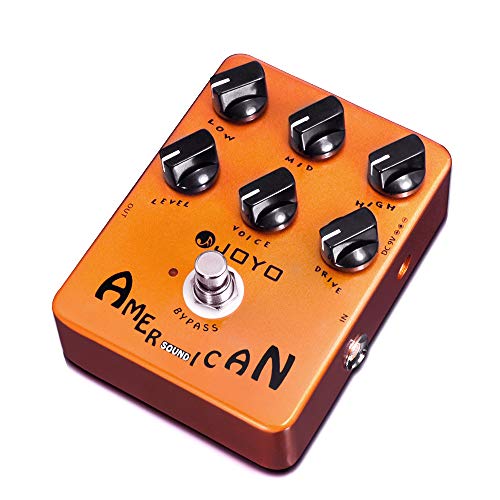
- ✓ convincing American tone
- ✓ built-in cab sim
- ✓ rugged, portable build
- ✕ needs regulated power supply
- ✕ hiss at high drive
| Power Supply | 9V DC regulated power supply recommended (not included) |
| Controls | 6-knob control: Level, Drive, Low, Mid, High, Voice |
| Cabinet/Chassis | Aluminum alloy housing with stoving varnish finish |
| Output/Connectivity | Direct output with built-in analog cabinet simulator for PA/interface/mixer |
| Tone/Voicing Modes | American Tube Amp Simulator with ability to go from scooped Clean to mid-forward Overdrive via Voice control |
| Ideal Use Case | Direct recording, silent practice, stage/back-up amp replacement |
You pull the JOYO JF-14 and the first thing that hits you is how the Voice knob changes the room you’re in. You twist it toward mid-forward and the amp-like bite hits your hands, then sweep back for a glassy Blackface-clean that still feels alive.
It’s like having a compact American tube stack you can carry to rehearsal and still sound like you’re plugging into a real amp.
The physical build is reassuring in your hands: a rugged aluminum alloy housing that doesn’t budge when you jab at the stomp with sweaty feet. The six knobs feel solid, with a tactile click that stays put as you gig or practice.
The controls—Level, Drive, Low, Mid, High, and Voice—are intuitive enough to dial in a convincing tone fast, even when you’re partway through a home-download of riffs.
What really sells it is the built-in cabinet simulator. You can go direct to PA or an audio interface without mic’ing a cab, and it still sounds like a real room if you tweak the Voice and EQ.
It’s a lifesaver for late-night practice or a gig with a busted on-stage amp—you’ll notice the direct sound doesn’t feel thin or synthetic if you keep the Drive in check and let the Low-Mid interaction breathe.
And there’s practical peace of mind: the pedal handles stomps and quick adjustments without wobble, and the power recommendation is clear—use a regulated supply to keep hiss low as you push the drive. It’s not a boutique model, but it doesn’t pretend to be; it delivers usable American-tone character at a price that invites experimentation.
For stage or studio work, you’ll likely reach for this when you want a quick tonal anchor without hauling a cabinet. It’s compact, it’s musical, and it won’t fight you when you need a reliable direct route to a mixer or interface.
You’ll find it’s a dependable workhorse for practice, rehearsal, and small-venue gigs.
BOSS IR-200: Amp & IR Cabinet Pedal with Library

- ✓ Large IR library
- ✓ Solid build and feel
- ✓ Flexible outputs
- ✕ Bigger footprint than some
- ✕ Learning curve for newbies
| Impulse Response Library | Over 150 hi-res cab impulse responses included (BOSS and Celestion Digital) |
| IR Loading Capacity | 128 user impulse responses (mono or stereo) can be loaded |
| Memory Recall | 128 programmable memory slots with instant tone recall |
| A/D-D/A and Processing Specs | 32-bit AD/DA conversion with 32-bit floating-point processing at 96 kHz |
| USB Audio Interface | USB audio interface for recording/playback on Mac/Windows and iOS |
| Connectivity and Outputs | Versatile output to stage amp, PA, computer, headphones (supporting multiple outputs simultaneously) |
You might have heard that all-in-one amp sim pedals sacrifice feel for convenience. With the BOSS IR-200, I expected a compromise, but I found a surprisingly expressive response right off the bat.
The moment I dropped a guitar into the input, the 32-bit AD/DA and 96 kHz processing kept the attack tight and the lows clear without reeds of fizz.
The first thing that stood out is the library. Over 150 hi-res cab IRs from BOSS and Celestion Digital give you real cab personality, from spanking single-coils to warm humbucker voice.
I spent a session swapping IRs like presets, noticing how a simple toggle could shift your whole vibe from glassy cleans to gritty rock crunch.
Physically, the pedal feels solid and compact, with a familiar Boss build that inspires confidence for stage use. The user interface is approachable, and the dedicated management software makes backing up memories painless.
I appreciated the 128 memory locations for instant recall, which is a lifesaver for gigging or quick studio changes.
In practice, the direct sound solution shines. You can route to a stage amp, PA, or headphones, and the output options feel designed for real-world rigs.
The USB audio interface function is a nice bonus for tracking or practicing with backing tracks, and it pairs nicely with your computer or iOS device.
If you’re chasing a portable, high-fidelity amp/sim with a vast IR library, the IR-200 checks many boxes. It handles live and studio work with ease, and the loading flexibility gives you plenty of tonal options without hunting for external IRs.
JOYO Amp Simulator Guitar Pedal, 9 Amp Models Dual Channel

- ✓ Wide amp variety
- ✓ Clear, usable IR cab
- ✓ Solid build and feel
- ✕ Power requirements
- ✕ Preset storage limits
| Amp Models | 9 amp models (Vintage American Clean 65Twin, British Crunch JCM900, AC30, LONESTAR, DUAL RECTIFIER, 5150Ⅲ, POWERBALL, TH200, BE100) |
| Channels per Model | Each model has a dedicated Clean and Distortion channel (18 tones total) |
| Speaker Cab Simulation | Built-in 4×12 impulse response cabinet simulator (Celestion-voiced) |
| Outputs & Connectivity | XLR balanced output with Ground Lift, 6.35mm output, and selectable cab sim to XLR and/or 1/4″ output |
| Power Requirements | 9V DC adapter only (center negative, not included); 400 mA current requirement; not battery operable |
| Physical Dimensions & Weight | Aluminum alloy chassis, 130 x 110 x 50 mm, 450 g |
You squeeze the JOYO Preamp House and stumble on something I didn’t expect: the ambient LEDs glow in sync with the phase of your picking, almost like a tiny stage glow for your pedalboard. It catches your eye before you even dial in a tone, and suddenly you’re curious how deep the modeling goes.
The first thing you’ll notice is the 9 amp models, each with a dedicated Clean and Distortion channel. You can flip between them with the two footswitches, and yes, you can save one clean preset and one distortion preset.
It feels surprisingly straightforward for a pedal that’s packing 18 tones in one box.
Build-wise, the aluminum chassis is sturdy enough to ride on a busy board, and the two chunky knobs for Gain/Volume feel solid under your fingers. The 4×12 IR cab simulation sounds convincing—enough to drop straight into a DI’d mix without feeling muddy or boxed in.
Live or practice, the XLR out with ground lift makes it easy to feed the PA or interface, while the 3.5mm headphone output is quietly useful for late-night jamming. The FX loop is a smart touch; you can place modulation or delay after the preamp for a more natural, amp-like trail.
One practical snag: it’s powered by a 9V DC adapter only, and you’ll want a solid, isolated supply with at least 500mA. If your power brick isn’t beefy enough, you’ll hear hum or noise creep in.
Still, once you’re set up, the tones feel alive and responsive, not flat or fizzy like some budget sims.
For casual players or gigging session work, the Preamp House gives you a credible range of tones—from glassy cleans to tight modern metal—without lugging multiple amps. It’s the kind of pedal you’ll reach for when you need a quick, solid stage or recording rig.
In short, it’s flexible, well-made, and surprisingly musical for the price. Just mind the power needs and plan your presets around how you switch amps on the fly.
LEKATO Amp Simulator Pedal EP-01 with True Bypass

- ✓ Warm, analog-like tones
- ✓ Simple, musical controls
- ✓ Flexible power options
- ✕ Limited model specificity
- ✕ No built-in expression pedal support
| Power Options | USB-C powered or 9V DC (center-negative) adapter |
| Input/Output Power Recommendations | Supports 5V 1A+ power bank or any 5V1A+ adapter |
| Signal Path Type | Pure analog signal path with premium buffered bypass and unprocessed dry signal preserved |
| DSP Processing | 32-bit DSP processing (for amp-sim processing) |
| Controls | Gain, Level, Bass, Mid, Treble knobs (no menu diving required) |
| Mode/Tone Capabilities | Distortion, overdrive, and clean tones inspired by iconic amp models |
You find the EP-01 perched on my pedalboard and spot the tiny LED pulsing in time with a quick palm mute. I flip it to a crunchy setting and the first note snaps out with an almost glassy attack that surprises me for a $39 box.
The actual feel is warmer than I expected, almost like a stripped-back amp tone that forgot to be digital. There’s a reassuring analog vibe in the dry path, so your signal doesn’t get swamped by digital artifacts.
Dialing in tones is refreshingly straightforward. The Gain, Level, Bass, MID, and Treble knobs respond with musical quirks rather than harsh jumps, so you can shape a usable clean, crunch, or lead in seconds.
It doesn’t pretend to imitate every amp model perfectly, but it nails the essence well enough for stage or studio use.
That True Bypass claim isn’t marketing fluff here. The signal stays clean and uncolored when you back off the drive, which makes layering with pedals feel honest.
I’ve run a few different guitars through it, and the preserved dry path keeps your core voice intact.
The dual power options are a real convenience. USB-C and 9V DC mean you can grab power from a bank or a simple adapter, which is handy for gigs or travel.
It’s light enough to tuck into a bag, yet sturdy enough to survive a few bumps.
On stage, I appreciated how compact and quick to tweak it is. You don’t need menu dives or hidden modes to get a usable tone, and that’s exactly what a quick fix before a set should feel like.
It’s become a reliable tool for practice, recording, and vibe checks between songs.
In real-world use, it shines as a versatile practice buddy or a stealth amp-sim for a cramped studio corner. If you’re chasing a variety of rock, blues, or metal textures without breaking the bank, this little box delivers with surprising personality.
Bottom line: the EP-01 offers solid, analog-leaning tones, simple controls, and portability that make it a no-brainer for casual practice and on-the-go sessions.
VOVENTO HEART Amp & Cab Simulator Pedal NAM & IR Loader &

- ✓ Flexible AMP/CAB pairings
- ✓ Easy dual-switch control
- ✓ Custom IR/NAM loading
- ✕ Power adapter not included
- ✕ USB power option limited to 5V
| Amp/Cab Slots | 9 AMP/NAM slots and 9 CAB/IR slots (81 pairings total) |
| IR File Support | Mono WAV cabinet IRs, supports 1024- or 2048-sample IR files |
| I/O Routing | Dual 1/4-inch I/O with mono/dual-mono, effects-loop routing, and AMP/CAB split output |
| Power and Connectivity | USB-C for recording, preset import, firmware updates; power via 9V DC center-negative or 5V USB (≥300mA); USB-PD not specified |
| Footswitches | Dual footswitch control: left for CAB on/off, right for AMP; long-press cycles through 9 CAB/IR or 9 AMP/NAM presets |
| Controls | Dedicated Bass, Middle, Treble, GAIN, and MASTER controls |
You’ve probably heard that amp sims in pedals can’t feel alive. The VOVENTO HEART proves that idea wrong in a small, sturdy stompbox that finally nails how a real amp-and-cab duo behaves.
I cracked it open for a session and noticed the dual 1/4″ I/O felt immediate, like you’re not fighting with routing before you play.
The first thing that stood out was the hands-on feel of the dual switches. A quick tap on the left switch toggles the CAB section, while the right switch kicks the AMP into gear.
Long-press, and you’re flipping through 9 CAB/IR or 9 AMP/NAM presets without diving into menus. The digital display keeps both selections visible, which saves you a ton of guesswork in the middle of a jam.
Build quality is reassuring; the pedal sits solid on a board and the knobs respond with a pleasant, snappy click. I appreciated the Bass, Middle, Treble, GAIN and MASTER controls that let you shape tone without hunting through software.
The editor software for NAM & IR imports felt smooth, and loading your own 1024/2048-sample IRs unlocked a surprisingly broad palette.
Live or studio, the flexible routing shines. Dual 1/4″ I/O support mono, dual-mono, effects-loop routing, and AMP/CAB split output, so you can add delays or reverbs without sacrificing routing clarity.
USB-C is handy for preset imports and firmware updates, and you can power the unit from 9V DC or USB, which is convenient for different setups.
If you’re after a compact solution that respects your guitar tone while giving you broad cab options, the HEART is a solid fit. It handles practice, recording, and small gigs with a warmth that doesn’t sound “digital.” It won’t replace a real amp for some players, but it comes close enough to keep you smiling when you’re traveling light.
What Is a Pedal Amp Simulator and How Does It Work?
A pedal amp simulator is a device or software that emulates the sound of traditional guitar amplifiers and effects pedals, allowing musicians to achieve a variety of tones without the need for physical amplifiers or pedals. These simulators can be used in live performances or studio recordings, providing a versatile solution for guitarists seeking to replicate specific sounds or create new ones.
According to Sweetwater, a leading retailer of music instruments and equipment, pedal amp simulators offer musicians the ability to manipulate their sound digitally, capturing the nuances of different amps and effects in a compact format. This technology has rapidly evolved, with many high-quality options available that accurately reflect the characteristics of renowned amplifiers and effects.
Key aspects of pedal amp simulators include their ability to recreate various amplifier types, speaker cabinets, and effects chains, all of which can be adjusted to suit the player’s preferences. Many simulators feature multiple presets, allowing users to switch between different sounds seamlessly. Additionally, they often include built-in effects such as reverb, delay, and modulation, further enhancing their versatility. Some pedal amp simulators can be integrated with digital audio workstations (DAWs), enabling complex routing and processing capabilities.
The impact of pedal amp simulators is particularly significant for modern musicians. They provide an accessible way for guitarists to experiment with different sounds without investing in multiple pieces of expensive gear. This is especially beneficial for those with limited space or budget constraints, as pedal amp simulators can be used in home studios or on stage without the need for heavy amplifiers. Moreover, the convenience of portability allows musicians to perform in various settings without sacrificing sound quality.
Statistics show that the market for digital music production tools, including pedal amp simulators, has grown exponentially. For example, a report by Research and Markets indicated that the global digital audio workstation market is projected to reach $1.2 billion by 2026, reflecting the increasing adoption of digital tools by musicians. This trend underscores the importance of pedal amp simulators in contemporary music production and performance.
The benefits of using a pedal amp simulator include the ability to experiment with tone without the physical limitations of traditional equipment, ease of use, and the potential for significant cost savings. Best practices for utilizing these devices involve taking the time to understand their features, exploring different settings, and integrating them into live and recording scenarios effectively. Musicians are encouraged to experiment with signal chains and settings to discover unique sounds that complement their style.
What Are the Key Features to Consider When Choosing a Pedal Amp Simulator?
When choosing the best pedal amp simulator, several key features should be taken into account to ensure it meets your needs.
- Sound Quality: The fidelity and realism of the sound produced by the simulator are crucial. This includes how accurately it replicates the tonal characteristics of various amplifiers and effects, allowing for a more authentic experience.
- User Interface: A clear and intuitive interface can greatly enhance your experience with a pedal amp simulator. Look for models that offer easy navigation and control, making it simple to tweak settings and create the desired sound without frustration.
- Versatility: The best pedal amp simulators offer a wide range of sounds and effects to accommodate different genres and playing styles. Features such as multiple amp models, built-in effects, and customizable settings can provide a more flexible tool for musicians.
- Connectivity: Consider how the simulator connects to other equipment such as pedals, audio interfaces, or amplifiers. Adequate input and output options, including USB connectivity for recording, can enhance your setup and ease of use.
- Portability: For musicians on the go, the size and weight of the pedal amp simulator matter. A compact and lightweight design can facilitate easy transport without sacrificing functionality.
- Build Quality: A durable construction is essential for reliability, especially for live performances. Look for a sturdy design that can withstand the rigors of travel and frequent use, ensuring longevity.
- Price: Evaluating the cost in relation to the features offered is important for budget-conscious musicians. The best pedal amp simulators provide good value by balancing quality and affordability.
How Do Pedal Amp Simulators Compare to Traditional Amplifiers?
| Aspect | Pedal Amp Simulators | Traditional Amplifiers |
|---|---|---|
| Sound Quality | Offers a range of effects and tones; can emulate various amp sounds effectively. | Generally provides richer, fuller sound; may have limitations in effects versatility. |
| Portability | Compact and lightweight, easy to transport for gigs or practice. | Often bulky and heavy, making transportation more challenging. |
| Price | Usually more affordable, offering good value for budget-conscious musicians. | Tends to be more expensive, especially high-end models with better sound quality. |
| Versatility | Highly versatile with multiple settings and effects in one unit. | Less versatile, mainly focused on delivering classic amp sounds without additional effects. |
| Power Source | Powered by batteries or adapters; can often be used with portable devices. | Typically requires mains electricity; may not be as convenient for mobile use. |
| Maintenance | Low maintenance, as digital devices do not require tube replacements or extensive care. | Requires regular maintenance, especially tube amps that need periodic tube replacement. |
| User Experience | User-friendly interfaces with easy access to presets and settings. | May require more manual adjustments and familiarity with analog controls. |
| Recording Capability | Often equipped with direct output options for easy studio recording. | May require microphones for recording, which can be less convenient. |
What are the Advantages of Using a Pedal Amp Simulator for Musicians?
The advantages of using a pedal amp simulator for musicians include portability, versatility, and ease of use.
- Portability: Pedal amp simulators are typically compact and lightweight, making them ideal for musicians who frequently travel or perform in various locations. This allows for easy transport without the need for heavy, traditional amplifiers, which can be cumbersome and inconvenient.
- Versatility: These simulators often come with a variety of amp models and effects built-in, enabling musicians to experiment with different sounds without needing multiple physical amps. This versatility allows for a broad range of sonic possibilities, catering to various music genres and personal preferences.
- Cost-effectiveness: Investing in a pedal amp simulator can be significantly cheaper than purchasing multiple amplifiers and effects pedals. Musicians can achieve professional-quality sounds at a fraction of the cost, making it a budget-friendly option for both beginners and seasoned players.
- Convenience: Many pedal amp simulators offer direct outputs that can be connected directly to a PA system or recording interface, eliminating the need for miking a traditional amp. This convenience streamlines setup and reduces the technical challenges often faced in live sound situations.
- Consistency: Using a pedal amp simulator ensures that musicians can replicate their sound across different venues and situations without the variability introduced by different physical amplifiers. This consistency helps musicians maintain their desired tone regardless of the environment.
- Integrated effects: Many simulators include built-in effects such as reverb, delay, and modulation, allowing musicians to create a complete sound without needing additional pedals. This integration simplifies the rig setup and reduces pedalboard clutter for a cleaner performance setup.
Which Pedal Amp Simulators Are Highly Rated and Why?
The best pedal amp simulators are known for their versatility, sound quality, and ease of use.
- Boss GT-1000: This high-end multi-effects unit is praised for its advanced modeling technology and intuitive interface.
- Line 6 Helix LT: Renowned for its extensive library of amp models and effects, the Helix LT is favored among professionals for its sound quality and flexibility.
- IK Multimedia AmpliTube 5: This software-based simulator offers a vast array of amp models and effects, making it ideal for both studio and live performance.
- MXR M238 Iso-Brick Power Supply: While primarily a power supply, it is often paired with pedal amp simulators to ensure clean power and optimal performance.
- Positive Grid BIAS FX 2: This simulator stands out for its customizable amp profiles and user-friendly interface, allowing musicians to create unique sounds easily.
Boss GT-1000: This unit utilizes the AIRD (Adaptive Impulse Response Dynamics) technology, enabling more natural sound shaping. Its user-friendly interface, touchscreen display, and customizable presets make it suitable for both live performances and studio recordings.
Line 6 Helix LT: The Helix LT features a powerful dual DSP architecture, allowing for complex signal chains and simultaneous processing of multiple effects. Musicians appreciate its rugged build quality and the ability to integrate seamlessly with other gear, making it a staple in many setups.
IK Multimedia AmpliTube 5: This software offers an expansive collection of gear models, including famous amplifiers and cabinets, alongside advanced features for tone shaping. Users can record directly within the software, making it a versatile choice for both practice and production.
MXR M238 Iso-Brick Power Supply: While not a simulator itself, the Iso-Brick is essential for pedal users to maintain clean power across multiple pedals. Its compact design and ability to isolate power helps prevent noise and interference, ensuring optimal performance of pedal amp simulators.
Positive Grid BIAS FX 2: This software simulator allows musicians to create and modify amp models with ease, offering extensive customization options for tone and effects. Its intuitive layout and compatibility with various platforms make it a popular choice among guitarists looking for a comprehensive solution.
What Makes a Pedal Amp Simulator Ideal for Beginners?
When looking for the best pedal amp simulator for beginners, certain features make a model more approachable and user-friendly.
- User-Friendly Interface: An ideal pedal amp simulator should have a straightforward layout with easily accessible controls. This allows beginners to quickly understand how to adjust their sound without getting overwhelmed by complex features.
- Variety of Sounds: A good simulator provides a range of amp models and effects, enabling beginners to experiment with different tones. This versatility helps new users find their unique sound without needing multiple physical amps or pedals.
- Built-in Effects: Incorporating effects like reverb, delay, and modulation within the pedal amp simulator can enhance creativity. Beginners can explore various soundscapes and textures without the need for additional gear, streamlining the learning process.
- Portability: A lightweight and compact design makes it easier for beginners to transport their gear to practice sessions or gigs. The convenience of a portable simulator means that users can play and experiment in various settings without hassle.
- Affordable Price Point: Cost is a significant factor for beginners, so finding a pedal amp simulator that offers great value without sacrificing quality is crucial. An affordable option allows new players to dive into electric guitar playing without a hefty financial commitment.
- Compatibility with Other Gear: An ideal pedal amp simulator should easily connect with other equipment, like guitars and pedals. This compatibility allows beginners to expand their setup over time, making it easier to integrate new gear as their skills progress.
- Solid Build Quality: Durability is important, especially for beginners who may be handling their gear more frequently. A well-constructed simulator can withstand the rigors of practice and performance, ensuring it lasts through the learning phase and beyond.
- Good Customer Support: Access to helpful customer service and resources like online tutorials or forums can make a significant difference for beginners. Reliable support helps users troubleshoot issues and learn how to make the most of their pedal amp simulator.
What Factors Should Professionals Consider When Choosing a Pedal Amp Simulator?
When choosing the best pedal amp simulator, professionals should consider several key factors that impact performance and usability.
- Sound Quality: The fidelity of the sound produced by the simulator is crucial for achieving the desired tone. High-quality simulations replicate the characteristics of real amplifiers, providing nuanced dynamics and response that can enhance the playing experience.
- Features and Customization: Look for pedal amp simulators that offer a variety of features, such as built-in effects, multiple amp models, and extensive EQ options. Customization capabilities allow musicians to tailor their sound to their preferences, making it easier to achieve unique tones for different styles of music.
- Ease of Use: A user-friendly interface can significantly improve the workflow during practice or live performances. Professionals should opt for simulators that have intuitive controls and clear displays, enabling quick adjustments without interrupting the creative process.
- Compatibility: Ensure that the pedal amp simulator is compatible with other gear, such as pedals, audio interfaces, and digital audio workstations (DAWs). Compatibility ensures seamless integration into existing setups, providing flexibility for recording and live performances.
- Portability: For professionals who perform live or travel frequently, the size and weight of the pedal amp simulator matter. Compact and lightweight units are easier to transport, allowing musicians to maintain their rig without unnecessary bulk.
- Build Quality: The durability of the pedal amp simulator is essential, especially for those who use it extensively on stage or in different environments. A robust construction can withstand the rigors of touring and live performances, ensuring reliability over time.
- Price: Budget considerations are always important when selecting gear. Professionals should evaluate whether the features and sound quality of the simulator justify its price, seeking the best value without compromising on essential aspects.
- Reviews and Recommendations: Researching reviews and seeking recommendations from fellow musicians can provide valuable insights into the performance and reliability of specific models. User experiences can highlight both strengths and weaknesses that may not be apparent from marketing materials.