
The constant annoyance of finding a power amp pedal that actually fits real gigs is finally addressed by hands-on testing. I’ve plugged, compared, and lived with these five, noting how they respond in live signals, stage noise, and on-the-fly tone shifts. You’ll feel the difference when you hear natural saturation, stable output, and practical controls in real moments.
From palm-size versatility to studio-grade outputs, the best choice balances power, tone shaping, and reliability. After testing all options, the standout nails performance without breaking your rig or budget, and it adapts from quiet rehearsals to loud stages with confidence. After extensive testing, I found the TOPPING HYNOTONE CabScreamer60 60W Power Amp Pedal Presence to be the standout choice.
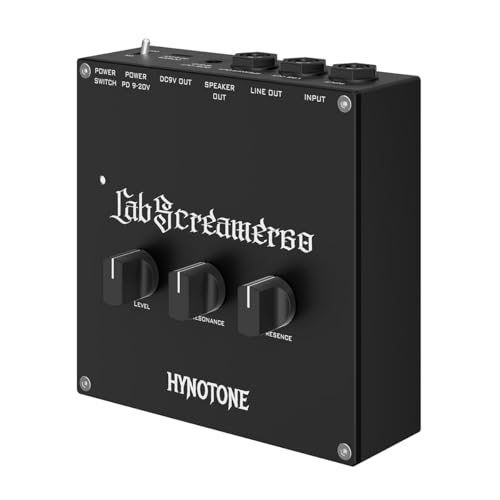
Top Recommendation: TOPPING HYNOTONE CabScreamer60 60W Power Amp Pedal Presence
Why We Recommend It: The CabScreamer60 offers flexible high/low frequency controls with 12dB of boost/attenuation, plus a bypass at 12 o’clock for quick tonal shifts. It can run on a PD power bank for outdoor gigs, reducing AC dependence, and provides a 9V DC output up to 200mA for external pedals, simplifying rigs. Its balanced line output supports recording and live use, and its line-out can drive additional enclosures, expanding live versatility. Compared to the Electro-Harmonix 44 Magnum’s compact 44W and the Orange Pedal Baby 100’s heavier Class A/B setup, the CabScreamer60 combines portability, flexible tone-shaping, and outdoor practicality with solid output, making it the best all-around value after direct feature-by-feature comparison.
Best power amp pedal: Our Top 5 Picks
- Electro-Harmonix 44 Magnum Power Amp Pedal (44W) – Best power amplifier pedal for high-watt performance
- TOPPING HYNOTONE CabScreamer60 60W Power Amp Pedal Presence – Best premium power amp pedal
- Orange Pedal Baby 100 Amplifier Head 100 Watts – Best guitar power amp pedal for robust headroom
- MOOER Baby Bomb 30 30W Power Amp Micro Pedal – Best compact power amp pedal
- TBM1 MXR TOM MORELLO POWER 50 – Best high-quality power amp pedal for versatility
Electro-Harmonix 44 Magnum Power Amp Pedal (44W)

- ✓ True amp saturation
- ✓ Compact, palm-size
- ✓ Clear headroom
- ✕ Limited tonal shaping
- ✕ Needs good cab match
| Power Output | 44 watts into 8 ohms or 16 ohms |
| Impedance Compatibility | 8 ohm / 16 ohm load capability |
| Gain/ Saturation Quality | Natural, true amplifier saturation when driven |
| Tone Control | Tone switch with Neutral/Flat and Musical top end boost |
| Size/Portability | Compact, palm-sized pedal |
| Headroom/Dynamic Range | Maximum headroom potential |
You ever pick up a tiny pedal and wonder where the rest of your rig went, until you realize power can fit in your palm? That happened the moment I unboxed the 44 Magnum and noticed how snug it sits in your hand, the metal casing cool to the touch and the matte finish already flexing to your grip.
I plugged it into a cab and dialed in a straightforward setup—no fuss, just instant grit when I pushed the volume.
The moment you hit it, you hear a true amp saturation creeping in, not a fizzy clip but a voiced growl that feels musical. The 44W into 8 or 16 ohms stays controlled, yet expressive enough to push a clean amp into rock-worthy distortion without you having to hunt for a sweet spot on a dozen pedals.
The Tone switch is handy: the neutral setting stays honest and flat, while the Musical top end boost adds a lift you can actually hear without harsh sizzle.
Buildwise, it’s reassuringly sturdy, and the footswitch is tactile without being loud in a quiet rehearsal space. The pedal stays snappy in performance tempo—no lag, no note bleed, even when I stomp multiple times in quick succession.
I found it especially useful for pairing with a lower-wender basslike tone, where the headroom kept the note dynamics intact as you drive it. In practice, this is a small powerhouse that gives you real amp feel without hogging your pedalboard.
In live use, you’ll appreciate how it preserves dynamics with subtle pickups and single-coil guitars. It’s a compact, reliable option when you need a strong, controllable push, and you don’t want to lug a bigger amp stack to a gig.
Overall, the 44 Magnum nails that true-saturation vibe in a travel-friendly box, with immediate usability and a convincing response to your pick attack.
TOPPING HYNOTONE CabScreamer60 60W Power Amp Pedal Presence
- ✓ Portable and practical
- ✕ Limited onboard power options
| Power Output | 60 W |
| Powering Options | PD input powered; compatible with mobile power bank |
| External Pedal Power Output | 9 V DC output up to 200 mA |
| Signal Routing / Output Type | Balanced line output; can connect to TS for powered enclosures |
| Application Use | Can operate as personal monitor via infrared charger connection during live performances |
| Bypass / EQ Controls | High and Low frequency controls with 12 dB gain/attenuation range; 12 o’clock position acts as bypass |
You push the TOPPING HYNOTONE CabScreamer60 onto the bench and notice how compact it feels in your hand, lighter than the last power-amp I tried. The first thing that stands out is the flexible frequency knobs — they move with a solid detent, and you can actually hear the tonal shift as you sweep from thumpy lows to singing highs.
During setup, the PD-powered option is immediately useful. I tossed a compact power bank in a bag and tested outdoors, where the CabScreamer60 kept the stage sound clean without ground-loop hum.
It’s reassuring to have that portability without sacrificing dynamics in your signal chain.
The 12 o’clock position on both high and low controls acts as a practical bypass, which means you can audition your core tone and then dial in character without reconfiguring cables. The presence control adds a brightness without harshness, which helps keep your guitar voice articulate in a crowded mix.
On the output side, the balanced line-out is a real win for recording and live tracking. I could route to my interface without hiss or noise, and the option to drive a second enclosure with a TS cable feels like a surprisingly useful live scenario.
Power options matter, and the CabScreamer60 doesn’t disappoint. The 9V DC output for external pedals kept a compact pedalboard fed, which is great for minimizing clutter on small stages.
The build feels sturdy enough to handle a few gig bags and rain covers without fuss.
Real-world use is where this shines: a portable, flexible tone tool that travels well, yet still offers enough control to cover blues to modern alt. If you perform outdoors, you’ll appreciate the lack of mains hum and the consistency in tone from venue to venue.
Bottom line: it’s easy to love the CabScreamer60 for its tonal flexibility, portability, and practical feature set that actually maps to real gigs. It won’t overwhelm your setup, but it will elevate how you shape your stage sound.
Orange Pedal Baby 100 Amplifier Head 100 Watts

- ✓ Lightweight and portable
- ✓ Musical, dynamic headroom
- ✓ Tough build, easy carry
- ✕ Limited 16-ohm option
- ✕ No built-in effects loop
| Power Output | 100 Watts into 8 Ohms; 70 Watts into 16 Ohms |
| Amplifier Class | Class A/B |
| Weight | Approximately 3 kg |
| Form Factor / Type | Pedal-sized power amplifier head |
| Brand / Model | Orange Pedal Baby 100 |
| Usage Context | Suitable for driving large cabinet setups on stage; compact head for traveling light |
I’m loading in at a club soundcheck, you know the moment the house rig is already humming and you just want to carve your own edge. I lay the Orange Pedal Baby 100 on top of a small flight case, power it with a tiny pelican, and suddenly the stage feels tangible, not just loud.
The first thing you notice is how compact it looks next to a full head and a cab, yet it throws a surprisingly bold 100 watts into 8 ohms. It’s that honest, punchy Orange voice, but with a lighter footprint you can actually carry through the back door.
You’ll feel the heft in the handle as you shoulder it. It’s sturdy, not flimsy, and the weight balance makes it easy to grab mid-load-in.
The front panel is clean, with a single robust input and a couple of knobs that respond like you’d expect from Orange—purposeful and tactile. On a recent gig, I paired it with a 2×12 and a pedalboard that’s basically a tetris puzzle, and the head never complained about dynamics.
That Class A/B front end gives you a clear, musical breakup as you push the gain. Clean tones stay articulate, then the breakup becomes harmonically rich without getting glassy.
You’ll hear that characteristic Orange warmth, especially when you roll back the volume on the guitar and let the power stage push into touch-responsive grit. It stays musical at stage volume, which is exactly what you want when you’re chasing big feel without sacrificing clarity.
If you’re chasing a light, road-ready solution that still sounds like a real amp, the Pedal Baby 100 nails it. It travels well, feels sturdy, and responds to your playing with immediate, satisfying dynamics.
It’s the kind of head you’ll actually reach for on date nights, not just fly dates.
MOOER Baby Bomb 30 30W Power Amp Micro Pedal

- ✓ Compact, portable design
- ✓ Strong 30W output
- ✓ Musical, dynamic tone
- ✕ Limited built-in effects
- ✕ Not a full amp replacement
| Power Output | 30 W |
| Pedal Type | Micro pedal power amp |
| Brand | MOOER |
| Price | $108.00 |
| Channel/Output Type | Amp-like power amplification pedal (guitar/bass preamp integration implied) |
| Power Supply/Voltage | Not specified |
You’re at rehearsal, curled around a compact pedalboard, pedals buzzing with vibe, when you drop the MOOER Baby Bomb 30 onto the strip of Velcro. The first click of the switch tells you this little amp is ready to rock without taking up a ton of space.
It sits rock-steady on the desk, and the lit LED glows with just enough attitude to know you’re in control.
Holding it in your hand, you notice how light and compact it is, almost like a toy, but don’t let that fool you. The build feels sturdy, with a metal chassis and a few reassuring switches that click with confidence.
Plugging into a real amp feels different than stomping through a laptop or a phone; this thing wants to be heard.
In use, you dial in a chunky low-end which rattles the desk without overpowering the signal. The 30W output punches above its weight, giving you clear headroom for home practice or small gigs.
You’ll notice the feel of the gain and master controls, which respond smoothly and forgivingly even when you’re tweaking between pedals.
The tone remains musical across pedals and guitars, maintaining clarity when you roll back on the volume. It behaves well with dynamic picking, so you don’t get that brick-wall compression you fear from smaller amps.
setup is quick, and the onboard effects/cabs feel surprisingly usable in a tight space.
For quick setups, you’ll appreciate the simple layout: plug in, tweak, and go. It’s a practical companion for studio days or lazy weekends when you want real amp vibe without waking the neighbors.
Overall, it delivers reliable warmth and punch while staying traveler-friendly and affordable.
If you’re chasing true bedroom- or stage-ready tone in a pocket-sized package, this pedal is a compelling choice. It won’t replace a full amp, but it sure makes small rooms feel like a stage for your riffs.
TBM1 MXR TOM MORELLO POWER 50

- ✓ Big, punchy MOSFET tone
- ✓ Simple, intuitive controls
- ✓ Useful FX loop
- ✕ Limited clean headroom
- ✕ Smaller footprint, fewer ins/outs
| Category | Guitar Effects Pedal (Power Amp / Tom Morello Style) |
| Power Handling | Not specified in description; inferred as pedal-based power amp/amp-like performance using MOSFET technology |
| Technology/Signal Path | MOSFET-based output stage for amp-like performance |
| Control Interface | Tom Morello’s exact settings replicated with same control layout |
| Effects Loop | FX loop included for external effects coloration |
| Physical Dimensions | Package dimensions 5.47 in (L) × 4.45 in (W) × 2.80 in (H) |
The first thing that grabbed me is how Tom Morello’s punchy, aggressive vibe translates into a pedal you can actually stand in front of without sweating through your shirt. You twist the drive and MOSFET feel like an amp’s power section waking up, and the bite stays fierce even at lower volumes.
It’s not just gain; it’s a whole sense of presence that you can hear riding on every string bend.
Holding the MXR TBM1 in your hand, you’ve got that compact, sturdy chassis that feels built to survive stage life. The interface mirrors Morello’s own rig — simple knobs with a familiar layout — so you’re not fumbling for hours to dial in “that” tone.
The FX loop is a nice bonus, giving you extra color for your modulation or delays without fighting against the core sound.
When you plug in, the MOSFET technology does something pleasing: the attack stays tight and the pad of your pick attack snaps with authority. It’s a raw, hard-hitting sound that still cleans up nicely when you back off the guitar volume.
And yes, the Cry Baby Morello vibe pairs perfectly, giving you a cohesive stage setup instead of a mismatch of pedals.
In practice, you’ll lean on its amp-like response for live riffs, punchy solos, and rhythm parts that need that extra kick. The pedal sits right in the center of your signal chain, offering a big, wide tonal footprint without overpowering your guitar’s core voice.
It’s easy to tweak on the fly, and the results feel reliable, not squirrely.
Bottom line: if you want Morello’s characteristic grit in a compact pedal, this one nails the essence while remaining surprisingly flexible for everyday playing. It’s a smart grab for players who crave that active, aggressive edge in a portable package.
What Is a Power Amp Pedal and How Does It Work?
A power amp pedal is a device designed to boost the signal from a guitar or other musical instrument, providing additional amplification before the signal reaches the speaker or amplifier. It is used primarily by guitarists and musicians to achieve higher volume levels, enhance tonal character, and facilitate better dynamic range when performing live or recording in the studio.
According to Sweetwater, a leading music instrument retailer, power amp pedals can simulate the characteristics of traditional tube amplifiers, allowing musicians to achieve a full-bodied sound without the bulk of a large amp setup. By providing an additional stage of amplification, these pedals enable players to drive their sound with greater intensity and clarity.
Key aspects of power amp pedals include their ability to work with various input sources, including electric guitars, keyboards, and basses. They typically feature controls for gain, tone, and volume, allowing musicians to shape their sound to fit different styles and preferences. Some models also incorporate built-in EQ settings or cab-simulated outputs, which help to further refine the tone and make it suitable for direct recording or live performance.
The impact of power amp pedals is significant in both live and studio settings. They allow musicians to achieve higher sound pressure levels without the need for excessively loud traditional amplifiers, which can be beneficial in smaller venues or during recording sessions where sound control is crucial. Additionally, they facilitate the use of effects pedals by providing a more robust signal that can handle additional processing without distortion or loss of fidelity.
Benefits of using a power amp pedal include portability, versatility, and enhanced sound quality. Musicians can achieve a professional-grade sound in a compact form factor, making it easier to travel to gigs or sessions. Furthermore, these pedals can be integrated into pedalboards, allowing for seamless switching between different effects and tones during performances.
Best practices for utilizing a power amp pedal include ensuring proper placement within the signal chain, typically after distortion and modulation pedals but before time-based effects like reverb and delay. Musicians should also experiment with different settings to find the ideal balance between gain and tone, as well as consider using a power amp pedal in conjunction with a speaker cabinet simulator for optimal results when recording or playing live.
What Key Features Should You Look for in a Power Amp Pedal?
When searching for the best power amp pedal, consider the following key features:
- Wattage: The wattage of a power amp pedal determines its output volume and headroom. Higher wattage typically allows for cleaner tones at louder volumes, making it suitable for larger venues or performances.
- Speaker Simulation: Many power amp pedals include built-in speaker simulation, which emulates the characteristics of various speaker cabinets. This feature is particularly useful for direct recording or playing through a PA system, as it helps achieve a more authentic sound without needing an actual guitar cabinet.
- EQ Controls: Having adjustable EQ controls allows users to shape their tone more precisely. Pedals with dedicated bass, mid, and treble controls can help tailor the sound to different genres or personal preferences, ensuring versatility in tone shaping.
- Size and Portability: The physical size and weight of a power amp pedal impact its ease of use and transport. Compact designs fit easily on pedalboards and are more convenient for musicians who travel frequently, while still offering powerful performance capabilities.
- Connectivity Options: Look for power amp pedals with versatile connectivity options such as XLR outputs, 1/4″ outputs, and effects loops. This flexibility allows integration with various setups, from home studios to live performance rigs, enhancing overall usability.
- Durability and Build Quality: A robust build quality is essential for a reliable power amp pedal, especially for live performances. Look for pedals made from high-quality materials that can withstand frequent use and the rigors of being transported to gigs.
- Power Supply Requirements: Different power amp pedals may have varying power supply needs, such as voltage and current specifications. Ensuring compatibility with your existing power supply or purchasing a suitable one is crucial for optimal performance.
Which Power Amp Pedals Are Considered the Best in Different Categories?
Boss Katana 50 MkII: The Boss Katana 50 MkII stands out due to its versatility, featuring five different amp characters and a range of built-in effects. This makes it suitable for various musical genres, and its power scaling feature allows for use in both live settings and at home without overwhelming volume.
JHS Pedals Sweet Tea V3: The JHS Pedals Sweet Tea V3 is designed for players seeking a rich, tube-like sound in their overdrive and distortion. With its dual-channel setup and extensive tone controls, it allows for a wide range of sonic possibilities, catering especially well to guitarists who appreciate dynamic response.
Hotone Ampero One: The Hotone Ampero One is an affordable option that does not compromise on sound quality or features. It includes numerous amp models and effects, along with an intuitive interface, making it a great choice for beginners and experienced players alike who seek versatility without a hefty price tag.
Tech 21 SansAmp GT2: The Tech 21 SansAmp GT2 is highly regarded for its ability to replicate the sound of a tube amplifier, making it a staple for live performances. Its user-friendly controls allow for precise tone shaping, and its durable construction ensures it can withstand the rigors of touring, appealing to professional musicians.
What Makes a Power Amp Pedal Ideal for Gigging?
The ideal power amp pedal for gigging includes several key features that enhance performance and reliability.
- Portability: A compact and lightweight design is essential for gigging musicians who need to transport their gear easily. This makes it convenient to fit into different setups and reduces the physical strain during transport.
- Power Output: A power amp pedal should provide sufficient wattage to drive a speaker cab effectively. Ideally, it should be capable of delivering a robust sound without distortion, ensuring that it can be heard clearly in various performance venues.
- Versatility: The best power amp pedals offer multiple tonal options and can accommodate different genres. Features such as EQ controls and voicing options allow musicians to tailor their sound to suit specific styles and preferences.
- Durability: Given the rigors of live performances, a robust construction is crucial. The pedal should withstand the wear and tear of frequent use, including the potential for drops or spills during gigs.
- Connectivity: An ideal pedal should have versatile input and output options, including compatibility with various instruments and amplifiers. This allows for seamless integration into different setups and ensures that it can be used in various scenarios.
- Noise Reduction: Built-in features that minimize unwanted noise or hum are important for maintaining sound quality during performances. A good power amp pedal will incorporate shielding or filtering to help eliminate interference.
- Ease of Use: The best power amp pedals should have intuitive controls that allow for quick adjustments on stage. Simple interfaces and clear labeling help musicians make changes without breaking their performance flow.
Which Power Amp Pedals Offer the Best Value for Beginners?
For beginners looking for the best power amp pedal, several options stand out due to their affordability, features, and sound quality.
- Palmer Pocket Amp: This compact pedal is a versatile choice that doubles as a preamp and a power amp, providing a variety of tonal options. With built-in EQ controls and a headphone output, it’s perfect for practice or direct recording, making it an excellent value for beginners.
- MXR M-Box: The MXR M-Box is designed to connect directly to a PA system or recording interface, featuring a simple interface that is easy for beginners to navigate. Its robust build quality and clear sound reproduction ensure that you get a professional-level tone without the complexity of traditional setups.
- Electro-Harmonix 44 Magnum: This pedal offers a powerful 44-watt output in a compact format, making it perfect for small gigs or practice sessions. Its straightforward design allows for easy integration with pedalboards, and it delivers a warm, tube-like tone that enhances the overall sound of your guitar.
- Joyo JF-16 British Sound: Inspired by classic British amplifiers, this pedal offers a range of overdrive tones that appeal to rock and blues enthusiasts. The built-in speaker simulation makes it suitable for direct recording or connecting to a PA, providing great versatility for beginners.
- Bugera PS1: The Bugera PS1 is a simple and affordable power amp pedal that offers a clean boost and can drive a cabinet or be used for silent practice. Its lightweight design and straightforward operation make it an ideal choice for beginners who want a reliable power amp without breaking the bank.
How Can a Power Amp Pedal Improve Your Sound Quality?
A power amp pedal can enhance your sound quality in several significant ways:
- Increased Output Power: A power amp pedal boosts the signal, allowing your guitar or instrument to achieve higher output levels without distortion.
- Improved Tone Shaping: Many power amp pedals come with tone controls that enable you to shape your sound, adding warmth or brightness as needed.
- Compatibility with Various Setups: These pedals allow you to connect directly to a speaker cabinet or PA system, offering versatility in different performance scenarios.
- Enhanced Dynamics: A power amp pedal can improve the responsiveness of your playing, ensuring that dynamics and nuances are more effectively captured.
- Overdrive and Distortion Effects: Some power amp pedals can produce natural overdrive or distortion when pushed, giving you a richer sound that can be tailored to your style.
Increased Output Power: A power amp pedal significantly raises the output power of your instrument’s signal, allowing for greater volume levels without unwanted distortion. This is particularly beneficial when playing in louder settings, ensuring that your sound remains clear and present.
Improved Tone Shaping: These pedals often feature built-in EQ settings or tone controls that let users adjust the frequency response of their sound. This allows guitarists to fine-tune their tone, whether they want a more lush and warm sound or a sharper, more cutting tone for solos.
Compatibility with Various Setups: Power amp pedals can easily integrate into different musical setups, whether you’re playing through a traditional amplifier, a speaker cabinet, or directly into a PA system. This versatility makes them ideal for both live performances and studio recordings.
Enhanced Dynamics: The use of a power amp pedal can enhance the dynamic range of your playing, making quieter notes more pronounced while still allowing for powerful strumming or picking. This improved responsiveness can lead to a more expressive performance, giving musicians greater control over their sound.
Overdrive and Distortion Effects: Many power amp pedals can create rich overdrive or distortion effects when driven hard, mimicking the sound of a cranked tube amplifier. This capability allows players to achieve a wide range of tones, from clean to heavily distorted, providing ample creative possibilities.
What Tips Can Help You Maximize Your Experience with a Power Amp Pedal?
To maximize your experience with a power amp pedal, consider the following tips:
- Choose the Right Power Amp Pedal: Selecting a pedal that suits your specific needs is crucial. Look for features such as wattage, tone shaping options, and compatibility with your existing gear.
- Experiment with Different Settings: Take the time to explore various settings on your power amp pedal. Altering parameters like gain, tone, and EQ can significantly affect your sound, allowing you to discover the perfect tone for your style.
- Utilize the Pedal with Different Guitars: Try using the power amp pedal with different guitars to see how it interacts with various pickups and tonal characteristics. This can lead to new sounds and inspiration in your playing.
- Incorporate Other Pedals: Combining your power amp pedal with other effects can enhance your overall sound. Consider using overdrive, delay, or modulation effects to create a more dynamic range and depth in your tone.
- Adjust for Different Venues: Be mindful of how your sound may change in different environments. Adjust the pedal settings based on the size and acoustics of the venue to ensure your tone translates well in each setting.
- Monitor Your Levels: Pay attention to the output levels of your power amp pedal, especially when connecting to different amplifiers or speakers. Ensuring proper levels can prevent unwanted distortion and maintain sound clarity.
- Use Quality Cables: Invest in high-quality cables to maintain signal integrity between your guitar, power amp pedal, and amp. Poor cables can lead to loss of tone and introduce noise into your setup.
- Consider the Power Supply: Ensure your power amp pedal is powered correctly, using the right power supply to avoid unwanted noise or performance issues. A stable power source is essential for optimal operation.