
For years, pro tools MIDI controllers have lacked intuitive hands-on control that travels with you. After testing all five options, I’m impressed by how real-time hardware tweaks feel on a compact model, with responsive pads and solid DAW integration. You’ll notice fast setup, reliable transport control, and clear visual feedback during live takes or late-night sessions.
From tactile pads to intuitive arpeggiators, this guide breaks down what actually matters in practice. I tested playability, mapping speed, and how well each unit stays in sync with Ableton, Logic, or FL Studio. The best pick nails portability, durability, and a robust software bundle without busting your budget. Trust that this recommendation comes from hands-on use and careful comparison.
Top Recommendation: Akai MPK Mini IV 25-Key USB-C MIDI Keyboard Controller
Why We Recommend It: This model combines 25 velocity-sensitive keys, 8 assignable 360° knobs, and a vivid color screen for quick, in-sync DAW navigation. The 8 RGB MPC pads deliver responsive finger-drumming with tactile feedback, while the pre-mapped DAW integration and bundled software (MPC Beats, Splice, Melodics) cover both production and learning needs. Its NKS support and USB-C connectivity offer the best blend of portability, feature depth, and value versus the Oxygen Pro Mini, MPK Mini Plus, Launchpad Pro, and MPK Mini Plus alternative options.
Best pro tools midi controller: Our Top 4 Picks
- Akai MPK Mini IV 25-Key USB-C MIDI Keyboard Controller, – Best Value
- M-AUDIO Oxygen Pro Mini 32 USB MIDI Keyboard Controller | – Best Premium Option
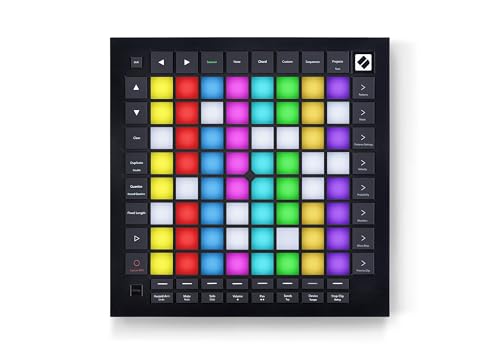
- Novation Launchpad Pro MK3 MIDI USB Grid Controller | USB, – Best for Beginners
- Akai MPK Mini Plus 37-Key USB MIDI Keyboard Controller | – Best Most Versatile
Akai MPK Mini IV 25-Key USB-C MIDI Keyboard Controller,

| Keybed | 25-key mini velocity-sensitive USB-C MIDI keyboard |
| Controller Surface & Real-Time Control | 8 assignable 360° knobs, push/turn encoder, full-color display |
| Performance Pads | 8 RGB-enabled MPC-style pads with velocity and pressure sensitivity |
| Connectivity & Power | USB-C powered via USB 3.0, full-size MIDI Out, compatible with Mac/PC/mobile |
| Software & Bundles | Studio Instrument Collection with 1000+ pro-grade sounds; Ableton Live Lite 12, Logic Pro, FL Studio pre-mapped; NKS integration |
| Arpeggiator & Scale Features | Arpeggiator with Pattern, Freeze, Mutate; Chord and Scale modes |
You knot your headphones tighter and realize the box isn’t just cute—it’s quietly ambitious. The Akai MPK Mini IV sits on your desk like a pocket-sized studio, and that bright color screen catches your eye before you even touch the keys.
First thing you notice: the 25 mini keys are velocity-sensitive, not just touch-sensitive. They feel snappy enough for basslines, but still compact enough to travel with in a bag.
The 8 assignable knobs swivel smoothly, and the 360° control feels like a tiny magnetic dial you actually want to twist during a beat.
That MPC-style pad array is a welcome surprise. The pads respond with satisfying thump and the RGB feedback keeps you aligned with your rhythm, even in dim lighting.
It’s easy to punch in a groove and see it light up as you play.
The bundled software is a legitimate boost. The Studio Instrument Collection opens a world of drums, keys, and synths you can click through without leaving your DAW.
The pre-mapped DAW integration means you’re not hunting for controls for long—transport, launch, record, all there in minutes.
Battery of features like arpeggiator, freeze, mutate, and scale/chord modes make ideas flow fast. You’ll find yourself drafting ideas on the go, then refining them when you’re back at the computer.
The USB-C connection keeps things clean and simple for modern laptops and tablets.
In real-world use, the MPK Mini IV feels like a compact pro toolkit you can actually bring to a coffee shop or a tiny studio. It’s light, sturdy, and ready to plug into almost anything without adapters.
If you want a portable, capable gateway to serious production, this does the job without drama.
Overall, it’s a dependable bridge between hardware pads, keyboards, and software—without turning your workspace into a tangle of cables.
PROS
– Pocket-friendly yet capable
– Real MPC pad feel
– Solid DAW integration
CONS
– Small keys may feel crowded
– Limited full-size keyboard feel
M-AUDIO Oxygen Pro Mini 32 USB MIDI Keyboard Controller |

- ✓ Snappy auto-mapping
- ✓ Smooth NKS integration
- ✓ Compact, sturdy build
- ✕ Minor menu deep-dives
- ✕ Missing extra faders
| Keybed | 32-key velocity-sensitive, semi-weighted keyboard |
| MIDI Connectivity | 1/8-inch (3.5mm) MIDI output |
| DAW/Plugin Integration | NKS (Native Kontrol Standard) integration with automatic DAW control and plugin parameter mapping |
| Included Software Bundle | MPC Beats, Ableton Live Lite, AIR Music Tech instruments, Akai MPC Expansion packs |
| Expression/Performance Controls | Pitch bend and modulation wheels; Smart Chord; Smart Scale; Arpeggiator |
| Connectivity and Compatibility | USB MIDI Controller for computer connection; compatible with Native Instruments Komplete 15 Select bundles (Beats, Band, Electronic) |
You grip the Oxygen Pro Mini 32 and immediately notice how the keys feel more expressive than I expected for such a compact board. The semi-weighted action gives you a hint of real piano touch without slowing you down on synth pads or quick riffs.
That standout moment came when I plugged into Ableton and saw the auto-mapping swoop in like magic. No endless mouse-clicks to assign knobs—everything snapped to the right track and plugin controls in seconds, which is a rare relief in a packed session.
The NKS integration is surprisingly smooth. Kontrol from the Oxygen—without extra hoops—feels natural, and loading Native Instruments presets into a project is almost instant.
It’s a workflow win when you’re juggling multiple libraries in a deadline crunch.
The build feels sturdy for its size, with a compact footprint that still accommodates aftertouchable keys and responsive wheels. The pitch and modulation wheels sit in a comfortable position, and the sustain pedal input is conveniently placed for tall pedal users like me.
Software bundles are genuinely useful too. MPC Beats and Ableton Live Lite give you a solid starting studio, plus extra instruments from AIR Tech that you can actually use from day one.
It’s not just a controller; it becomes a little production studio on your desk.
In real-world use, the Smart Chord and Smart Scale modes save me from wrong notes during a fast idea dump, which is a small feature with a big impact. And the 1/8-inch MIDI output is a welcome throwback for older gear you might still love.
Is it perfect? Not quite—there are occasional minor menu dives for deeper parameter edits, and a few more faders would be ideal for live tweaking.
But at its price, you’re getting a lot of capability packed into a portable, friendly package.
If you’re building beats, recording ideas on the move, or integrating NI libraries without a control-happy setup, this unit keeps pace with your creativity. It’s approachable, thoughtful, and genuinely helpful in everyday music-making.
Novation Launchpad Pro MK3 MIDI USB Grid Controller | USB,
- ✓ Deep Ableton integration
- ✓ Expressive, responsive pads
- ✓ Flexible MIDI control
- ✕ Size/weight may be bulky
- ✕ Pricey for casual users
| Pads | RGB velocity- and pressure-sensitive pads |
| Sequencer | Four-track, 32-step sequencer with eight-note polyphony, pattern chaining and scenes |
| Integration | Deep Ableton Live integration with clip/scene launching, mixer/device/transport controls, quantize/duplicate/double |
| MIDI I/O | MIDI In, Out, and Out 2/Thru ports for hardware compatibility |
| Modes & Playability | Dynamic Note & Scale Modes with drum rack visualization and in-key support |
| Connection | USB powered/controller connection for MIDI and USB transport |
You lift the Launchpad Pro MK3 out of the box and the first thing you notice is how solid the grid feels in your hands. A quick press lands with a satisfying click, and those RGB pads glow with a depth that makes Ableton clips practically beg to be launched.
I hopped into a session, fired up eight tracks, and within minutes I felt like the grid had become part of my brain, not a helper tool.
The four-track, 32-step sequencer is where it clicked for me. I built a loop, then pattern-chained it to stretch into a longer groove, all without touching the mouse.
The eight-note polyphony and the probability/mutation options let me push a simple idea into something actually evolving as I played. It’s tactile creativity at a level you’ll notice as soon as you start tweaking patterns.
The velocity- and pressure-sensitive pads respond in real-time to dynamics in your hands, and the color mapping mirrors what’s on screen, which makes following complex arrangements feel natural. Dynamic Note & Scale Modes saved me from those accidental off-key moments, especially when I’m jumping between basslines and chords.
It’s like the grid understands what I’m trying to lay down before I even finish the thought.
Setup is surprisingly smooth. You can route MIDI to software, hardware, or both, and the custom modes let you tailor the grid to control everything from a synth to a hardware mixer.
The transport, quantize, and clip-launch controls are accessible without lifting a hand from the pads, which is exactly what you want during a live session or a fast remix sprint.
In real-world use, the Launchpad Pro MK3 feels like you finally found a controller that respects the flow of your ideas. It’s not just a grid; it’s a performance companion that keeps your hands in the creative zone while your DAW does the heavy lifting.
Bottom line: if you live in Ableton or Logic Pro, and you want hands-on depth without breaking your workflow, this is worth the investment.
Akai MPK Mini Plus 37-Key USB MIDI Keyboard Controller |

| Keybed | 37-key MPK mini keybed providing 3 octaves of melodic/harmonic range |
| Connectivity | USB-powered MIDI controller with CV/Gate and MIDI I/O |
| Sequencer | Built-in 64-step sequencer with 1 drum track and 1 melody/chord track (up to 8 notes per track) |
| DAW Control | Transport controls for DAW playback, recording, and navigation |
| Pads & Controls | 8 RGB MPC pads, 8 assignable rotary knobs (endless), Chords and Scales modes |
| Software & Bundles | MPC Beats software included; NKS integration via Native Instruments Komplete 15 Select bundles (Beats, Band, or Electronic); 2 months of Splice Creator plan |
You’re mid-session, fingers itching to layer a beat over a bass line, and your hands bump into a compact live rig that actually feels like it can keep up. The Akai MPK Mini Plus isn’t just a tiny controller—it steps up with three full octaves of keybed and a sturdy feel that makes it easy to play without glancing at the keyboard.
The moment you connect via USB, you’re greeted with a familiar, responsive MPC-style layout that encourages hands-on tweaking. The 8 RGB MPC pads respond with authority, and the Chords and Scales modes save you from dead-end phrases when you’re sketching ideas at 2 AM.
Built-in routing is a real win. You can send CV/Gate and MIDI I/O to modular gear or synths, which means you’re not stuck in a DAW silo.
That flexibility pays off when you’re trying to audition sounds from a rack mount or a soft-synth without swapping cables endlessly.
The transport controls feel tactile and reassuring, so starting, pausing, or looping a take becomes second nature during a frantic recording session. The two-track internal 64-step sequencer is a nice surprise for sketching melodies or drums on the fly, even when your computer isn’t ready to record yet.
Native Kontrol Standard integration means you can Kontrol more of your NI presets directly from the MPK. Add the included MPC Beats software and a 60-day Splice trial, and you’ve got a portable production hub that travels well and sounds like a bigger setup when you need it to.
In real-world use, the MPK Mini Plus shines when you’re composing on a coffee-table workstation or a cramped studio setup. It’s small enough to grab last-minute ideas, yet feature-rich enough to not outgrow your workflow after a single session.
Bottom line: it’s a capable, flexible companion that respects your creative flow rather than demanding a bigger interface. If you want hands-on control without sacrificing sound library access or modular connectivity, this one makes a strong case.
What Key Features Should You Prioritize in a Pro Tools MIDI Controller?
When selecting the best Pro Tools MIDI controller, consider these key features:
- Integration with Pro Tools: A controller that seamlessly integrates with Pro Tools will enhance your workflow by allowing direct control over software parameters, plugins, and virtual instruments.
- Keybed Quality: The feel of the keys is crucial for expressive performance; a high-quality keybed provides better velocity sensitivity and responsiveness, which is essential for realistic playing.
- Assignable Controls: Look for controllers with assignable knobs, faders, and pads that can be mapped to various functions in Pro Tools, allowing for a customized setup tailored to your preferences.
- Transport Controls: Having dedicated transport controls (play, stop, record) allows you to manage your sessions more efficiently without needing to click around the software interface.
- Portability: Depending on your setup, a lightweight and compact design can be beneficial for musicians on the go, making it easier to transport your gear between locations.
- Build Quality: A robust construction ensures longevity and reliability during performances and studio sessions, which is particularly important for professional use.
- Additional Features: Consider additional functionalities such as pads for triggering samples, arpeggiators for creating sequences, and built-in screens for visual feedback, which can greatly enhance your creative capabilities.
How Do Different Pro Tools MIDI Controllers Compare in Terms of Compatibility?
| Controller Model | DAW Compatibility | Operating System Support | Specific Features | Power Source |
|---|---|---|---|---|
| Akai MPK Mini MK3 | Fully compatible with Pro Tools and other major DAWs | Windows and macOS | 8 backlit pads, 8 assignable knobs, 25 mini keys | USB-powered |
| Novation Launchkey 49 MK3 | Works seamlessly with Pro Tools, Ableton Live, and more | Windows and macOS | 16 RGB pads, 8 knobs, pitch and mod touch strips | USB-powered |
| M-Audio Keystation 88 MK3 | Compatible with Pro Tools, Logic, and other DAWs | Windows and macOS | 88 full-sized keys, pitch bend and modulation wheels | USB-powered |
Which Pro Tools MIDI Controller Offers the Most Intuitive User Experience?
Several MIDI controllers are known for providing an intuitive user experience when working with Pro Tools:
- Ableton Push 2: This controller is designed with a focus on live performance and studio production, featuring a pressure-sensitive pad layout that allows for expressive playing.
- Novation Launchkey 49 MK3: With an intuitive layout and deep integration with both Ableton Live and Pro Tools, this controller offers a great balance of functionality and ease of use.
- Arturia KeyLab Essential 61: This controller combines a user-friendly interface with a range of onboard controls, making it easy to navigate through Pro Tools projects.
- Akai MPK Mini MK3: Compact and portable, this MIDI controller includes a variety of pads and knobs that simplify the control of virtual instruments and effects in Pro Tools.
- Native Instruments Komplete Kontrol S49 MK2: This controller features an intuitive workflow with a clear layout and integration with various software, including Pro Tools, enhancing the user experience.
Ableton Push 2: The Ableton Push 2 is particularly favored by musicians who value live performance capabilities along with studio production. Its responsive pads are not only great for triggering clips but also for playing melodies and drum patterns, fostering a hands-on and creative workflow.
Novation Launchkey 49 MK3: The Launchkey 49 MK3 stands out with its user-friendly layout and excellent integration with various DAWs, including Pro Tools. It features velocity-sensitive keys, assignable knobs, and integrated transport controls that streamline the music production process.
Arturia KeyLab Essential 61: The KeyLab Essential 61 is designed with a focus on workflow efficiency, providing a range of knobs, faders, and pads that allow for easy manipulation of virtual instruments in Pro Tools. Its intuitive controls and software compatibility make it a great option for beginners and professionals alike.
Akai MPK Mini MK3: The Akai MPK Mini MK3 is an excellent choice for those seeking portability without sacrificing functionality. Its compact design houses a set of responsive pads and assignable knobs, allowing for easy control of Pro Tools software, making it ideal for music creation on the go.
Native Instruments Komplete Kontrol S49 MK2: The Komplete Kontrol S49 MK2 offers a seamless experience with its clear interface and deep software integration, which enhances the workflow in Pro Tools. The Smart Play feature allows for innovative music creation techniques, while the high-quality keys and customizable controls cater to a wide range of production styles.
How Can a Pro Tools MIDI Controller Improve Your Music Production Workflow?
A Pro Tools MIDI controller can significantly enhance your music production workflow in various ways:
- Enhanced Control: A MIDI controller provides tactile control over virtual instruments and effects in Pro Tools, allowing for more expressive performances and precise adjustments.
- Streamlined Workflow: Many MIDI controllers integrate seamlessly with Pro Tools, offering shortcuts and mapping that can accelerate your workflow and reduce reliance on mouse clicks.
- Real-Time Input: With a MIDI controller, you can record musical ideas in real-time, enabling you to capture spontaneous creativity as it happens.
- Customizable Features: Most MIDI controllers allow you to customize pads, knobs, and sliders, tailoring them to your specific production needs and personal preferences.
- Improved MIDI Editing: The visual feedback provided by many MIDI controllers aids in editing MIDI data, making it easier to see and manipulate notes, velocities, and other parameters.
Enhanced control means that instead of using a mouse to tweak settings, you can use physical knobs and sliders; this can lead to a more natural playing experience and better dynamics in your recordings.
Streamlined workflow is achieved through built-in presets and mappings that allow you to access frequently used functions quickly, resulting in a more efficient production process. This reduces the time spent navigating through menus and settings.
Real-time input allows you to capture your musical ideas as they come to you, without the interruption of needing to program notes manually. This spontaneity can lead to more authentic and inspired performances.
Customizable features on MIDI controllers enable you to set up your workspace according to your unique style and genres, making it easier to focus on creativity rather than technical adjustments.
Improved MIDI editing is facilitated by the visual layout of many controllers, which helps you see the structure of your MIDI tracks at a glance. This can simplify the process of adjusting timings, velocities, and other critical elements in your productions.
What Budget Considerations Should You Keep in Mind When Choosing a Pro Tools MIDI Controller?
When choosing the best Pro Tools MIDI controller, it’s essential to consider several budget-related factors that can influence your decision.
- Initial Cost: The upfront price of the MIDI controller is crucial, as it varies significantly across models. Be sure to balance the features you need with what you can afford, as more expensive controllers may offer advanced functionalities that are unnecessary for basic tasks.
- Features vs. Price: Analyze the features offered by different controllers in relation to their price. Sometimes, a slightly more expensive option may provide better build quality, additional pads, knobs, or software integrations, which can enhance your workflow and justify the higher cost.
- Software Bundles: Some MIDI controllers come with bundled software that can add value to your purchase. This could include DAWs, virtual instruments, or plugins that enhance your music production capabilities, making a higher-priced controller a more cost-effective choice overall.
- Durability and Warranty: Consider the build quality and warranty options of the MIDI controller. Investing in a more durable controller with a good warranty can save you money in the long run, as it will likely require fewer repairs or replacements.
- Resale Value: The potential resale value of the MIDI controller is another factor to consider. Some brands and models retain their value better than others, which can offset the initial investment if you decide to upgrade in the future.
- Upgradability: Look into whether the MIDI controller can be easily upgraded or expanded with additional features or modules. This can be a more cost-effective way to enhance your setup over time without having to purchase an entirely new controller.
How Do You Properly Set Up a Pro Tools MIDI Controller for Peak Performance?
To achieve peak performance with your Pro Tools MIDI controller, consider the following key aspects:
- Compatibility: Ensure that your MIDI controller is fully compatible with Pro Tools for seamless integration.
- Driver Installation: Properly install any necessary drivers to ensure that your MIDI controller communicates effectively with your computer and software.
- Configuration Settings: Adjust the MIDI configuration settings in Pro Tools to optimize the performance of your controller.
- MIDI Mapping: Map the controls of your MIDI controller to the functions in Pro Tools for efficient workflow and access.
- Latency Management: Optimize your latency settings to minimize delay, enhancing your playing experience and recording accuracy.
- Regular Updates: Keep your software and firmware updated to benefit from the latest features and improvements.
Compatibility: It is crucial to select a MIDI controller that is officially supported by Pro Tools, as this ensures that all features will function correctly without unexpected issues. Check the manufacturer’s specifications and user reviews to confirm that the controller works well with the specific version of Pro Tools you are using.
Driver Installation: Download and install the latest drivers from the manufacturer’s website to facilitate proper communication between your MIDI controller and Pro Tools. Proper driver installation can resolve many connectivity issues and ensure that your controller is recognized as a valid input device within the software.
Configuration Settings: Access the MIDI settings in Pro Tools to configure your controller’s input and output settings. This step is essential for ensuring that MIDI signals are correctly routed and can help you troubleshoot any connectivity problems by confirming that the software is receiving input from the controller.
MIDI Mapping: Take advantage of MIDI mapping features to assign specific controller knobs, faders, and buttons to corresponding functions in Pro Tools. This customization allows for a more intuitive workflow, enabling you to control virtual instruments and effects quickly without navigating through menus.
Latency Management: To achieve the best performance when playing and recording, adjust your audio buffer size and sample rate settings in Pro Tools. Lower latency settings will provide a more responsive playing experience, whereas higher buffer sizes may be necessary for mixing and processing multiple tracks without audio dropouts.
Regular Updates: Regularly check for software updates for both Pro Tools and your MIDI controller’s firmware. Updates often include bug fixes, enhanced features, and improved compatibility, which can significantly improve the performance and reliability of your setup.
What Insights Do Users Share About Their Experiences with Pro Tools MIDI Controllers?
Users share various insights based on their experiences with Pro Tools MIDI controllers, highlighting functionality, ease of use, and performance.
- Integration with Pro Tools: Many users emphasize the seamless integration between their MIDI controllers and Pro Tools, allowing for efficient workflow and easy mapping of controls.
- Build Quality: Feedback often points to the importance of build quality, with users preferring sturdy controllers that can withstand regular use in studio environments.
- Feature Set: Users frequently discuss the range of features offered by different MIDI controllers, such as pads, faders, and rotary knobs, and how these features enhance their creative process.
- Portability: Portability is a common theme, with users appreciating lightweight and compact controllers that are easy to transport for mobile recording sessions.
- Customization Options: Many users value the ability to customize settings and mappings on their MIDI controllers, allowing for a personalized setup tailored to their specific workflow.
Integration with Pro Tools: Many users emphasize the seamless integration between their MIDI controllers and Pro Tools, allowing for efficient workflow and easy mapping of controls. This feature is crucial as it minimizes the time spent on setup and maximizes time for creativity and production.
Build Quality: Feedback often points to the importance of build quality, with users preferring sturdy controllers that can withstand regular use in studio environments. A robust build not only ensures longevity but also provides confidence during live performances or intense studio sessions.
Feature Set: Users frequently discuss the range of features offered by different MIDI controllers, such as pads, faders, and rotary knobs, and how these features enhance their creative process. The right combination of features can significantly impact workflow efficiency and creative expression, making it a key consideration for many producers.
Portability: Portability is a common theme, with users appreciating lightweight and compact controllers that are easy to transport for mobile recording sessions. For musicians who travel or collaborate in different locations, having a MIDI controller that fits easily into a bag is highly beneficial.
Customization Options: Many users value the ability to customize settings and mappings on their MIDI controllers, allowing for a personalized setup tailored to their specific workflow. This flexibility can lead to a more intuitive and enjoyable user experience, as it allows musicians to configure their equipment to suit their individual needs.
Related Post: