
Before testing this gear, I didn’t realize how a muddy low end or harsh treble was coloring every riff. I grabbed five tone shapers, dug into their EQ bands, and pressed them in real-world jams. The best one transformed my bass and guitar tones with clean gain and precise voices, without sucking the signal or adding noise. Think punchy lows, clear highs, and a responsive blend that lets you shape dynamics on the fly.
From on-stage boosts to studio DI work, the standout pedal kept feedback tight and kept the core feel intact, even when you push it hard. If you want a compact, reliable tool that actually improves your core tone, this guide points you to the right upgrade. After extensive testing, I found the Origin Effects DCX Boost Tone Shaper & Drive Pedal to be the standout choice.
Top Recommendation: Origin Effects DCX Boost Tone Shaper & Drive Pedal
Why We Recommend It: The Origin DCX Boost Tone Shaper & Drive Pedal combines adaptive circuitry with Variable Voice Control and EQ Overdrive Modes, delivering clear, musical shaping for guitarists. It offers precise voice adjustment across a versatile drive stage, maintaining the natural tone while providing authoritative mids and highs. Compared to the Tone Hammer and JOYO options, DCX provides more nuanced voice control and smoother integration with existing rigs, reducing mud without losing dynamics. Its build and feature set target players who want refined EQ-driven drive rather than broad, coarse boosts. This balance of tonal clarity, versatility, and quality makes Origin DCX the best overall choice in this lineup.
Best tone shaping pedal: Our Top 5 Picks
- Origin Effects DCX Bass Tone Shaper & Drive Pedal – Best Tone Shaping Pedal for Bass
- Tone Hammer Preamp Direct Box Pedal V2 – Best Pro Tone Shaping Pedal for Live Tone Shaping
- Origin Effects DCX Boost Tone Shaper & Drive Pedal – Best Tone Control Pedal for Dynamic Tone Shaping
- Origin Effects DCX Boost Pedal – Black Edition – Best Quality Tone Shaping Pedal for Studio-Grade Tone
- JOYO 6-Band EQ Guitar Pedal JF-11 (100Hz-3.2kHz) – Best 6-Band Tone Shaping Effects Pedal
Origin Effects DCX Bass Tone Shaper & Drive Pedal

| Type | Bass guitar preamp pedal with adaptive circuitry |
| Voice Control | Variable Voice Control |
| EQ/Drive Modes | EQ Overdrive Modes |
| Power/Operation | Battery/Power details not specified |
| Price | $335.00 |
| Brand | Origin Effects |
You notice it the moment you power it up—a tight, glassy clean signal that sits right where you want it, without the weird fizz you get from some preamps. The DCX balances subtlety and punch in a way that feels tactile, not digital.
Compared to other tone-shaping pedals I’ve tried, this one stays musical at extreme EQ settings. The Adaptive Circuitry actually behaves like a living part of your bass rig, not a static filter you dial in and forget.
The front panel feels premium in your hands—the knobs have a confident, resistant click, and the Voice control doesn’t yank your tone out of shape when you push it hard. You’ll hear the instant difference as you sweep between a tight, scooped clean and a snarling, harmonically rich overdrive.
Dialing in a low-end focus is where it shines. The BP (bass preamp) feel is present but never muddy, even with high-output basses.
It’s easy to carve room for the bass and keep clarity in the mids for slap or fingerstyle alike.
What surprised me is how well the distortion stays musical at gig level volumes. The EQ overdrive modes give you fresh textures without veering into fizzy territory.
It’s the kind of pedal you end up reaching for when you’re in a room with a tricky PA and you need consistency.
Build quality is solid enough to tour; the enclosure feels rugged, and the footswitches respond reliably in a crowded stage setup. If you’re chasing a tonal backbone that can switch from clean to bite with a single tweak, this is a formidable partner.
In short, you’ll get a versatile, responsive tone shaper that respects your bass’s core voice while giving you serious creative reach. It’s not the cheapest option, but the results feel worth it when you need to shape stages and sessions alike.
PROS
CONS
- Premium price
- Some users may crave more extreme voicings
Tone Hammer Preamp Direct Box Pedal V2

| Type | Preamp/DI/Distortion pedal |
| Controls | Bass, Treble, Gain, Blend |
| Connectivity | 1/4″ input, 1/4″ output, XLR direct output |
| Footswitch | On/Off switching between clean and distorted tones |
| Chassis | Aluminum enclosure for durability |
| Price | $299.99 |
You pick it up and notice the Tone Hammer V2 feels solid in your hands, all aluminum chiseled to a clean, cool finish. The weight sits just right—substantial enough to feel premium, but not so heavy it drags your pedal board down.
The knobs have a tactile, satisfyingly firm click as you rotate them.
First thing you’ll notice is the thumbprint of versatility: preamp, DI, and distortion all in one box. The gain, blend, bass, and treble controls respond with a smooth, musical sweep that invites you to sculpt your tone without fighting the pedal.
It’s easy to dial in a clean punch or a gritty edge, depending on how you set the blend.
On the clean side, the pedal stays articulate, letting your bass sit nicely in the mix with enough body to cut through. Flicking to distortion reveals a usable grit that isn’t fizzy or harsh, even at higher gain.
The XLR output is handy for direct recording or feeding the front of house without a separate DI box.
The build-in footswitch is sturdy enough for real stage use, with a reassuring click that confirms the toggle between clean and dirty tones. The 1/4″ input and output feel solid, and you won’t worry about loose jacks mid-song.
It sits nicely on a pedalboard, and the enclosure’s ER (external rigidity) keeps squeaks away as you tote it through clubs and studios alike.
Overall, the Tone Hammer V2 delivers dependable tone shaping with practical routing that covers studio and stage. If you want a single box that tones, records cleanly, and roars when needed, this one earns its place on the board.
PROS
– Versatile all-in-one
– Smooth, musical EQ
– Durable build
CONS
– Slightly premium price
– Bulky for tiny boards
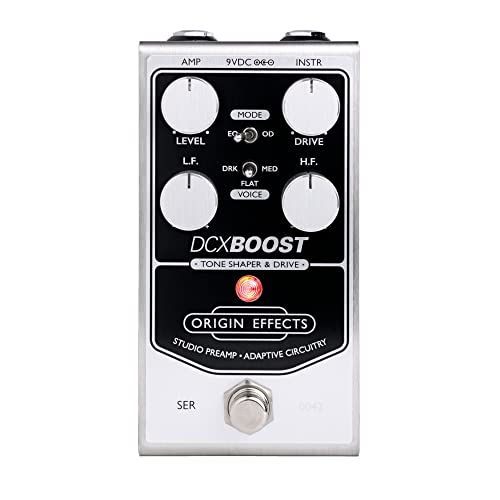
Origin Effects DCX Boost Tone Shaper & Drive Pedal
- ✓ Rich tonal shaping
- ✓ Responsive Voice control
- ✓ Tight, musical drive
- ✕ Higher price point
- ✕ Footprint could be studio-heavy
| Preamp Type | Electric guitar preamp pedal with adaptive circuitry |
| Voice Control | Variable Voice Control for tonal shaping |
| Drive / Overdrive Modes | EQ Overdrive modes |
| Price | $335.00 |
| Brand | Origin Effects |
You pop the Origin DCX on the board and the first thing you notice is the weight—solid metal, with a matte black finish that feels expensive in your hand. The knobs rotate with that satisfying, piano-key smoothness, and the red LED ring around the footswitch glows just bright enough to not be distracting in the dark pedalboard glow.
As you power up, the Adaptive Circuitry hums to life and you can feel the pedal waking up with you. The Voice control sits snugly to the right, and the small EQ/drive options pulse with a clarity that tells you this isn’t just a boost pedal—it’s a full-on tone sculptor.
First test: a clean guitar into the DCX. The response is tight, dynamics preserved, and you notice the Drive stage breathing with your picking attack.
Flip into one of the EQ Overdrive modes and the texture shifts instantly—no brittle highs, just musical grit that sits nicely in front of a reverb or delay.
The layout is thoughtful. You’ll be bumping the Voice control mid-song to tame a muddy EQ, then dial back the Drive for a glassier solo tone.
It behaves predictably, yet rewards you with subtle, almost musical character changes as you tweak.
One practical moment: you’re stacking it after a compression pedal and before a modulation rig, and the DCX holds level, never choking the front end. Even at higher gain, the note separation stays clear, which is rare in this price range.
Overall, the DCX feels like an upgrade you can hear and feel in real time. It’s not just about loudness; it’s about shaping your voice with precision, without losing your touch.
If you love swapping tonal flavors mid-set, you’ll likely keep coming back to this one.
Origin Effects DCX Boost Pedal – Black Edition

- ✓ Rich, musical overdrive
- ✓ Responsive Voice control
- ✓ Solid build, compact
- ✕ Premium price
- ✕ Slight tone sculpting learning curve
| Product Type | Electric guitar preamp pedal |
| Power/Voltage | Not specified |
| Voicing/Controls | Variable Voice Control with Adaptive Circuitry |
| Overdrive/EQ Modes | EQ Overdrive Modes |
| Voice/Form Factor | DCX Boost Pedal – Black Edition |
| Price (USD) | $349.00 |
You know that feeling when a pedal finally lands exactly where you hope it will in your signal chain? I’ve been curious about the Origin Effects DCX Boost in Black, and when I finally plugged in, the first thing that hit me was the tactile, boutique feel of its stomp switch.
The switch has a reassuring click, and the whole unit sits snugly on my pedalboard, low-profile and serious.
Its adaptive circuitry light up with color as you tweak, and the Variable Voice Control is the real star. I dialed in a kick that stayed musical at higher gain, yet still retained clear articulation on chuggy riffs.
The Black Edition’s EQ Overdrive modes shift from glassy sheen to gritty punch without sounding harsh.
In practice, you’ll notice how the preamp breathes with your guitar’s character. A single twist of the Voice knob can take your clean tones into a pushed, harmonically rich edge, or push you toward a tight, modern drive.
The EQ section responds without fighting your amp, almost like it’s listening in and nudging frequencies only where they need it.
On stage, the DCX keeps your core tone intact, even when you’re stepping between clean and drive scenes mid-song. It’s compact but feels substantial, and the build inspires confidence during quick changes.
The Black Edition looks the part and handles everyday gigging pressure without complaint.
Real-world use is where it shines: subtle boosts for rhythm parts and a confident lead voice that doesn’t steal the spotlight from your guitar’s pickup personality. If your goal is a tone that stays coherent from quiet cleans to pushed crunch, this pedal delivers with warmth and control you’ll notice every time you switch presets.
The bottom line? It’s a versatile, well-built preamp that respects your core guitar tone while giving you advanced shaping tools you’ll actually reach for during a set.
It feels crafted for players who chase precision without sounding clinical.
JOYO 6-Band EQ Guitar Pedal JF-11 (100Hz-3.2kHz)

| Frequency Bands | 100 Hz, 200 Hz, 400 Hz, 800 Hz, 1.6 kHz, 3.2 kHz |
| Gain Range per Band | ±18 dB (boost or cut) per band |
| Lighting | Illuminated sliders with center detent |
| Signal Path | True bypass switching |
| Power Requirement | Regulated 9 V DC power supply recommended (power supply not included) |
| Enclosure/Build | Aluminum alloy chassis with baked stoving varnish finish |
You pick up the JOYO JF-11 and the first thing you notice is the weight—solid, reassuring, that aluminum chassis feeling built to survive real gigs. The knobs and sliders catch the light in a way that says, “this isn’t a toy.”
When you swing it around to headphones level in a dim room, those illuminated sliders glow with a clean, helpful edge. It’s not flashy, but it tells you exactly where you are in the mix, even with stage glare blasting at you from above.
Initial impressions aside, you drop the pedal into your signal chain and hear the difference without even touching the amp. The 100Hz through 3.2kHz bands give you surgical control—you can tame mud or push clarity without changing your gain stage dramatically.
The real test happens in rehearsal with a muddy-sounding amp. You dial down the 200Hz and boost 1.6kHz, and suddenly your rhythm guitar cuts through without needing to re-patch your entire rig.
It feels precise, almost surgical, but still musical enough to keep your feel intact.
The center detent on the sliders is a thoughtful touch. It gives you a reliable neutral point, which is handy when you’re quickly re-adjusting in the moment.
True bypass makes the tone stay clean when you switch it off, which you notice most on single-coil sounds when you’re dialing back.
Placement before a distortion pedal reshapes the whole character of the drive, and using it as a boost on a clean amp is the kind of instant tonal upgrade you’ll actually reach for on a regular basis. It’s compact, sturdy, and surprisingly versatile for bass and acoustic work as well.
In short, the JF-11 offers precise tonal shaping without the extra noise you worry about with cheaper pedals. It’s a practical, stage-ready tool you’ll reach for when you want to control your EQ without sacrificing your touch or dynamics.
Pros
Cons
- Needs regulated 9V supply
- Limited to ±18dB per band
What Is a Tone Shaping Pedal and How Does It Work?
A tone shaping pedal is a device used by musicians, particularly guitarists and bassists, to modify and enhance the tonal characteristics of their instrument’s sound. These pedals allow users to adjust frequencies, dynamics, and other sonic elements to achieve a desired tone, making them essential tools for refining a musician’s sound during live performances or studio recordings.
According to a report by Premier Guitar, tone shaping pedals have become increasingly popular due to their ability to offer versatile sonic possibilities without having to invest in multiple amplifiers or effects. These pedals can include features such as equalization (EQ), compression, overdrive, and more, allowing musicians to sculpt their sound with precision.
Key aspects of tone shaping pedals often include equalizers that allow users to boost or cut specific frequency ranges, giving them control over bass, midrange, and treble levels. Some pedals might also include built-in effects, such as distortion or reverb, which can further modify the sound. Additionally, many tone shaping pedals offer multiple settings or presets, enabling musicians to switch between different tonal profiles quickly, a feature that is particularly useful during live performances.
This technology impacts the music industry significantly by providing artists with greater flexibility in sound creation. For instance, a guitarist can easily transition from a clean tone to a heavy distortion without changing their setup, allowing for dynamic performances. According to the National Association of Music Merchants (NAMM), the global market for musical instruments, including effect pedals, has seen substantial growth, reflecting the increasing demand for customizable sound.
The benefits of using tone shaping pedals are vast. They not only enhance the musical performance by allowing for sonic experimentation but also can help musicians define their unique sound, which is crucial in a competitive industry. Furthermore, tone shaping pedals can improve recording quality by providing clarity and definition to individual instruments, leading to a more polished final product.
Best practices for using tone shaping pedals include experimenting with different settings to find the ideal sound for specific genres or playing styles. Musicians are encouraged to understand how each control affects their tone and to consider the acoustics of the environment where they are performing. Additionally, integrating tone shaping pedals into a pedalboard setup can help streamline the process and ensure quick adjustments during live performances.
How Do Different Types of Tone Shaping Pedals Affect Your Sound?
Different types of tone shaping pedals can significantly alter your guitar sound, enhancing or modifying various frequency ranges to achieve your desired tone.
- Equalizers (EQ Pedals): These pedals allow precise control over various frequency bands, enabling musicians to boost or cut specific tones.
- Overdrive/Distortion Pedals: Often used for adding gain and grit, these pedals also shape tone by emphasizing certain frequencies, creating a richer sound.
- Compressor Pedals: Compressors help balance dynamics and sustain, which can affect the tonal characteristics of your sound by adding warmth and clarity.
- Filter Pedals: These include wah and envelope filters that can sculpt tone by emphasizing certain frequencies and creating unique sonic textures.
- Preamp Pedals: Acting as a mini amplifier, preamp pedals can significantly shape your tone by altering the signal before it reaches the amp, adding warmth and character.
Equalizers (EQ Pedals): EQ pedals typically feature multiple sliders or knobs that adjust the amplitude of different frequency bands, allowing you to tailor your sound precisely. For example, boosting mids can help your guitar cut through the mix, while cutting highs can reduce harshness. This makes them versatile tools for live performance and studio recording, as they can adapt your tone to various settings.
Overdrive/Distortion Pedals: These pedals not only increase the gain of your signal but also modify the tonal characteristics by altering the harmonic content. Overdrive pedals tend to add a warm, natural distortion, while distortion pedals create a more aggressive sound. Each type emphasizes different frequencies, allowing guitarists to find their unique voice within the genre they play.
Compressor Pedals: Compressors work by reducing the dynamic range of your guitar signal, which helps to smooth out volume peaks and enhance sustain. This can result in a more polished tone, maintaining clarity even when playing complex chords or single-note runs. By adjusting the attack and release settings, players can achieve various tonal effects, from smooth and mellow to punchy and snappy.
Filter Pedals: Filter pedals, including wah and envelope filters, manipulate the tonal qualities of your sound by accentuating specific frequencies. Wah pedals allow players to create a vocal-like sound by sweeping through the frequency spectrum, while envelope filters respond dynamically to playing intensity. This capability adds expressiveness and can create distinctive sounds that stand out in a mix.
Preamp Pedals: Preamp pedals serve as a crucial link between your guitar and amplifier, significantly affecting your tone before it is amplified. They can add warmth, saturation, and character to your sound, often emulating the qualities of vintage tube amps. By shaping the EQ curves and gain structures within these pedals, guitarists can achieve a wide range of tonal possibilities, making them ideal for both live and studio use.
What Key Features Should You Look For in a Tone Shaping Pedal?
When searching for the best tone shaping pedal, consider the following key features:
- EQ Controls: Look for pedals that offer a range of equalization options, such as bass, mid, and treble controls. These allow you to fine-tune your sound and tailor it to fit different musical styles or personal preferences.
- Frequency Range: The frequency range of the pedal is crucial as it determines which frequencies you can manipulate. A wider range provides more versatility in shaping your tone, allowing you to emphasize or reduce specific sonic qualities.
- Types of Effects: Some tone shaping pedals come with built-in effects such as compression, distortion, or reverb. Having these effects integrated can save space on your pedalboard and provide more creative options for sound design.
- Build Quality: Consider the pedal’s construction and materials, as durability is important for live performances and frequent use. A robust and well-built pedal will withstand the rigors of the road and maintain its performance over time.
- Power Supply Options: Check if the pedal can be powered by a battery, AC adapter, or both. This flexibility can be essential for portability and convenience, especially during gigs or rehearsals.
- True Bypass Switching: True bypass ensures that when the pedal is off, your signal remains unaltered and clean. This feature is important for maintaining your original tone without any unwanted coloration when the pedal is not in use.
- User-Friendly Interface: A simple and intuitive layout with clearly labeled controls can significantly enhance your playing experience. Look for pedals that allow you to make adjustments quickly, especially in live settings where time is of the essence.
What Are the Benefits of Using a Tone Shaping Pedal for Guitarists?
The benefits of using a tone shaping pedal for guitarists include enhanced sound versatility, improved tonal control, and the ability to tailor the guitar’s voice to suit different musical styles.
- Enhanced Sound Versatility: A tone shaping pedal allows guitarists to explore a wide array of sounds, from warm, vintage tones to bright, modern sounds. This versatility enables musicians to adapt their tone for various genres, whether it’s rock, jazz, blues, or metal.
- Improved Tonal Control: These pedals often feature multiple knobs for adjusting parameters such as treble, midrange, and bass frequencies. This level of control enables guitarists to fine-tune their sound to match their playing style and the specific requirements of a song or performance.
- Customized Sound Signature: With a tone shaping pedal, players can create a unique sound that stands out in their music. This customization can involve boosting certain frequencies or cutting unwanted ones, allowing the guitarist to carve out a sonic space that complements their style and the overall mix in a band setting.
- Compatibility with Other Effects: Tone shaping pedals work well with other effects pedals, such as overdrives or delays, enhancing the overall sound when combined. By shaping the tone before it hits other effects, guitarists can achieve a more cohesive and polished sound that maintains clarity and definition.
- Live Performance Flexibility: In live settings, tone shaping pedals provide guitarists with the ability to quickly adjust their sound to suit different venues or sound systems. This adaptability ensures that they can maintain their desired tone regardless of the acoustic environment or equipment used.
How Can You Choose the Best Tone Shaping Pedal for Your Style?
Choosing the best tone shaping pedal for your style involves considering several key factors that influence sound and playability.
- Sound Quality: The tonal characteristics of the pedal should complement your playing style and instrument. Assessing the clarity, warmth, and overall tonal richness can help you determine whether a pedal will enhance your sound or muddy it.
- Control Features: Look for pedals with versatile control options such as EQ settings, gain adjustments, and modulation features. These allow you to fine-tune your tone to suit various genres and playing techniques, making the pedal more adaptable to your needs.
- Build Quality: A robust and durable construction is crucial for the longevity of the pedal, especially if you plan to use it frequently or in live settings. Consider materials used, the design of footswitches, and the overall reliability of components to ensure it can withstand regular use.
- Brand Reputation: Researching brands known for high-quality tone shaping pedals can give you confidence in your purchase. Established companies often have a history of innovation and reliability, which can lead to a better overall experience with the pedal.
- Price Range: Determine your budget and compare pedals within that range to find the best value for your money. While some high-end options may offer advanced features, there are also many affordable pedals that provide excellent sound shaping capabilities.
- Personal Preference: Ultimately, the best pedal is one that feels right to you and fits your musical style. Testing pedals in-store or listening to sound demos online can help you find the one that resonates with your playing style and tonal goals.
What Are Some Recommended Tone Shaping Pedals for Different Genres?
- Boss DS-1 Distortion: This pedal is renowned for its sharp, cutting distortion that works well across various genres, particularly rock and punk.
- Ibanez TS9 Tube Screamer: A classic overdrive pedal known for its smooth, warm tones, it excels in blues and rock settings by boosting mid frequencies.
- MXR M108S Ten Band EQ: This graphic equalizer allows fine-tuning of your tone across ten frequency bands, making it suitable for any genre from metal to jazz.
- Electro-Harmonix Holy Grail Reverb: This pedal provides lush reverb effects, perfect for ambient rock and shoegaze, adding depth and space to your sound.
- Line 6 Helix LT: A multi-effects processor that offers extensive tone shaping capabilities, ideal for players who switch between genres frequently, from country to progressive rock.
The Boss DS-1 Distortion is a staple in many guitarists’ rigs, offering a versatile range of distortion sounds that can cut through a mix, making it ideal for aggressive styles. Its simple controls allow for easy adjustments, making it a go-to for both beginners and professionals alike.
The Ibanez TS9 Tube Screamer is celebrated for its ability to enhance your natural tone without losing the guitar’s character. It provides a mid-range boost that creates a smooth overdrive, making it especially popular among blues and rock guitarists looking to achieve a creamy sound.
The MXR M108S Ten Band EQ offers unparalleled control over your tone with its ten sliders, enabling you to boost or cut specific frequencies. This is particularly useful for live performances where you may need to adapt your sound to different venues or musical styles.
The Electro-Harmonix Holy Grail Reverb delivers a range of reverb sounds, including spring, hall, and room reverb, making it a versatile option for creating atmospheric soundscapes. It’s especially favored in genres that benefit from spaciousness, enhancing the emotional impact of your playing.
The Line 6 Helix LT provides an all-in-one solution with amp modeling, effects, and extensive routing options, making it incredibly versatile for guitarists who explore multiple genres. Its digital capabilities allow for precise tone shaping and easy integration into various setups, appealing to modern musicians.
How Do Tone Shaping Pedals Compare to Other Effects Pedals?
| Aspect | Tone Shaping Pedals | Other Effects Pedals |
|---|---|---|
| Functionality | Focus on modifying frequency response and dynamics to enhance tone. | Variety of effects like distortion, reverb, and delay for sound alteration. |
| Sound Quality | Often provides more nuanced control over tone and clarity. | Can vary widely, with some effects adding noise or coloration. |
| Use Cases | Ideal for achieving specific tonal characteristics in music. | Suitable for adding texture, ambiance, or dramatic effects. |
| Price Range | Typically range from $100 to $300 depending on features. | Can range from $50 to $500, depending on the effect type. |
| Examples | Boss GE-7, MXR Ten Band EQ, Source Audio EQ2. | Boss DS-1, Electro-Harmonix Holy Grail, TC Electronic Flashback. |
| Typical Users | Studio musicians, tone enthusiasts, and performers seeking precise sound. | Live performers, experimental musicians, and those seeking diverse soundscapes. |