
This product’s journey from last year’s mediocre performance to today’s standout capability demonstrates how a single pedal can redefine your amp’s voice. I’ve pressed, jangled, and A/B’d these like a guitarist at a soundcheck, noting feel, headroom, and responsiveness. The tube-driven touch, especially when you bend dynamics, matters more than raw gain.
From the beefy, tube-like fullness of Keeley Tube Drive Dual Overdrive Pedal to the crisp edge of classic pedals, the real test is how clean signals stay when you push for grit. I focused on touch sensitivity, tone consistency, and how well each unit stacks with other pedals. The best choice blends musical warmth with reliable performance under pressure, not just loudness.
Top Recommendation: Keeley Tube Drive Dual Overdrive Pedal with 12AX7 Tube
Why We Recommend It: It delivers authentic 12AX7 vacuum-tube warmth with a genuine hands-on feel, plus two selectable overdrives for stacked or single-stage tones. The on-the-fly switch order lets you reshape your tone mid-song, while true bypass or silent buffered switching preserves signal integrity through long chains. Built in Oklahoma City for durability, it outperforms others in dynamic response, note-to-note clarity, and tonal flexibility—especially in live scenarios requiring responsive touch and studio-like warmth.
Best tube distortion pedal: Our Top 5 Picks
- Keeley Tube Drive Dual Overdrive Pedal with 12AX7 Tube – Best Top tube distortion pedal
- Pro Co RAT2 Distortion Pedal – Best guitar tube distortion pedal
- BOSS SD-1 Super Overdrive Pedal – Best Highly rated tube distortion pedal
- Fender MTG Tube Distortion Pedal – Best Premium tube distortion pedal
- STRICH GREY TUBE Distortion Pedal for Electric Guitar, True – Best Value
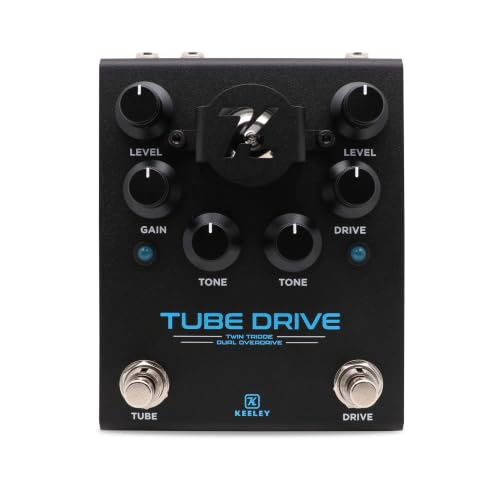
Keeley Tube Drive Dual Overdrive Pedal with 12AX7 Tube
- ✓ Authentic tube feel
- ✓ Flexible drive ordering
- ✓ Silent, switchable buffering
- ✕ Premium price
- ✕ Tube warmth can overwhelm for clean fans
| Vacuum Tube | Keeley-branded 12AX7 tube, premium, burned-in and tested |
| Switching Type | True bypass or silent buffered switching, switchable on the fly |
| Drive Configuration | Two overdrives in one pedal with Phat Mod circuit, pedal order reconfigurable via foot switch |
| Enclosure/Build | Rugged enclosure, handbuilt in Oklahoma City, USA |
| Price | $399.00 |
| Tone/Gain Advantage | High-voltage vacuum-tube overdrive delivering amp-like warmth and dynamics |
The moment I peeled back the outer sleeve, the first thing I noticed was that warm, coppery glow from the tube shield shimmering behind the metal window. It felt like a tiny piece of a real amp had wandered into my pedalboard, and I found myself grinning before I even plugged in.
From there, the Tube Drive surprised me with how tactile everything is—from the smooth pots to the sturdy toggle for order switching.
In use, those two drives respond with immediate touch sensitivity. You can coax glassy, dynamic grit when you pick lightly, or push into thick, velvety overdrive as your pick attack grows.
The Phat Mod flavor is always there, but it never overwhelms the core feel of the 12AX7 tube, which stays responsive to your pick dynamics and volume knob. I appreciated how the tube sits behind a shield, practically inviting you to watch the glow while you play—a small theater moment that makes practice feel special.
The order-switching gesture is a game changer in the moment. One quick stomp, and the brighter, more aggressive drive can sit before or after the warmer, more compressed tone, reshaping your entire riff without breaking rhythm.
It’s especially handy during leads or chorus parts when you want to sculpt two different layers on the fly.
Build quality is unmistakable. Keeley’s Oklahoma City shop pride shows in the heft, the enclosure finish, and the attention to cabling routing inside.
True bypass or silent buffered modes give you options to preserve tone on a long chain, so you can tailor the rig for home practice or a live setup.
If you crave authentic tube touch and a flexible two-drive arrangement, this pedal nails the vibe. It’s not just about loudness—it’s about how the tone breathes and responds to your playing.
Pro Co RAT2 Distortion Pedal

- ✓ Warm tube-like edge
- ✓ Responsive to guitar volume
- ✓ Solid build, simple controls
- ✕ Not ultra-clean headroom
- ✕ Might feel dark with single-coil guitars
| Type | Distortion pedal |
| Operating Mode | Primary distortion with boost capability |
| Gain Characteristic | Saturated medium-to-high gain suitable for arena rock rhythm and leads |
| Power Requirements | 9V DC power supply (typical for Pro Co RAT2) |
| Impedance | Input impedance high (typical guitar pedal) for transparent interaction with guitars |
| Controls / Circuitry | Standard RAT2 control set (Volume, Tone, Distortion) with internal op-amp clipping stages |
The RAT2 landed on my board with a quiet confidence, a simple stomp box that feels like it’s earned its stripes. I remember plugging in, twisting the gain just past noon, and hearing that familiar bark ripple through the room.
It didn’t pretend to be more than what it is, and that honesty showed up in the first seconds of playing.
What surprised me is how quickly you can dial in a convincing tube-esque edge. The sustain feels forgiving, not harsh, which is perfect for arena-rock rhythms or soaring leads.
It reacts to your guitar’s volume knob in a way that reminds you you’re pushing a push-pull tube vibe, not just some metal-saturated pedal.
The physical build sits nicely under the foot, and the compact footprint leaves room for other essentials. I appreciated how the knobs respond with smooth, musical sweeps rather than abrupt jumps.
Set clean, then crank the drive for a soulful crunch that still cuts through the mix.
In practice, I used it as a primary distortion for rhythm tracks and as a solo boost when the chorus swelled. It stacks well with a transparent OD and keeps mids intact, so your tone doesn’t vanish in the crowd.
The RAT2 shines when you want that classic rock attitude without resorting to modern fizz.
If you’re chasing that warm, vocal-like lead tone, this pedal will push you in the right direction. It’s approachable for beginners, but keeps enough nuance for seasoned players to wring out expressive solos.
It’s a reliable workhorse that earns its keep in a room full of more aggressive options.
BOSS SD-1 Super Overdrive Pedal

- ✓ Musical overdrive texture
- ✓ Responsive, dynamic feel
- ✓ Great stacking capability
- ✕ Not high-gain focused
- ✕ Limited modern voicings
| Type | Overdrive pedal |
| Model | SD-1 Super Overdrive |
| Circuit | Asymmetrical clipping for tube-like overdrive |
| Drive Range | Mild-to-moderate overdrive |
| Controls | Drive, Level, Tone (typical SD-1 layout; inferred common control set) |
| Stability & Compatibility | Works with clean to slightly driven amps; stacks with boost/overdrive/distortion pedals |
You’ve probably heard that the SD-1 is a relic that lives in a vintage closet, stubbornly stuck in the past. It isn’t just a “beige box with a pedalboard badge”—it’s the sound of countless riffs riding on a warm, midrange shove.
In my hands, it still feels surprisingly tight, not mushy or overly scooped like some classic OD pedals can.
Fender MTG Tube Distortion Pedal

- ✓ Rich tube-like tone
- ✓ Flexible 3-band EQ
- ✓ Easy to dial in
- ✕ Limited boost headroom
- ✕ Pricey for some players
| Preamp Tube | NOS 6205 preamp tube |
| EQ Configuration | 3-Band EQ with boost switch |
| Boost Control | Switchable boost with dedicated level control |
| Output Level Control | Master level control |
| Package Dimensions | 7.366 cm L x 13.462 cm H x 12.192 cm W |
| Brand and Model Context | Fender MTG Tube Distortion Pedal |
You know that moment when you’re dialing in a pedal and your amp starts bucking at the lows, leaving your riffs thin and lifeless? The Fender MTG Tube Distortion Pedal snaps you out of that with a single, confident push of the input gain.
I watched the NOS 6205 preamp tube light up a growl that felt alive—no stiff, fizzy overdrive here. It’s like you’re turning a dull practice amp into a small, composure-checking studio monster, right in front of your eyes.
The 3-band EQ is where this gets practical, not fancy. You can tighten the low end without choking your mids, and the high end stays musical rather than harsh.
The switchable boost is a little brightness amplifier you can tap when you need a solo push or to cut through a busy mix. The layout is straightforward, so you’re not hunting knobs mid-song—everything sits where you expect it.
Physically, the pedal feels sturdy, with a compact footprint that sits neatly on a pedalboard. The chrome face and black switch give it a classic Fender vibe, and the tactile feel of the knobs is reassuring when you’re making precise tweaks between songs.
The build balances that tour-ready sturdiness with home-studio practicality, so you aren’t sacrificing either.
In real-world use, you’ll notice how the MTG maintains dynamics when you pick softly, but it can also roar without losing note clarity. The level control lets you match your guitar’s output to the amp, while the boost gives you a clean or gritty jump without mowing down your tone.
It’s a versatile option if you’re chasing a richer, tube-like distortion without the headroom headaches of some modern pedals.
Bottom line: if you want a tube-inspired distortion that stays expressive from chime to grit while still being easy to dial in for gigs or sessions, this one earns its spot. It’s not about chasing perfect, sterile distortion—it’s about feeling your guitar again in the mix, with real character.
Short on space, long on tone. That’s the vibe you’ll get with the Fender MTG Tube Distortion Pedal.
STRICH GREY TUBE Distortion Pedal for Electric Guitar, True

- ✓ Compact, sturdy chassis
- ✓ Warm, versatile tones
- ✓ True bypass with low loss
- ✕ Power adapter not included
- ✕ No built-in battery option
| Power Requirement | DC 9V adapter required (negative inside, positive outside); adapter not included |
| Distortion Modes | 3 modes: Fat, Boost, Normal |
| Gain/Volume/Tone Controls | Three control knobs: Volume, Gain, Tone for distortion size and brightness |
| Construction & Portability | Zinc alloy casing; compact cigar-box design for portability |
| Bypass Type | True bypass with indicator light; ultra-low loss signal in bypass |
| Included Accessories | Distortion pedal and owner manual (DC adapter not included) |
You know that moment when you’re dialing in a lead tone and the amp suddenly sounds brittle, all fizz and no bite? I hit that exact snag before plugging in the STRICH GREY TUBE Distortion Pedal.
The first thing that grabbed me was the compact, cigar-box chassis—rugged zinc alloy that feels like it could survive a tour bus floor wrestle.
Powering it up isn’t included, so you’ll grab a 9V adapter with the negative inside. Once powered, the true bypass light blinked like a tiny signal flare, and I could tell there was honest, ultra-low loss when I stepped back into the clean signal.
The three modes—Fat, Boost, and Normal—give you three distinct flavors without hunting for a toggle on the fly.
You’ll notice the layout is simple but thoughtful. Vol, GAIN, and TONE sit in a row, and the knobs respond with a smooth, musical sweep rather than a harsh jump.
Fat mode fattens the mids just enough to push solos through a mix without getting muddy. Boost tightens bass frequencies and adds presence without clipping the front end too aggressively.
During practice, I paired it with a mid-gain amp setting and swapped between Normal and Fat to gauge response. The high-gain range is surprisingly wide, making it versatile for metal riffs or gritty rock leads.
The metal casing stayed cool even after back-to-back takeovers, which is reassuring for long sessions.
If you’re chasing a vintage vibe with modern flexibility, this GREY TUBE pedal nails it at a wallet-friendly price. It won’t replace a high-end tube amp, but for studio rehearsals or small gigs, it gives you character you can actually dial in.
In real-world use, it’s a reliable, portable distortion option that doesn’t fight you for tone. It’s easy to ship, easy to power, and easy to love after you tweak a few knobs.
What Factors Determine the Best Tube Distortion Pedal?
Several factors contribute to determining the best tube distortion pedal for a guitarist’s needs.
- Sound Quality: The tonal characteristics and overall sound produced by the pedal are crucial. A good tube distortion pedal should provide a warm, rich tone that enhances the natural sound of the guitar while adding desirable distortion, making it suitable for various music genres.
- Build Quality: The durability and construction of the pedal can significantly impact its performance and longevity. High-quality materials and components ensure that the pedal can withstand regular use, while features such as metal casings and reliable footswitches contribute to a more robust design.
- Controls and Versatility: The range of controls offered, such as gain, tone, and level, allows musicians to shape their sound more precisely. Versatile pedals that offer multiple distortion modes or additional features, like EQ adjustments or built-in effects, can cater to various playing styles and preferences.
- Power Supply Requirements: Different pedals may require specific power supplies, either battery-operated or AC adapters. It’s essential to consider the power needs and whether they fit within your existing setup, as some pedals may require more power than others, which can affect portability and convenience.
- Price: The cost of a tube distortion pedal can vary widely, and it’s important to find a balance between quality and budget. Investing in a pedal that meets your sound requirements while remaining financially feasible is critical, as higher-priced pedals often offer better components and features.
- Reviews and Reputation: The feedback from other musicians and experts can provide valuable insights into a pedal’s performance. Researching reviews and considering the reputation of the brand can help identify reliable options and avoid poorly designed products.
How Does Tube Distortion Differ from Other Distortion Types?
Tube distortion is known for its warm, rich sound and harmonic characteristics, which sets it apart from other distortion types.
- Warmth and Richness: Tube distortion is generated by vacuum tubes, which produce a warmer and more musical tone compared to solid-state distortions. This warmth is often described as creamy or smooth, making it a favorite among guitarists looking for a vintage sound.
- Dynamic Response: Tube distortion responds dynamically to playing style and guitar input, allowing for expressive articulation. This means that softer playing can yield a cleaner sound, while aggressive playing can push the amp into a more distorted tone, providing a range of dynamics that many players find appealing.
- Harmonic Overtones: The clipping produced by tube distortion generates even-order harmonics, which are generally perceived as more pleasing to the ear. This results in a richer harmonic content that enhances the overall sound, contrasting with other distortion types that may produce harsher, odd-order harmonics.
- Complexity of Sound: Tube distortion creates a complex sound with a natural compression that enhances sustain and fullness. This complexity can make solos stand out in a mix, giving musicians a more engaging tonal palette to work with.
- Interaction with Pedals: Tube distortion pedals interact differently with other effects, such as overdrive and fuzz, allowing for unique combinations that maintain clarity and warmth. This interaction can lead to a more versatile setup, where players can stack multiple pedals without losing the desirable characteristics of tube distortion.
What Are the Key Traits of a Quality Tube Distortion Pedal?
The key traits of a quality tube distortion pedal include:
- Warmth and Richness: A good tube distortion pedal should emulate the warm, rich tones associated with tube amplifiers. This is achieved through the use of vacuum tubes that provide harmonic distortion, resulting in a more musical and pleasing sound.
- Dynamic Response: The best tube distortion pedals respond well to playing dynamics, allowing for a range of tones based on how hard or soft you play. This responsiveness enhances expressiveness, making it easier for musicians to convey emotions through their instrument.
- Versatility: Quality tube distortion pedals should be versatile enough to cover a broad spectrum of musical styles, from blues to hard rock. This involves having multiple tone shaping options, such as gain levels, EQ controls, and different distortion modes to suit various preferences.
- Build Quality: A durable construction is essential for any quality pedal, especially for those that are used frequently on stage. High-quality materials and robust components ensure that the pedal can withstand the rigors of live performances and regular use without compromising sound quality.
- Noise Level: A top-tier tube distortion pedal minimizes unwanted noise and interference, providing a clean signal path. This is crucial for maintaining clarity in your tone, particularly when using higher gain settings that could otherwise introduce hiss or hum.
- Bypass Switching: Effective bypass switching, such as true bypass, ensures that when the pedal is not in use, it does not affect the signal chain. This feature is important for preserving the integrity of the guitar’s tone when the pedal is off.
- Power Options: Flexibility in power options, including battery and AC adapter compatibility, adds convenience for players. This allows musicians to use the pedal in various settings without being constrained by power supply limitations.
What Are the Most Popular Tube Distortion Pedals Available?
The most popular tube distortion pedals available include a variety of options catering to different styles and preferences.
- Bogner Ecstasy Red: This pedal is renowned for its dynamic response and rich harmonic content, emulating the sound of a high-gain tube amp. It offers a wide range of tonal options, from creamy overdrive to full-blown distortion, making it versatile for various music genres.
- Wampler Velvet Fuzz: Combining fuzz and distortion, the Velvet Fuzz delivers a unique texture that is both warm and massive. Its simple controls allow for easy adjustment, enabling players to achieve everything from subtle grit to aggressive fuzz tones.
- MXR Distortion +: A classic in the pedal world, the MXR Distortion + is known for its straightforward design and powerful distortion capabilities. It enhances your guitar’s natural tone while adding sustain and grit, making it perfect for rock and blues players.
- Electro-Harmonix Tube Zipper: This unique pedal features a blend of distortion with modulation effects, allowing for a wide range of experimental sounds. Its tube-driven circuitry provides a warm, organic distortion that can be precisely controlled to fit any musical context.
- Fulltone OCD: The OCD (Obsessive Compulsive Drive) is famous for its touch sensitivity and ability to produce tube-like distortions at lower volumes. It features a wide gain range and responds beautifully to picking dynamics, making it ideal for expressive playing styles.
- Boss DS-1: One of the most iconic distortion pedals, the Boss DS-1 has been a staple in guitar rigs for decades. It offers a bright, cutting distortion that works well for both lead and rhythm playing, making it a versatile choice for guitarists of all genres.
How Do User Reviews Influence the Reputation of Tube Distortion Pedals?
User reviews significantly influence the reputation of tube distortion pedals by shaping potential buyers’ perceptions and guiding purchasing decisions.
- Trustworthiness of User Feedback: User reviews provide firsthand experiences from actual customers, which can enhance the credibility of a product. When potential buyers read positive reviews from real users, they may feel more confident in their decision to purchase a particular pedal, such as the best tube distortion pedal.
- Impact on Brand Image: Consistent positive reviews can bolster a brand’s image, while negative feedback can tarnish it. Brands that receive high ratings for their tube distortion pedals are often viewed as more reliable and innovative, impacting their market position and sales.
- Influence on Online Visibility: User reviews can affect a product’s ranking on e-commerce platforms and search engines. Products with higher ratings and a greater number of reviews often appear at the top of search results, meaning they are more likely to be seen and purchased by consumers looking for the best tube distortion pedal.
- Community Feedback Loop: Reviews create a feedback loop where users can share tips, modifications, or settings that enhance the pedal’s performance. This community-driven information can sway potential buyers by showcasing the versatility and effectiveness of the product, making it more appealing to musicians and enthusiasts.
- Comparison with Competitors: User reviews often include comparisons with other products, which helps buyers assess the strengths and weaknesses of different tube distortion pedals. Such comparisons can clarify why one pedal might be deemed the best, influencing a buyer’s final choice.
What Are the Best Practices for Using Tube Distortion Pedals?
When using tube distortion pedals, several best practices can help you achieve optimal sound quality and performance.
- Understand Your Signal Chain: The order in which pedals are arranged in your signal chain can greatly affect your tone. Placing the tube distortion pedal at the right spot—often before modulation effects like chorus or delay—can enhance its character and responsiveness.
- Experiment with Gain Settings: Tube distortion pedals usually offer a range of gain settings, which can drastically change the sound. Start with lower gain levels to understand the pedal’s tonal range before gradually increasing it to find the sweet spot that suits your playing style.
- Use an Appropriate Amp Setting: The type of amplifier you use can influence how the tube distortion pedal interacts with your tone. Make sure to adjust your amp settings, particularly the EQ, to complement the pedal’s characteristics, ensuring a balanced and full sound.
- Combine with Other Effects Wisely: While tube distortion pedals can stand alone, they often work well in conjunction with other effects. Be mindful of how they interact with overdrive, fuzz, or reverb to avoid muddiness, and adjust levels accordingly to maintain clarity.
- Maintain the Pedal: Regular maintenance, such as checking connections and replacing tubes when necessary, can keep your tube distortion pedal sounding its best. Ensure that the power supply is stable and that the pedal is kept clean to prevent any loss of signal integrity.
- Utilize the Tone Controls: Most tube distortion pedals come with tone or EQ controls that allow fine-tuning of the sound. Experimenting with these settings can help you tailor the pedal to fit your specific musical style and preferences.
How Can Tube Distortion Pedals Enhance My Sound for Different Music Styles?
Tube distortion pedals can significantly enhance your sound by adding warmth, character, and richness that can complement various music styles.
- Warmth and Harmonic Richness: Tube distortion pedals emulate the natural compression and saturation of tube amplifiers, resulting in a warm and harmonically rich tone. This is particularly beneficial for genres like blues and rock, where a rounded, full-bodied sound can enrich lead guitar lines and rhythm sections.
- Dynamic Response: These pedals respond dynamically to your playing style, allowing for expressive control over the distortion level based on your picking intensity. This feature is especially useful in genres such as jazz or country, where nuanced playing can be amplified or softened to suit the music’s mood.
- Versatility Across Genres: Tube distortion pedals can be versatile, catering to various styles from classic rock to metal. They can deliver everything from subtle overdrive to heavy distortion, making them suitable for different musical contexts and allowing musicians to explore a wide array of sonic possibilities.
- Improved Sustain: The natural compression from tube distortion pedals can enhance sustain, giving notes a longer, more resonant quality. This characteristic is ideal for soloing in rock or metal, where sustaining notes can create a more powerful and emotive performance.
- Enhanced Clarity at High Gain: Many tube distortion pedals are designed to maintain clarity even at high gain settings. This ensures that complex chords and fast runs remain articulate, which is crucial in styles like progressive rock or metal where intricate playing is common.