
The first thing that struck me about this JOYO JF-14 American Tube Amp Simulator Guitar Pedal wasn’t its classic amp vibe at first glance, but how it kept my tone tight while I stomped. The 6-knob layout—Level, Drive, Low, Mid, High, and Voice—lets you carve a scoop-clean to thick-overdrive spectrum quickly, and the built-in cabinet simulator means you can go direct without a mic. It’s springy enough for stage and quiet enough for the studio, with durable aluminum housing that handles gigging.
Between the TC Electronic options and the Boss/TC lineups, you’ll notice differences in cab simulation depth, output versatility, and tonal shaping. The TC JIMS 800 adds a two-channel boost and convolution-based IR for immersive tones, while the COMBO DELUXE 65’ nails vintage Blackface vibes with spring reverb. The SonicaKE is great for acoustic-focused setups, but for electric guitar with real re-amping flexibility, the JOYO stands out for value, direct-recording ease, and reliable build. If you want a single, versatile preamp that plays well with both amps and PA systems, this is the one to test.
Top Recommendation: JOYO JF-14 American Tube Amp Simulator Guitar Pedal
Why We Recommend It: It combines authentic American-tube voicing with a comprehensive yet simple control set (Level, Drive, Low, Mid, High, Voice), plus a built-in analog cabinet simulator for direct-to-PA use. Compared to TC Electronic JIMS 800’s dual-channel boost and advanced IR, and COMBO DELUXE 65’’s vintage emphasis, the JOYO offers the best value-to-feature balance, solid construction, and real flexibility for stage, studio, and silent practice without needing extra gear. The direct-out cabinet simulation and wide tonal range address the primary pain point: getting versatile, library-ready tones from a single compact pedal.
Best preamp pedal for electric guitar: Our Top 5 Picks
- JOYO JF-14 American Tube Amp Simulator Guitar Pedal – Best Premium preamp pedal for electric guitar
- TC Electronic JIMS 800 PREAMP Guitar Pedal | Twin-Channel – Best Ultimate preamp pedal electric guitar
- SONICAKE Acoustic Guitar Effects Pedal Analog Preamp – A – Best for acoustic-to-electric preamp needs
- TC Electronic COMBO DELUXE 65′ PREAMP Guitar Pedal | – Best Top preamp pedal for electric guitar
- BOSS BP-1W Booster/Preamp Guitar Pedal with Analog Circuitry – Best for clean boost and preamp versatility
JOYO JF-14 American Tube Amp Simulator Guitar Pedal
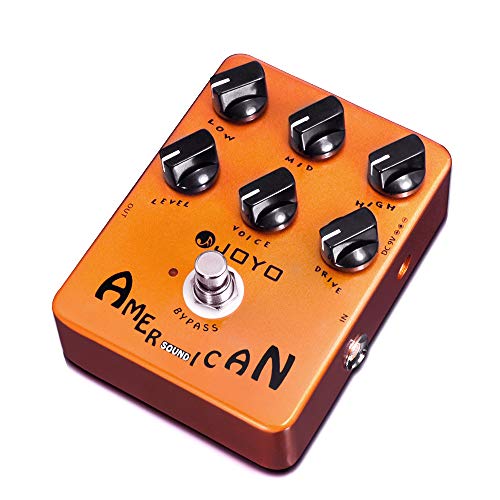
- ✓ Authentic American tones
- ✓ Direct recording ready
- ✓ Sturdy, lightweight build
- ✕ Needs regulated power supply
- ✕ Not a full amp replacement
| HousingMaterial | Aluminum alloy |
| PowerSupplyRequired | 9V DC regulated power supply recommended (not included) |
| PowerSupplyImpact | Regulated isolated supply advised to minimize hiss at high drive |
| VoicingControls | Voice knob for scooped vs. mid-forward tones (counter-clockwise = scooped/clean, clockwise = thicker mid-range overdrive) |
| BuiltInCabinetSimulation | Analog cabinet simulator for direct connection to PA, audio interface, or mixer |
| CoreControls | 6-knob control set: Level, Drive, Low, Mid, High, Voice |
You lean the JOYO JF-14 off the board and catch a whiff of that old-school amp vibe—the kind you hear in rehearsal spaces where cranked Tweed guitars ride the air. Then a quick twist of the Voice knob and you’re surprised how quickly it nudges from sparkling Blackface cleans to something thicker and more mid-forward, just like a real American tube amp would.
It’s not pretending to be a full amp, but it nails the feel well enough to keep you from reaching for your own stack in casual jams.
The aluminum chassis feels sturdy in your hand, lighter than you’d expect, and the knobs respond with a satisfying click as you tune. The 6-knob layout—Level, Drive, Low, Mid, High, and Voice—gives you enough color without turning into a science project.
You start with everything at noon, then nudge the Voice to sweep from scooped cleans to mid-packed drive without fighting with the signal chain.
Direct-to-PA or interface setup is shockingly simple. You can dial in a clean, glassy tone for a home studio or push the Drive for a punchier lead with body.
The built-in cabinet simulator is a real lifesaver when you’re recording in a room with odd reflections or practicing quietly. It’s the sort of feature you didn’t know you needed until you try it and hear the difference.
On stage, you’ll appreciate how the unit holds its tone under a bit of dirt and vibrato, staying musical rather than fizzy. The power supply caveat is real—use a clean, regulated 9V to keep hiss minimal at higher gains, and you’ll notice the difference in headroom.
For the price, this pedal feels like a surprisingly capable, go-to preamp for electric guitar players who crave authentic American flavors without breaking the bank.
All told, the JF-14 is a compact workhorse that travels well and sits nicely on crowded pedalboards. It may not replace a real amp, but it gets you within sniffing distance of that classic tone when you’re recording or playing live with a minimal rig.
Pros are lean and clear in my experience:
Cons are equally concise:
- Needs regulated power supply
- Not a full amp replacement
TC Electronic JIMS 800 PREAMP Guitar Pedal | Twin-Channel

- ✓ Strong cab-sim accuracy
- ✓ Smooth treble handling
- ✓ Flexible outputs
- ✕ Slight learning curve for setup
- ✕ Heavy on the pedalboard at times
| Type | Twin-channel guitar preamp pedal |
| Cabin Simulation | Convolution-based IR with authentic G12-65 4×12 cab |
| Tonestack | versatile modern-mix of classic amp controls |
| Output Options | Headphones, DI, and line/desk direct outputs with cab simulation |
| Treble Response Enhancement | Treble Bleed circuit to soften harsh tones |
| Gain Channel Feature | Subtle additional gain boost on second channel |
You glide the JIMS 800 onto your pedalboard and instantly notice how its twin channels feel like a tiny amp you can carry around. The first thing that stands out is how clean the cab simulation sounds, even when you’re just noodling at home next to the coffee mug shelf.
It’s not just “in the box” tones—there’s a sense that the convolution IR is translating real cabinet behavior.
The Treble Bleed circuit is the real quiet win you’ll notice after a day of chasing brightness. Fingers feel a little more forgiving when you roll the guitar volume down, and the edge that used to bite your ears softens into something musical.
It’s subtle, but you’ll hear it in how your chords stay defined at lower dynamics.
Dialing in with the versatile tonestack, you’re not stuck in one era of tone. You can tug the midrange into classic rock warmth or push for modern scooped clarity without losing the feel of the original amp.
The layout makes sense—classic knobs with modern tweaks that respond predictably in real life playing.
Output options are thoughtful enough for real-world use. Headphones for late-night practice, DI for a home project, or direct to a mixer for gigs—each path preserves the cab vibe.
It’s the kind of pedal you can reach for when you need a dependable, studio-to-stage transition.
The added gain on channel two is the nudge you didn’t know you were missing. It pushes just enough without turning into fizz, so solos stay expressive and not harsh.
It’s a frictionless way to get a touch more presence when you need it.
Build feels sturdy, controls are tactile, and the overall experience is friendly enough for both bedroom players and small rigs. If you’ve been hunting for a compact preamp with genuine cab feel and flexible output, this one nudges ahead without pretending to be a full amp rig.
In everyday scenarios, you’ll reach for the JIMS 800 when a gig or session demands reliable tone plus easy on-ramp to recording paths. It’s not chasing boutique quirks; it’s delivering a usable, musical character you can depend on.
SONICAKE Acoustic Guitar Effects Pedal Analog Preamp – A

| Input/Output Impedance | 10 MΩ high-impedance input |
| Output Connection | XLR balanced output |
| Power Requirements | 9 V center-negative DC power supply (power supply not included) |
| Special Features | Analog preamp with built-in notch filter, mute, and gain/frequency range adjustment |
| Buffer Design | Buffer bypass circuit to preserve pristine tone |
| Intended Use / Application | Designed for acoustic guitars and other acoustic instruments (e.g., violins, mandolins) requiring amplification |
PROS
CONS
- Power supply not included
- Limited to 9V pedal power
TC Electronic COMBO DELUXE 65′ PREAMP Guitar Pedal |

- ✓ Rich vintage feel
- ✓ Flexible two-channel setup
- ✓ Handy DI with cab IR
- ✕ Slightly warm on bright rooms
- ✕ Footswitch not super loud
| Output options | DI output with Celestion 1×12 G12M Creamback cab sim IR |
| Reverb Type | Built-in spring reverb inspired by vintage Blackface Deluxe unit |
| Channels | Two independent channels with separate gain, volume, and EQ controls |
| Controls | Independent gain, volume, EQ, reverb; Middle control and Bright switch for tone shaping |
| Practice/Monitoring | Headphone output for silent practice |
| Footswitch/Stage Use | Footswitch-enabled channel changes for live use |
You discover something surprising as you boot up the Combo Deluxe 65’. The first chord rings out from the spring reverb and you swear you hear a familiar grin in the room, like a tiny blackface sky opened up in your pedalboard.
It’s unexpected how warm and three-dimensional that tone feels, right from the first strum.
You’ve got two channels to juggle, and it’s wonderfully clear how independent the gains and EQs are. You can push one for gritty clean, keep the other sparkling and loud for solos, then flick between them with the footswitch and not lose your sense of space.
The built-in spring reverb isn’t just “reverb”—it’s a real, airy glide that reminds you of a classic tube amp, without the weight of a full stack.
The MIDDLE control and the Bright switch add a little extra spice you didn’t know you needed. Dialed in, they carve out room in a dense mix or brighten up a muddy guitar part without shouting.
It’s the kind of tonal shaping you reach for during gig prep when you want to feel like you’ve got a real amp on stage, not a simulation.
The DI output with the Celestion IR is handy for recording or direct gigs, and the headphone out is surprisingly usable for late-night practice. It’s sturdy, compact, and easy to mount on a pedalboard, with knobs that respond so you can tweak on the fly without losing your rhythm.
All told, it feels like a practical, flavorful throwback that plays nice with modern setups. You’ll reach for it when you want that unmistakable vintage vibe without hunting down a vintage amp.
BOSS BP-1W Booster/Preamp Guitar Pedal with Analog Circuitry

- ✓ Versatile three-mode design
- ✓ Rich, musical saturation
- ✓ Natural clean boost option
- ✕ Slightly pricey
- ✕ Larger footprint than basic boosters
| Mode_Types | CE Mode, RE Mode, NAT Mode |
| Circuit_Type | Analog circuitry with premium Waza Craft design |
| Gain_Control | Gain knob for saturation amount |
| Level_Control | Level knob for overall output level |
| Input_Buffer | Selectable input buffer: Standard or Vintage |
| Warranty | BOSS Five-Year Warranty |
You’ve probably heard that a booster is just a lighter touch for your signal, no big deal beyond a louder knob. On the BP-1W, that misconception gets a quick reality check the moment you twist the gain and hear the room-right sustain bloom with analog warmth.
From the first click, you notice the three modes aren’t gimmicks. CE mode adds a bright, bell-like bite you can actually hear in a live band setting, not just in a studio sense.
RE mode brings a fat, vintage saliva of warmth that coats your chords without turning everything muddy.
The NAT mode keeps things transparent, so you can push the front end of your amp without losing your core tone. The build feels premium, with the tactile attention you’d expect from a Waza Craft-inspired design.
It sits on the pedalboard like a sturdy, familiar friend.
Dialing in the gain is where you’ll start to hear the real value. You get usable saturation without fizz, and the level control lets you drive amps or other pedals without surprising volume jumps.
The selectable input buffer is a small but meaningful detail that changes your feel and response in subtle, musical ways.
In practice, you’ll reach for this when you want a touch more personality without stepping into a full overdrive. It pairs nicely with single-coils or humbuckers, giving you a versatile preamp voice for gigs, rehearsals, or home practice.
The five-year warranty adds confidence that this isn’t a quick flavor of the month.
Bottom line: you’re getting a compact analog toolkit in one box, with distinct voices that map cleanly to real-world playing styles. It isn’t just a boost pedal; it’s a preamp that respects your core signal while giving you three very usable character shifts.
What Is a Preamplifier Pedal and How Does It Enhance Electric Guitar Sound?
The benefits of incorporating a preamp pedal into an electric guitar setup are manifold. They can add warmth and depth to the sound, making it richer and more pleasing to the ear. Preamps also allow for greater dynamic range and headroom, enabling players to achieve a more responsive and expressive performance. Moreover, they can serve as a bridge between the guitar and various effects, ensuring that the signal retains its integrity while passing through multiple devices.
To make the most of a preamp pedal, musicians are encouraged to consider specific features that align with their playing style. For instance, the best preamp pedal for electric guitar might include options for both clean and overdriven tones, allowing seamless transitions between different sound profiles. Additionally, it is advisable to experiment with placement within the signal chain to determine the optimal position for achieving the desired tonal effects, whether before or after distortion pedals, for instance.
How Do You Choose the Right Preamplifier Pedal for Your Needs?
Choosing the right preamplifier pedal for electric guitar involves considering several key factors that influence sound quality, versatility, and usability.
- Sound Quality: Look for a preamp pedal that offers a clean and transparent tone, or one that adds warmth and character, depending on your style. High-quality components and circuitry are crucial for minimizing noise and distortion, ensuring that your guitar’s natural tone shines through.
- Versatility: Opt for a pedal that allows you to shape your sound with various EQ controls and tonal options. A versatile preamp can accommodate different playing styles and genres, making it suitable for both live performances and studio recordings.
- Power Requirements: Consider whether the pedal requires a battery or an external power supply. This can affect portability and convenience, especially for musicians who travel frequently or perform in different venues.
- Build Quality: A sturdy construction is essential for durability, particularly if you plan to use the pedal in a live setting. Look for a pedal with metal housing and reliable footswitches to withstand the rigors of regular use.
- Price Point: Determine your budget as preamp pedals can vary significantly in price. Evaluate the features offered at different price ranges to find the best value for your specific needs without compromising on quality.
- Reviews and Recommendations: Research user reviews and expert recommendations to gauge the performance and reliability of the pedal. Insights from fellow guitarists can help you identify the best preamp pedal for electric guitar that aligns with your expectations.
What Features Matter Most in a Preamplifier Pedal?
When selecting the best preamp pedal for electric guitar, several key features should be considered:
- Sound Quality: The sound quality of a preamp pedal is paramount, as it directly affects your guitar’s tone. Look for pedals that offer a clean, transparent amplification or those that introduce desirable coloration without compromising clarity.
- EQ Controls: EQ controls allow you to shape the tonal balance of your signal. Having adjustable bass, midrange, and treble frequencies can help tailor your sound to fit various musical styles and settings.
- Gain Range: A versatile gain range enables the pedal to handle different types of pickups and playing styles. Whether you need a subtle boost or a gritty overdrive, a preamp with a wide gain range will provide the flexibility you need.
- Build Quality: The durability of a preamp pedal is crucial, especially for gigging musicians. Look for sturdy construction and high-quality components that can withstand the rigors of regular use on stage or in the studio.
- Power Supply Options: Consider how the pedal is powered, whether by batteries or a power adapter. Pedals that can operate on both battery and external power offer greater convenience for different playing scenarios.
- Size and Portability: The physical size of the pedal can impact your pedalboard setup and portability. Smaller pedals are easier to fit on crowded boards, while larger ones may offer more features but can be cumbersome to transport.
- Additional Effects: Some preamp pedals come with built-in effects like reverb, delay, or modulation. These additional features can enhance your sound without needing extra pedals, making setup simpler and more efficient.
- Connectivity Options: Check for various input and output options, including XLR outputs for direct connection to a PA system. Versatile connectivity allows for seamless integration into different setups, whether live or in the studio.
- Price Point: Finally, consider your budget, as preamp pedals can vary significantly in price. It’s essential to find a balance between features and cost to ensure you get the best value for your investment.
How Does Gain Control Affect Your Tone?
Gain control on a preamp pedal is a critical parameter that significantly affects the tone of an electric guitar. It determines the amount of amplification applied to the signal before it reaches the speakers or additional effects.
-
Distortion Levels: Higher gain settings introduce more distortion, resulting in a saturated, rich tone often favored in rock and metal genres. It accentuates harmonics and can create a more aggressive sound.
-
Dynamic Response: With lower gain, the tone tends to remain cleaner, preserving the guitar’s inherent nuances and dynamics. This range is ideal for jazz, blues, or any style requiring articulation and clarity.
-
Noise Levels: Increased gain can also amplify background noise and unwanted feedback. Effective use of gain involves balancing it to achieve the desired tone while keeping unwanted noise in check.
-
Articulation: Gain control can impact how well notes sustain. This is particularly important for soloing, where a higher gain can give notes a fuller body, making solos stand out.
Understanding the relationship between gain and tone is essential for crafting personalized guitar sounds that suit various musical styles. Experimenting with different gain settings on your preamp pedal can lead to discovering unique tones and dynamics tailored to your playing style.
What Impact Does EQ Have on Your Sound?
- Frequency Response: The frequency response of a preamp pedal determines how it amplifies different ranges of frequencies. A pedal with a broad and balanced frequency response will preserve the natural tone of the guitar while allowing for tonal adjustments to enhance specific frequencies.
- Boost and Cut Capabilities: Many preamp pedals feature EQ controls that allow you to boost or cut specific frequency ranges. This capability enables musicians to tailor their sound, emphasizing desirable tonal characteristics or reducing unwanted frequencies that may muddy the mix.
- Presence and Warmth: EQ settings can add presence and warmth to the guitar tone. For instance, boosting mids can enhance the richness of the sound, while a high-frequency boost can add sparkle and clarity, making the guitar stand out in the mix.
- Interaction with Other Effects: EQ can also affect how guitar signals interact with other effects pedals. Adjusting EQ settings can prevent frequencies from clashing with distortion, modulation, or delay effects, ensuring that each element of the sound remains clear and distinct.
- Dynamic Range Control: A well-designed EQ in a preamp pedal can help manage the dynamic range of your guitar signal. By smoothing out peaks and boosting softer sounds, it can lead to a more consistent and polished overall tone, especially important during live performances.
Which Are the Best Preamplifier Pedals for Different Playing Styles?
The best preamp pedals for electric guitar cater to various playing styles and preferences, enhancing tone and versatility.
- Boss Katana Air Wireless Guitar Amplifier: This compact pedal offers a unique combination of portability and powerful tone shaping.
- MXR M81 Bass Preamp: Although designed for bass, this preamp pedal is also favored by guitarists for its clean and punchy sound.
- Palmer PDI03 JB Speaker Simulator: Ideal for those looking to record directly, this pedal simulates speaker feedback and impedance for a more authentic sound.
- Tech 21 SansAmp GT2: Renowned for its versatility, this pedal can emulate various amplifier sounds, making it perfect for diverse styles.
- Electro-Harmonix Black Finger Compressor: While primarily a compressor, it serves as a great preamp, adding warmth and sustain to your sound.
Boss Katana Air Wireless Guitar Amplifier: This wireless pedal is designed for guitarists who value both convenience and quality. It features Bluetooth connectivity for streaming music and a wide range of tone controls, which allow players to shape their sound to fit various genres, from blues to hard rock.
MXR M81 Bass Preamp: This pedal is primarily aimed at bass players but has gained a reputation among guitarists for its ability to provide a clear and powerful signal. Its built-in EQ section helps tailor the tone, offering flexibility for different playing styles, whether clean or distorted.
Palmer PDI03 JB Speaker Simulator: This preamp is excellent for direct recording or live performances where amplifiers are not an option. It simulates the characteristics of a speaker cabinet, giving guitarists a fuller sound that’s closer to what they’d get from a traditional amp setup.
Tech 21 SansAmp GT2: This pedal is known for its ability to recreate the tonal characteristics of various amplifiers, making it a favorite for guitarists who switch styles frequently. With adjustable controls for gain, treble, mid, and bass, it allows players to dial in their perfect tone, whether they are looking for a vintage or modern sound.
Electro-Harmonix Black Finger Compressor: This pedal not only acts as a compressor, enhancing sustain and clarity, but also serves as a preamp that warms up the signal. Guitarists appreciate its ability to smooth out dynamics while maintaining tonal integrity, making it suitable for both clean and overdriven settings.
Are There Affordable Options Without Compromising Sound Quality?
There are several affordable preamp pedals for electric guitar that maintain high sound quality without breaking the bank:
- Behringer Vintage Time Machine VM1: This preamp pedal is known for its warm, vintage tones and simple controls, making it suitable for a variety of music styles.
- Joyo JF-14 American Sound: The JF-14 offers impressive versatility with its EQ controls and built-in cab simulation, allowing users to achieve a wide range of tones at an affordable price.
- MXR M81 Bass Preamp: While designed primarily for bass, this pedal can be effectively used with electric guitars, providing a clear and punchy sound with great tonal shaping options.
- Electro-Harmonix Nano Big Muff Pi: This pedal is not just a distortion unit but also functions as a preamp, giving a rich, saturated tone that can enhance your guitar’s sound without losing clarity.
- TC Electronic Spark Booster: The Spark Booster is an excellent option for adding both gain and tonal enhancement to your sound, all while remaining budget-friendly and compact.
The Behringer Vintage Time Machine VM1 is a great choice for guitarists seeking a warm, vintage sound. The simplicity of its controls allows players to quickly dial in their desired tone, making it user-friendly for both beginners and seasoned musicians alike.
The Joyo JF-14 American Sound stands out due to its versatility. It features a range of EQ controls and cab simulations, enabling users to craft sounds from various guitar amp styles, all without a hefty price tag.
The MXR M81 Bass Preamp, while primarily intended for bassists, offers a clear and punchy sound that works well with electric guitars as well. It includes several tonal shaping options, making it a fantastic addition to any guitarist’s pedalboard.
The Electro-Harmonix Nano Big Muff Pi adds a unique twist by functioning as both a distortion and preamp pedal. Its rich, saturated tones can significantly enhance an electric guitar’s sound while still preserving clarity, making it a versatile option for various genres.
Lastly, the TC Electronic Spark Booster excels in providing an extra boost along with tonal enhancement. This compact pedal is budget-friendly and effective, making it a favorite for guitarists looking to add some extra punch to their playing without compromising on sound quality.
What Advantages Do Preamplifier Pedals Offer Over Traditional Setups?
Preamplifier pedals offer several advantages over traditional setups for electric guitarists.
- Portability: Preamplifier pedals are compact and lightweight, making them easy to transport and set up for gigs or practice sessions.
- Versatility: Many preamp pedals come with a range of tone-shaping features, allowing guitarists to experiment with different sounds and styles without needing multiple amplifiers.
- Direct Recording Capability: These pedals often include a direct output option, enabling musicians to connect directly to recording systems or PA systems, maintaining sound quality without relying on microphones.
- Reduced Noise: Preamplifier pedals help reduce noise and interference that can occur with traditional setups, providing a cleaner signal chain.
- Less Heat Production: Unlike traditional tube amplifiers, which can become hot and require time to warm up, preamp pedals remain cool and ready to use almost instantly.
- Consistency: The sound produced by preamp pedals is often more consistent across different venues, as they can be adjusted to deliver the same tone regardless of the amplification system used.
Portability allows guitarists to carry their gear easily, making it ideal for musicians who travel frequently. The compact size means that a preamp pedal can fit into a gig bag or pedalboard without taking up significant space.
Versatility is a key benefit as many pedals offer multiple modes or settings, enabling players to find their ideal sound quickly. This flexibility means that guitarists can adapt their tone to suit various musical genres without needing multiple setups.
Direct recording capability is particularly valuable for those who record at home or in a studio setting. With a direct output, musicians can achieve high-quality sound recordings without the need for additional microphones or amplifiers.
Reduced noise is achieved through better circuitry and design, which minimizes hum and interference that can plague traditional setups. This results in a clearer sound that is especially important for performances and recordings.
Less heat production is an advantage for those playing long sets or during warm conditions, as it ensures that the equipment remains cool and functional. This also means less wear and tear on the components, contributing to longer pedal life.
Consistency across venues is crucial for professional musicians, as it allows them to deliver the same performance night after night. Preamplifier pedals can be easily dialed in to ensure a reliable sound regardless of the acoustics or amplification used at different locations.
How Can You Effectively Integrate a Preamplifier Pedal into Your Rig?
Integrating a preamplifier pedal into your rig can enhance your guitar’s tone and versatility.
- Placement in the Signal Chain: The position of the preamp pedal in your signal chain can significantly affect your sound.
- Power Supply Considerations: Ensuring your preamp pedal has the correct power supply is crucial for optimal performance and noise reduction.
- Matching Impedance: It’s important to match the impedance between your guitar, the pedal, and the amplifier to maintain signal integrity.
- Experimenting with Settings: Take time to experiment with different settings on the preamp pedal to find the best tone for your style.
- Using EQ Adjustments: Utilize the EQ features on the preamp pedal to shape your sound precisely, enhancing or cutting frequencies as needed.
The placement of the preamp pedal can vary based on your setup but is typically placed before modulation effects and after any distortion or overdrive pedals to ensure the cleanest signal is processed first. This positioning can maximize the tonal benefits and keep your sound clear and articulate.
When it comes to power supply, using a dedicated power adapter or a power supply with isolated outputs can help prevent unwanted noise and interference. Many preamp pedals operate best at certain voltage levels, so ensure you’re providing the recommended power to avoid any performance issues.
Matching impedance is fundamental in achieving the best sound quality. If the impedance of the preamp pedal is mismatched with that of the guitar or amp, it can lead to loss of tone and signal clarity, resulting in a less desirable sound.
Experimentation is key when it comes to setting up your preamp pedal. Each pedal has unique characteristics and tonal options, so playing around with gain, tone, and other controls allows you to discover the best settings that complement your playing style.
Using the EQ adjustments available on the preamp pedal can greatly enhance your guitar tone. Depending on the frequencies you want to emphasize or reduce, small tweaks can lead to significant differences in how your guitar sits in the mix, making it essential for achieving a polished and professional sound.
Related Post: