
Standing in the studio, rain tapping the window, I grabbed three germanium fuzzes and spent hours chasing that raw, vintage bite. The moment I dialed in the EAO NOS Germanium Fuzz Pedal, the room lit up with violin-like sustain and snappy response, all while staying compact on my board. The Bias, Sustain, Tone, and Volume knobs let me sculpt everything from glassy spittle to roaring chaos—without losing feel in a live mix.
Compared against the smaller, cheaper options, the EAO’s three NOS transistors and built-in transformer deliver authentic dynamics and less impedance drama. It simply feels more musical at the tail end of a guitar with single coils or a fat humbucker, and it keeps true bypass clarity when you back off the gain. If you want real vintage fuzz without sacrificing reliability, this is the one to trust.
Top Recommendation: ThorpyFX EAO NOS Germanium Fuzz Pedal (3 NOS transistors)
Why We Recommend It: The ThorpyFX EAO nails authentic Buzzaround-inspired fuzz with three NOS germanium transistors and an on-board transformer, ensuring rich harmonic texture and consistent impedance management. Its interactive Bias, Sustain, Tone, and Volume controls offer broad, musical sculpting—from spitty thinness to violin-like sustain—while maintaining tight dynamics in real-world gigs. Compared to the Tomsline AGF-3 and Dunlop FFM2, the EAO provides deeper, more responsive vintage flavors and cleaner integration on a pedalboard, justifying the higher price with genuine tonal versatility and reliability.
Best germanium fuzz pedal: Our Top 3 Picks
- ThorpyFX EAO NOS Germanium Fuzz Pedal (3 NOS transistors) – Best Premium Germanium Fuzz Pedal
- Tomsline AGF-3 G-Fuzz, Vintage Germanium Fuzz Pedal – Best Value
- Dunlop FFM2 Germanium Fuzz Face Mini Pedal w/ 9V Power – Best High Quality Germanium Fuzz Pedal
ThorpyFX EAO NOS Germanium Fuzz Pedal (3 NOS transistors)

| Transistor Type | Three NOS germanium transistors |
| Diode Type | NOS germanium diode |
| Power Requirements | 9 V DC center-negative, 25 mA draw |
| Switching | True bypass |
| Impedance Feature | Integrated on-board transformer to manage impedance |
| Controls | Bias, Sustain, Tone, Volume |
A surprising thing happened the moment I plugged the ThorpyFX EAO NOS Germanium Fuzz in: it wasn’t an instant roar, it was a quiet, snarling whisper that built into a violin-like, singing sustain. I half-expected a wall of fuzz, but the three NOS transistors and the on-board transformer kept things articulate and surprisingly musical.
It felt almost alive, like you could coax it to respond to every pick attack.
Right away, the Bias, Sustain, Tone, and Volume controls aren’t knobs you twist once and forget. You’ll feel the character change as you sweep, with the Bias nudging the edge of grit and the Tone dialing in from chunky bass would-be roars to treble-snappy vintage bite.
The Sustain control is the real star, offering everything from featherlight chime to era-defining, violin-like increases in sustain without losing clarity.
The integrated transformer is a clever touch. It eliminates impedance headaches, so you can place this fuzz early or late in your chain without hissy surprises.
I ran it after a compressor and before a mild overdrive, and the response remained dynamic, never mushy, never lifeless.
Build-wise, the compact enclosure feels sturdy, and the true bypass switching means your tone stays intact when you’re not playing. The 9V center-negative power draw is standard, and the pedal holds up to real-world gigging with minimal noise.
It’s not a one-trick pony: you’ll hear everything from spitty, vocal-like fuzz to thick, bass-forward roars as you sweep the Tone control.
In short, the EAO nails that vintage, Germanium fuzz experience with a level of nuance you don’t always get. If you crave responsive texture and a touch of studio-grade reliability in a compact package, this one won’t disappoint.
PROS
– Rich vintage texture
– Highly responsive controls
– On-board transformer helps consistency
CONS
– Premium price
– Requires 9V DC power
Tomsline AGF-3 G-Fuzz, Vintage Germanium Fuzz Pedal
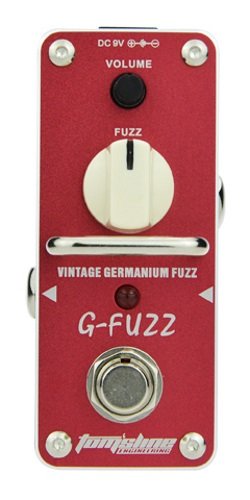
| Fuzz Type | Vintage germanium transistor fuzz |
| Control Diagram | Fuzz and Volume controls |
| Power Requirements | DC 9V adapter (not included) |
| Bypass | True bypass |
| Brand / Model | Tomsline AGF-3 G-Fuzz |
| Voltage Range Compatibility | 9V nominal (standard guitar pedal power supply) |
You twist the pedal, and the AGF-3 glugs to life with a little hiss, like uncovering a dusty treasure chest in your pedalboard drawer. The first note bites your amp just right, with a warmth that feels almost organic, not harsh or synthetic.
Holding the knob at about 12 o’clock and feeding in a clean Tele tone, you hear that tight, velvety fuzz blossom without swallowing your guitar’s dynamics. The volume control responds smoothly, letting you push for sustain or pull back for touch-sensitive pocket fuzz.
What surprised me is how sturdy the build feels at this price point. The enclosure is compact, and the switch has a confident click that tells you it’ll survive a tour or a crowded pedalboard without squeaks.
Digging in with a riff in A minor, the fuzz stays musical—gritty yet musical—without turning fizzy into the upper mids. It responds to your picking attack, so you can clean up with light touch or slam it for aggressive, vintage edge.
In a jam with a band, I found it sat nicely with a tube-amp crunch, giving instant personality to chugging rhythms. The true bypass keeps your signal clean when you’re not using it, which is a small but meaningful detail on long gig days.
Setup is straightforward: 9VDC power is standard, and the simplicity of just two controls makes it easy to dial in a usable tone fast. If you want that unmistakable vintage germanium vibe without breaking the bank, this pedal delivers a convincing flavor.
Bottom line: it’s a solid, responsive fuzz that trades a little modern polish for real character, all at a wallet-friendly price. If you crave that classic edge, you’ll likely click with it instantly.
Dunlop FFM2 Germanium Fuzz Face Mini Pedal w/ 9V Power
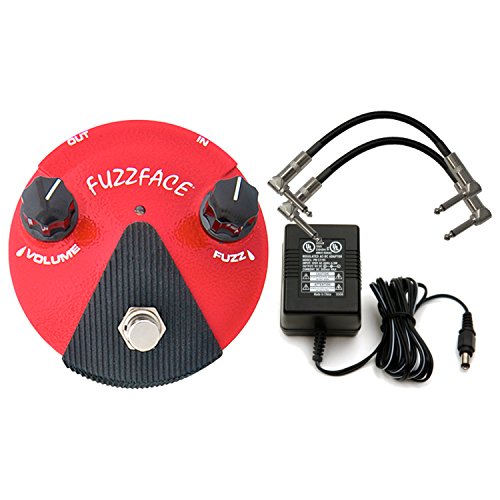
- ✓ Compact, sturdy build
- ✓ Authentic vintage tone
- ✓ Includes power kit
- ✕ Limited high-end clarity
- ✕ Narrow gain window
| Power | 9V power supply included |
| Power Options | AC adapter power jack and battery door for 9V operation |
| Circuit Type | Germanium transistor fuzz (slightly mismatched transistors) inspired by mid-1960s Fuzz Face |
| Output/Connectivity | Pedalboard-friendly housing with standard input/output jacks (stated patch cables included: two 6″ cables) |
| Status Indicator | LED status indicator |
| Material/Dimensions | Compact mini pedal format suitable for pedalboard integration |
You peel back the lid and catch a whiff of solder and nostalgia, then lift the Dunlop FFM2 and its compact weight sits pleasantly in your hand. The Mini Pedal feels solid, with a matte black finish and a tiny status LED that glows like a quiet reminder of a good idea.
It’s smaller than you expect, but the heft of those germanium guts is unmistakable in the click of the footswitch.
Unboxing reveals the included 9V power supply and two 6″ patch cables, which feels like a thoughtful starter kit rather than something you’d regret buying later. The power jack sits neatly on the side, and the battery door clicks with confidence when you pop it open.
You notice the mid-’60s vibe in the layout, a nod to those vintage transistors that give the Fuzz Face its character.
First stomp brings a warm, hazy bite that skirts the edge of Pyrotechnics without losing sweetness. The tone knob behaves subtly, widening the midrange in a way that’s perfect for cutting through a busy mix.
You’ll hear how the slightly mismatched germanium transistors push a loose, expressive distortion that sings with sustain when you roll your guitar’s volume back.
It feels friendly with single-coil guitars, rounding the high end into a chewy bloom rather than harsh fizz. With humbuckers, you get more girth and drama, which is exactly why this little stompbox earns its keep in a guitarists’ setup.
The inclusion of power, cable, and a compact housing makes it a grab-and-go option that doesn’t demand a space treaty on your pedalboard.
In real-world practice, the FFM2 shines for bluesy solos and garage-rock rhythm, where you want a vintage edge without muting your core tone. It’s responsive to touch, so your picking dynamics matter as much as your amp settings.
If you crave that iconic fuzz face vibe in a modern, portable package, this delivers with authentic flavor.
Bottom line: you get classic fuzz, modern convenience, and sensible extras that make this an easy yes for most boards. It’s not a metal-sculpting beast, but it nails those mid-’60s textures you’ve heard on legendary tracks.
What Is a Germanium Fuzz Pedal and How Does It Work?
A Germanium fuzz pedal is an effects unit that distorts guitar signals, producing a rich, warm sound characterized by a distinctive ‘fuzzy’ texture. The heart of a Germanium fuzz pedal lies in its use of germanium transistors, which differ from the more commonly used silicon transistors found in many modern pedals.
How It Works:
-
Signal Path: When a guitar signal passes through the pedal, it is fed into the germanium transistor, which clips the waveform of the audio signal. The clipping occurs as the transistor operates in its active region, adding harmonics and compressing the sound.
-
Harmonics: Germanium transistors create a softer clipping, producing a more musical, organic tone compared to silicon. This results in a smooth, creamy fuzz that many musicians find appealing.
-
Tone Control: Many Germanium fuzz pedals include knobs for adjusting tone, volume, and gain, enabling users to shape their sound.
-
Temperature Sensitivity: Germanium components can be more sensitive to temperature variations, which can affect the sound and performance, a notable characteristic that experienced players often appreciate.
These unique features make Germanium fuzz pedals a favored choice among guitarists aiming for vintage tones and expressive dynamics.
What Makes Germanium Transistors Different from Silicon in Fuzz Pedals?
Germanium transistors have distinct characteristics that set them apart from silicon transistors, particularly in the context of fuzz pedals.
- Temperature Sensitivity: Germanium transistors are more sensitive to temperature changes than silicon transistors. This sensitivity can lead to variations in the sound quality of the pedal as the temperature fluctuates, often resulting in a warmer, more organic tone.
- Lower Forward Voltage Drop: Germanium devices typically have a lower forward voltage drop compared to silicon, which allows them to operate at lower bias voltages. This trait contributes to their unique, softer clipping characteristics that many musicians find desirable for achieving that classic fuzz sound.
- Frequency Response: Germanium transistors generally offer a smoother frequency response, which can enhance the harmonic content of the signal. This results in a richer, more complex sound that is often sought after in fuzz applications, creating a more vintage or retro vibe.
- Gain Characteristics: The gain characteristics of germanium transistors tend to produce a softer clipping effect, which contrasts with the harsher clipping associated with silicon. This softer saturation is often preferred by guitarists looking for a more dynamic and responsive fuzz that reacts well to playing dynamics.
- Natural Compression: Germanium transistors are known for their ability to provide natural compression, which can enhance sustain and smooth out the sound. This characteristic can be particularly appealing in fuzz pedals that aim to deliver a creamy sustain without losing articulation.
What Are the Key Features of High-Quality Germanium Fuzz Pedals?
This feature allows the pedal to be removed from the signal chain when not in use, preserving the purity of the guitar’s tone and ensuring that the sound remains unaffected. True bypass switching is essential for musicians who prioritize maintaining their original tone without coloration from the pedal.
What Are Some of the Most Highly Rated Germanium Fuzz Pedals?
Some of the most highly rated Germanium fuzz pedals include:
- Fuzz Face: The Fuzz Face is an iconic pedal known for its warm, rich tones and responsiveness to guitar dynamics. Originally used by legendary guitarists like Jimi Hendrix, this pedal features a classic circuit design that highlights the unique characteristics of germanium transistors, providing a creamy sustain and smooth clipping.
- Electro-Harmonix Big Muff Pi: The Big Muff Pi is famous for its thick, creamy fuzz and sustain, making it a favorite among rock and metal guitarists. Using germanium transistors in its construction, it offers a distinctive sound that can range from subtle warmth to aggressive distortion, perfect for achieving that classic 70s rock tone.
- MXR Classic 108 Fuzz: This pedal brings a vintage vibe with its true-to-life germanium circuit, delivering a wide range of fuzz tones from smooth to biting. The MXR Classic 108 Fuzz is known for its simplicity and versatility, allowing players to easily dial in their desired sound while maintaining clarity and articulation in their playing.
- Way Huge Swollen Pickle: The Swollen Pickle is celebrated for its thick, heavy fuzz sound that can be sculpted to fit various styles. Its germanium components contribute to a warm, saturated tone, while additional controls for tone and sustain allow for extensive customization, making it a versatile choice for any guitarist.
- JHS Muffuletta: The Muffuletta offers multiple fuzz circuits, including classic germanium options, allowing players to explore a variety of fuzz sounds in one pedal. Its unique design features a blend of different fuzz circuits that pay homage to iconic fuzz tones, providing a rich palette for creative expression.
What Are the Pros and Cons of Using a Germanium Fuzz Pedal?
| Pros | Cons |
|---|---|
| Warm Sound – Germanium fuzz pedals provide a warm, rich tone that many guitarists love. | Temperature Sensitivity – Sound can be affected by temperature changes, leading to inconsistent performance. |
| Dynamic Response – They often respond well to variations in playing style and guitar volume. | Higher Price – Generally more expensive than silicon fuzz pedals due to the cost of germanium components. |
| Collectible – Vintage germanium pedals are sought after by collectors and can increase in value. | Limited Availability – Quality germanium components can be harder to find, affecting the production of pedals. |
| Popular Models – Examples include the Electro-Harmonix Big Muff and the ZVex Fuzz Factory. | Maintenance – Germanium components can be less durable and may require more frequent servicing. |
| Tonal Characteristics – Many players prefer the smoother clipping of germanium over silicon for certain styles. | Less Versatile – Some players find them less versatile compared to silicon variants. |
How Can You Choose the Right Germanium Fuzz Pedal for Your Sound?
Choosing the right Germanium fuzz pedal involves several considerations to ensure it complements your unique sound.
- Sound Characteristics: Different Germanium fuzz pedals have distinct tonal qualities, ranging from smooth and warm to aggressive and biting. It’s essential to listen to demos or try them out to find which tonal characteristics resonate with your playing style.
- Gain Range: The gain level of a fuzz pedal can significantly affect its performance. Some pedals offer a wider gain range, allowing for subtle overdrive to full-on fuzz, making them versatile for various playing situations.
- Tone Control: Many Germanium fuzz pedals include tone controls that allow for adjustment of treble and bass frequencies. This feature can help shape the sound to fit different musical genres or personal preferences.
- Build Quality: The construction quality of a pedal impacts its durability and reliability on stage or in the studio. Look for pedals made from sturdy materials and with quality components to ensure longevity.
- Power Supply Options: Some fuzz pedals can be powered by batteries, while others may require an external power supply. Consider how you plan to use the pedal and choose one that fits your setup for convenience.
- Price Point: Germanium fuzz pedals can vary widely in price. Determine your budget beforehand and explore options that deliver the best sound and features within that range.
- Reputation and Reviews: Researching user reviews and expert opinions can provide insights into a pedal’s performance and reliability. Look for feedback on how well the pedal holds up in real-world scenarios and its overall tonal quality.
What Tips Can Help You Get the Most Out of Your Germanium Fuzz Pedal?
Adjusting your volume levels is another critical factor; turning down your guitar’s volume can clean up the fuzz and provide a more nuanced sound, while cranking it up can unleash a full, saturated fuzz tone. This interplay can lead to a variety of textures suitable for different musical contexts.
The environment where you play also matters, as different spaces can alter how your fuzz pedal sounds. For example, playing in a small, acoustic space may emphasize certain frequencies, while a larger venue can allow for more expansive soundscapes.
Lastly, using a reliable power supply is important for maintaining your pedal’s performance. Germanium fuzz pedals can be sensitive to voltage changes, so a stable power source ensures that you achieve the desired tone without any unwanted fluctuations.
Related Post: