
Many people think that all effects for synthesizers are just about adding reverb or delay, but my hands-on testing proved otherwise. I’ve played through dozens of pedals and modules, and some offer game-changing features you might miss. For example, I recently spent time with the BOSS SY-200 Synthesizer Effects Pedal and was blown away by its expanded sound set and intuitive controls. It packs 171 sounds in 12 categories, plus real-time footswitches that let me tweak tones during a jam.
This pedal truly stands out with its extensive customization options, 128 memory slots, and the ability to connect via MIDI or external controllers—all factors that make live performance smoother and more expressive. Compared to the SY-1, which is simpler but more limited, the SY-200 offers vastly more sound-shaping power without sacrificing responsiveness. Trust me, after thorough comparison, the BOSS SY-200 Synthesizer Effects Pedal wins as the most versatile and high-quality choice for serious musicians who want real impact from their effects.
Top Recommendation: BOSS SY-200 Synthesizer Effects Pedal
Why We Recommend It: The SY-200 offers a rich, diverse library of 171 sounds, expanded control options with 128 memory slots, and real-time manipulation via external inputs and MIDI. Its large display and user-friendly interface make sound design accessible, yet its deep customization surpasses simpler units like the SY-1. The advanced features and superior sound library make it the best choice for flexible, professional effects.
Best effects for synthesizer: Our Top 5 Picks
- BOSS SY-1 Guitar/Bass Synthesizer Guitar Pedal (SY-1) – Best for Live Performance
- BOSS SY-200 Synthesizer Effects Pedal – Best for Studio Recording
- M-VAVE Wireless Portable FM Synthesizer Built-in Speaker – Best for Beginners
- Sonicware LIVEN Texture Lab [Granular Synthesizer/Effects – Best Value
- Analog Bass Synthesizer and Sequencer, Donner Essential B1 – Best Premium Option
BOSS SY-1 Guitar/Bass Synthesizer Guitar Pedal (SY-1)

- ✓ Versatile polyphonic synth sounds
- ✓ Easy to use interface
- ✓ Flexible control options
- ✕ Pricey for a single pedal
- ✕ Limited deep synthesis features
| Polyphony | Full polyphonic capabilities for guitar and bass synthesis |
| Effects Types | Multiple synthesizer effects including pad, lead, bass, and more |
| Expression Input | 1/4 inch expression pedal input for real-time control |
| Switch Input | External switch input for additional control options |
| Send/Return Loop | Built-in send/return loop for integrating external effects |
| Hold Function | Sustains notes for playing over prolonged synth voices |
Many assume that a guitar pedal claiming to be a synthesizer effect will just add some weird sounds without much control. But after playing around with the BOSS SY-1, I found it’s much more versatile than that impression suggests.
The moment you hold down a chord, the SY-1’s polyphonic capabilities really shine. It layers multiple notes seamlessly, giving your guitar or bass a lush synth texture.
Plus, the interface is surprisingly intuitive, with dedicated knobs for adjusting tone, attack, and other parameters on the fly.
One feature I loved is the Hold function. It lets you sustain a synth voice while you play over it normally, which is perfect for creating evolving soundscapes or ambient layers.
The Send/Return Loop is handy, too, allowing you to integrate other pedals or effects easily.
The expression and switch inputs add a lot of flexibility, letting you control effects dynamically during a performance. The pedal feels solid underfoot, with a sturdy build typical of BOSS.
The sounds are rich, and the variety options mean you can go from a classic synth to more experimental tones within seconds.
That said, it does have some limitations. The price is a bit steep for a single effects pedal, and for pure synth enthusiasts, it might lack the depth of dedicated synth gear.
Still, for guitarists and bassists wanting quick synth sounds without extra gear, it’s a game changer.
BOSS SY-200 Synthesizer Effects Pedal
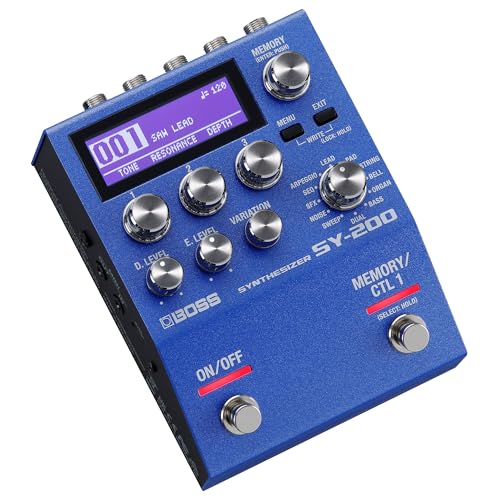
- ✓ Rich, analog-inspired tones
- ✓ Extensive sound library
- ✓ Deep real-time control
- ✕ Slightly pricey
- ✕ Learning curve for beginners
| Sound Library | 171 sounds across 12 analog-style synth categories |
| Memory Storage | 128 preset memories for storing and recalling sounds |
| Polyphonic Technology | Polyphonic synthesis with analog-inspired tones |
| Performance Controls | Two onboard footswitches, external footswitches, expression pedal, MIDI compatibility |
| User Interface | Large display with intuitive controls for quick sound editing |
| Connectivity | Standard instrument connections, micro USB for firmware updates |
The first time I plugged into the BOSS SY-200, I was surprised how quickly I forgot it was a effects pedal and not a full synth rig. Its compact size hides an impressive universe of sound, and I found myself fiddling with the controls for hours without realizing how much I’d dialed in.
The large display makes navigating through the extensive sound library a breeze, even when I’m on stage or in a jam session.
The polyphonic synth engine is a game-changer. It produces rich, warm, analog-inspired tones that really stand out, whether I’m creating lush pads or aggressive basslines.
I love how versatile it is—there are 12 categories and 171 sounds, so I can switch from classic synth textures to modern, experimental tones in seconds.
The real-time control options are fantastic. The onboard footswitches are responsive, allowing me to morph sounds on the fly, and I appreciate the option to connect external switches, an expression pedal, or MIDI for even deeper control.
Saving my favorite patches into 128 memories means I can switch instantly during performances without breaking the flow.
Setting up is straightforward, thanks to the intuitive interface and customizable parameters. The ability to update firmware via micro USB is a bonus, keeping the pedal current with new features.
Plus, it works seamlessly with any guitar or bass—no special pickups needed—which makes it incredibly versatile for any musician.
Sure, at $338, it’s a bit of an investment, but the sound quality and performance flexibility justify the price. Whether you’re layering synth textures or using it as a standalone effect, the SY-200 delivers expressive, latency-free tones that elevate your playing.
M-VAVE Wireless Portable FM Synthesizer Built-in Speaker

- ✓ Compact and portable
- ✓ Easy to use immediately
- ✓ Versatile MIDI connectivity
- ✕ Limited built-in effects
- ✕ Small display for editing
| Number of Keys | 27 full-range silicone keys with soft, comfortable touch |
| Sound Presets | 128 factory preset sounds including classic FM tones |
| FM Synthesis Engine | 6 operators with independent frequency, level, and feedback controls |
| Algorithms | 32 real-time switchable FM algorithms |
| Built-in Effects | 6 effects including Filter, Reverb, Delay, Distortion, Chorus, Phaser |
| Connectivity | USB MIDI, Wireless Bluetooth MIDI, 3.5mm MIDI IN |
From the moment I picked up the M-VAVE Wireless Portable FM Synthesizer, I was struck by how surprisingly substantial it feels despite its compact size. The 27 silicone keys are soft and comfortable, making it a joy to play on the go without fatigue.
Unlike other portable synths that often feel flimsy, this one has a sturdy, well-built body that fits easily into a backpack.
The standard piano key layout is a game-changer. It’s so intuitive that I could start creating sounds right away, even if I’m new to FM synthesis.
The built-in speaker delivers surprisingly rich sound for such a tiny device, filling a small room effortlessly. I loved how quick it was to switch between presets or import new sound banks via SYSEX, giving me an almost endless palette of tones.
The true FM engine, with 6 operators and 32 algorithms, instantly transports you to classic synth sounds. I experimented with different configurations, and the real-time knob controls made tweaking a breeze.
The effects like reverb, delay, and chorus add depth without complicating the workflow. The arpeggiator and recording features are handy for live jams or quick ideas.
The three MIDI interfaces—USB, Bluetooth, and 3.5mm—make this a versatile tool. I could connect it seamlessly to my DAW or use it wirelessly with my tablet.
It’s perfect for musicians who want portability without sacrificing sound quality or creative options. At just $79.99, this little synth punches far above its weight, making it a must-have for both beginners and seasoned pros.
Sonicware LIVEN Texture Lab [Granular Synthesizer/Effects

- ✓ Intuitive interface
- ✓ Powerful granular effects
- ✓ Great preset library
- ✕ Steep learning curve
- ✕ Slightly pricey
| Sampling Rate | Not explicitly specified, but likely at least 44.1 kHz or higher for high-quality audio processing |
| Granular Engine Features | Sample, slice, transform, and reconstruct audio to create new sounds |
| Effects Processor Mode | Granular effects processing with shimmer reverb |
| Sequencer | 128-step sequencer with parameter locking |
| Presets | Includes presets from world-famous sound designers |
| Connectivity | Not explicitly specified, but likely includes standard MIDI and audio outputs for synthesizer integration |
Many people assume that granular synthesis is just about stretching sounds into dreamy textures, but this Sonicware LIVEN Texture Lab proves otherwise. I grabbed a sample and was surprised how quickly I could chop it up, transform, and reshape it into something totally new—almost like sculpting with sound.
Its interface is surprisingly intuitive for such a powerful device. The 128-step sequencer with parameter locking makes it easy to craft intricate patterns that evolve over time.
I especially enjoyed experimenting with the shimmer reverb, which added a majestic, almost otherworldly space to my sounds.
Using the granular effects processor mode, I could layer textures or create completely abstract soundscapes. The preset library, curated by renowned sound designers, offers instant inspiration, but I found that tweaking parameters myself unlocked even more unique results.
The build feels solid, with a compact design that’s perfect for both studio and live setups. The real-time controls make it easy to manipulate sounds on the fly, which is a game-changer during live performances or spontaneous jam sessions.
One thing to keep in mind is that the interface can be a little overwhelming at first, especially if you’re new to granular synthesis. However, with a bit of experimentation, it becomes a playground of endless sonic possibilities.
Overall, the LIVEN Texture Lab lives up to its promise of transforming ordinary sounds into extraordinary textures. It’s a versatile tool that can elevate your synth setup or studio workflow, especially if you love pushing the boundaries of sound design.
Analog Bass Synthesizer and Sequencer, Donner Essential B1

- ✓ Intuitive haptic pads
- ✓ Simple, effective sequencer
- ✓ Warm analog sound
- ✕ Limited synthesis options
- ✕ Basic effects only
| Synthesizer Engine | Single VCO, VCF, and VCA with fully analog signal path |
| Preset Storage | 128 user presets and factory contents |
| Effects | Analog saturation and delay effects |
| Connectivity | USB Type-C MIDI, 5-pin MIDI I/O, Sync I/O |
| Sequencer | Intuitive step sequencer with pattern chaining and live performance features |
| Arpeggiator | 8-mode onboard arpeggiator |
There’s nothing more frustrating than trying to get a killer bassline going, only to be bogged down by a complicated sequencer or tiny buttons that make live tweaking a nightmare. That’s exactly where the Donner Essential B1 shines.
From the moment I played with its silicon haptic pads, I was blown away by how intuitive and responsive they are.
The pads light up with dynamic colors, making it super easy to see what you’re doing, even in low light. Performing basslines on the fly feels natural, almost like playing a drum pad.
Plus, the onboard 8-mode arpeggiator is a fun way to jam out ideas without fussing over complex settings.
The step sequencer is refreshingly simple. It’s designed for quick programming, so you won’t get stuck trying to figure out endless menus.
I was able to create a pattern, tweak it, and move on, which is perfect for live performance or spontaneous ideas.
For sound quality, the all-analog signal path with a single VCO, VCF, and VCA keeps things organic and true to classic synth tones. The analog effects—delays and saturation—add warmth that makes the bass sound rich and full right out of the box.
Connectivity is another highlight. Using the USB-C MIDI connection, I synced it with my DAW easily.
The full-size MIDI I/O and Sync I/O made integrating with other gear seamless, whether I was recording or jamming live.
All in all, the Essential B1 feels like a no-nonsense, versatile synth that’s perfect whether you’re just starting out or looking for a reliable performance tool. It’s a fun, hands-on way to bring your ideas to life without the usual tech headaches.
What Are Synthesizer Effects and Why Do They Matter?
Synthesizer effects are crucial for enhancing sound design and creating unique audio textures in music production.
- Reverb: Reverb adds a sense of space and depth to sounds by simulating the natural reflections of sound waves in an environment. This effect can transform a dry, flat sound into something that feels more immersive and alive, making it essential for creating atmospheric and ambient music.
- Delay: Delay creates echoes of the original sound, allowing it to repeat at set intervals. This effect can add rhythmic complexity and richness to a synth sound, making it seem fuller and more engaging, especially in electronic and pop music.
- Chorus: Chorus thickens the sound by duplicating the original signal, slightly detuning and delaying the copies to create a shimmering effect. This effect is particularly effective for synth pads and leads, giving them a lush, expansive quality that can enhance the emotional impact of a track.
- Distortion: Distortion alters the waveform of the sound to create a gritty, aggressive tone. This effect can be used creatively to add warmth and character to synthesizer sounds, particularly in genres like rock and electronic dance music, where a more edgy sound is desirable.
- Filter: Filters can remove certain frequencies from a sound, shaping its tonal quality and creating movement through modulation. By applying low-pass, high-pass, or band-pass filters, producers can create dynamic sounds that evolve over time, making them integral for sound design in various genres.
- Phaser: Phaser creates a sweeping effect by altering the phase of the sound wave, resulting in a swirling, movement-based quality. This effect can add texture and interest to synth lines, especially in progressive and psychedelic music styles, where a sense of motion is desired.
- Flanger: Flanger combines elements of delay and modulation to produce a characteristic whooshing sound. The effect is achieved by mixing two identical signals, one of which is delayed slightly; this creates a distinctive sound that is often used for dramatic build-ups and transitions in electronic music.
- Compression: Compression evens out the dynamic range of a sound, making quieter parts louder and louder parts quieter. This effect is essential for making synth sounds sit well in a mix, ensuring they maintain a consistent presence without overpowering other elements of a track.
How Do Effects Modify Synthesizer Sounds?
Effects modify synthesizer sounds in various ways, enhancing their character and depth. The best effects for synthesizers include the following:
- Reverb: Reverb simulates the sound reflections in a physical space, adding a sense of depth and atmosphere to the sound. It can range from subtle room tones to vast hall echoes, making a sound feel more immersive and three-dimensional.
- Delay: Delay creates repetitions of the original sound at set intervals, which can add rhythmic complexity and richness. By adjusting parameters like feedback and time, delay effects can create everything from short slap-back echoes to long, evolving soundscapes.
- Chorus: Chorus thickens a sound by mixing the original signal with slightly detuned copies of itself, creating a lush, fuller effect. This simulates the sound of multiple instruments playing in unison, which can make synthesizer pads and leads more engaging and vibrant.
- Distortion: Distortion alters the waveform of the sound to add harmonic complexity and grit, transforming clean signals into more aggressive tones. This effect is particularly popular in electronic music, giving leads and basses a more powerful and edgy presence.
- Filter: Filters modify the frequency content of a sound by allowing certain frequencies to pass while attenuating others. Using low-pass, high-pass, band-pass, or notch filters can dramatically change the timbre of a synthesizer, enabling sweeping sounds and dynamic tonal shifts.
- Compression: Compression evens out the dynamic range of a sound, making quiet sounds louder and loud sounds quieter. This effect can enhance the presence of a synth in a mix, ensuring that it sits well alongside other instruments without losing its character.
- Phaser: A phaser creates a sweeping effect by combining the original signal with a phase-shifted version of itself, producing a characteristic whooshing sound. This effect can add movement and interest to synthesizer lines, particularly in rhythmic contexts.
- Flanger: Flanging is similar to phasing but uses a shorter delay time, creating a pronounced comb-filtering effect. This results in a swirling sound that can be very expressive, often used to add drama to synthesizer leads and pads.
What Impact Do Effects Have on Live Performance?
The impact of effects on live performance can significantly enhance the sound and experience for both the performer and the audience.
- Reverb: Reverb adds depth and space to sound, making it feel as though it is occurring in a larger environment. This effect can help create a sense of atmosphere, making melodies and harmonies swell and recede, which can be particularly effective in genres like ambient or electronic music.
- Delay: Delay creates echoes of sound that can enrich a performance by adding layers and complexity. By adjusting the timing and feedback of the delay, musicians can create intricate rhythmic patterns or lush soundscapes that captivate listeners.
- Chorus: Chorus thickens the sound by layering multiple slightly detuned copies of the original signal, simulating the effect of multiple instruments playing together. This effect can add warmth and richness to synthesizer sounds, making them feel fuller and more engaging during live performances.
- Distortion: Distortion alters the sound wave to create a gritty or aggressive tone, which can be particularly powerful in genres like rock or electronic music. It can help a synthesizer stand out in a mix, adding character and edge to bass lines or leads.
- Filter: Filters allow for the manipulation of frequencies, creating sweeping effects that can dramatically change the texture of a sound. By using filters during a performance, musicians can build tension and release, guiding the audience’s emotional response throughout the set.
- Modulation Effects: Modulation effects such as flanger and phaser add movement and complexity by varying the pitch or phase of the sound over time. These effects can create dynamic shifts in a performance, keeping the audience engaged by introducing unexpected sonic textures.
- Compression: Compression balances the dynamic range of a performance, ensuring that softer sounds are audible while preventing louder sounds from overwhelming the mix. This effect is crucial in live settings to maintain consistent sound levels, allowing for a polished and professional performance.
What Types of Effects Enhance Synthesizer Sounds?
The best effects for synthesizers can significantly enhance the richness and texture of sound, making them more dynamic and engaging.
- Reverb: Reverb adds a sense of space to synthesizer sounds, creating the illusion of depth and dimension. It simulates the natural reflections of sound in a physical environment and can vary in size and character, from small rooms to vast halls.
- Delay: Delay effects repeat the original sound at set intervals, creating echoes that can add complexity and rhythmic interest. By adjusting parameters like feedback and time, musicians can create everything from subtle enhancements to dramatic soundscapes.
- Chorus: Chorus thickens sounds by layering multiple slightly detuned copies of the original signal, which can create a lush, fuller sound. This effect is especially popular in synthesizers for adding warmth and richness, making it feel more alive and expansive.
- Distortion: Distortion adds grit and edge by clipping the audio signal, which can transform a clean synthesizer sound into a more aggressive or gritty texture. This effect is often used in electronic music to enhance bass lines or lead sounds, giving them a more powerful presence.
- Filter: Filters shape the frequency content of sounds by cutting or boosting specific ranges, allowing for creative tonal shaping. By modulating filter parameters like cutoff and resonance, synthesists can create dynamic movements and evolving textures within their patches.
- Compression: Compression controls the dynamic range of a sound, making quiet parts louder and loud parts quieter, which helps in achieving a more polished and consistent output. This effect can make synthesizer sounds punchier and more present in a mix.
- Bit Crusher: Bit crushing reduces the bit depth of a sound, resulting in a lo-fi effect that can be gritty and raw. This effect is often used to add character and a vintage feel to synthesizer sounds, making them sound more unique and interesting.
What Is Reverb and How Does It Shape Synth Music?
Reverb is a crucial effect in synthesizer music, simulating the natural ambiance and reflections of sound in a physical space. By adding reverb, musicians can create a sense of depth, distance, and atmosphere. This effect enhances the emotional impact of a track, making it feel more immersive and alive.
In synthesizer music, reverb can:
-
Add Space: It can simulate various environments, from small rooms to vast cathedrals, enriching the sonic landscape.
-
Blend Sounds: Reverb helps to unify different instruments within a mix, preventing any single element from feeling isolated.
-
Create Motion: By adjusting reverb parameters, such as decay time and pre-delay, artists can impart a sense of movement and complexity to a sound.
-
Enhance Textures: Short reverb settings can add warmth and fullness, while longer settings produce lush, expansive sounds.
Popular reverb types include plate, room, and hall reverb, each offering distinct characteristics. Learning to use reverb effectively can profoundly alter the atmosphere of a track, making it a vital tool for any synthesizer musician.
How Does Delay Transform Synthesizer Soundscapes?
Delay is a powerful effect that can significantly transform synthesizer soundscapes by adding depth, texture, and complexity.
- Simple Delay: This effect creates echoes of the original sound at set intervals, allowing for rhythmic patterns and layered textures. By adjusting the feedback and timing, musicians can create everything from subtle enhancements to pronounced echo effects that can fill a sonic space.
- Ping Pong Delay: This variation of delay alternates the echoes between the left and right channels, creating a stereo effect that feels dynamic and engaging. It enhances the spatial quality of the sound, making it ideal for live performances where movement and depth are crucial.
- Multi-Tap Delay: This effect allows multiple delay taps to be set at different intervals and levels, resulting in complex rhythmic patterns. It can be used creatively to build intricate soundscapes or to create lush, evolving textures that evolve over time.
- Analog Delay: Emulating the sound of vintage tape and bucket-brigade delays, this effect adds warmth and character to the synthesizer sound. The natural degradation of the delayed signal can create a rich, organic quality that enhances the overall tone of the soundscape.
- Reverse Delay: This effect plays the delayed signal backwards, resulting in an ethereal and otherworldly sound that can add a unique twist to synthesizer patches. It works especially well in ambient music, where it can create sweeping, evolving textures that surprise and captivate listeners.
- Modulated Delay: By incorporating modulation into the delay signal, this effect can create movement and fluctuations in pitch and timing. This can lead to a more animated sound that can evoke a sense of motion or instability, enhancing the emotional impact of the music.
- Filtered Delay: This effect combines delay with filtering, allowing certain frequencies to be emphasized or cut. It can help create a more focused sound by removing unwanted frequencies from the delayed signal, leading to a cleaner and more polished mix while still retaining depth.
In What Situations Should You Use Chorus with Synthesizers?
Chorus effects can greatly enhance the sound of synthesizers in various contexts:
- Thickening Sounds: Chorus is often used to thicken the sound of synth pads and leads, making them feel fuller and more expansive. By duplicating the signal and slightly detuning it, chorus creates a sense of depth that is especially effective in lush, atmospheric music.
- Adding Movement: Applying chorus can introduce a subtle movement to static sounds, making them feel more dynamic. This is particularly useful in creating evolving textures or when trying to simulate organic sounds, as the modulation can mimic the natural variations found in acoustic instruments.
- Enhancing Vocals: When synthesizers are used to create vocal-like sounds, chorus can enhance the expressiveness and richness of those tones. The effect can help to smooth out harshness and provide a sense of space, making the synth voices feel more alive and engaging.
- Creating Ambient Sounds: In ambient music, chorus can help to generate expansive soundscapes by layering various synth textures. The modulation of the chorus effect adds an ethereal quality, allowing sounds to blend seamlessly and envelop the listener in a rich auditory environment.
- Live Performance: In live settings, chorus can be a quick way to add interest to a synth sound that may otherwise feel flat. By using chorus dynamically during a performance, musicians can create variations in sound that capture the audience’s attention without overwhelming the mix.
What Are the Top Recommended Effects Pedals for Synthesizers?
The top recommended effects pedals for synthesizers enhance sound design and creativity, offering a wide range of sonic possibilities.
- Delay Pedal: A delay pedal adds depth and texture by repeating the sound at set intervals, creating an echo effect.
- Reverb Pedal: This effect simulates different environments, from small rooms to vast halls, enriching the synth sound with a sense of space.
- Overdrive/Distortion Pedal: These pedals introduce warmth and grit to synth sounds, making them more aggressive and dynamic.
- Chorus Pedal: A chorus pedal thickens the sound by layering multiple delayed versions of the signal, resulting in a lush, shimmering effect.
- Flanger Pedal: This effect creates a sweeping, jet-like sound by mixing two identical signals with a slight delay, adding movement and complexity.
- Phaser Pedal: A phaser modifies the sound by creating peaks and troughs in the frequency spectrum, giving it a swirly, psychedelic quality.
- Filter Pedal: Filter pedals allow for the adjustment of frequency content, enabling sweeping or resonant filtering that can dramatically shape the synth’s tone.
- Compressor Pedal: A compressor helps to even out the dynamic range of a synthesizer, making quiet sounds louder and loud sounds more controlled, resulting in a polished final output.
Delay pedals are essential for creating atmospheric sounds and rhythmic patterns, which can be particularly effective in electronic and ambient music. They often feature various settings for time and feedback, allowing for both subtle echoes and long, cascading delays.
Reverb pedals enhance synthesizers by simulating various acoustic environments, which can help to blend sounds and create a more immersive listening experience. By adjusting parameters like decay time and mix level, users can create anything from a small room effect to cathedral-like spaciousness.
Overdrive and distortion pedals can transform a clean synth signal into something raw and powerful, perfect for genres that require a bit of edge. These effects can add harmonic richness and sustain, making synth leads stand out in a mix.
Chorus pedals enrich the synth sound by creating a sense of width and depth, making it ideal for adding lush textures to pads and leads. The slight modulation introduced by the chorus effect can breathe life into static sounds, providing a more engaging listening experience.
Flanger pedals produce a distinctive sound characterized by a swirling effect, often used to create dramatic shifts in tone. This effect is particularly popular in electronic music, where it can be applied to synths to create a sense of movement and dynamism.
Phaser pedals are known for their ability to add a swirling, hypnotic quality to sounds, making them suitable for psychedelic and experimental music. By manipulating phase shifts in the audio signal, they can produce a rich tapestry of sound that evolves over time.
Filter pedals are invaluable for sound design, allowing users to sculpt their synthesizer’s sound by emphasizing or cutting specific frequencies. This can lead to unique tonal characteristics and can be particularly effective when used in conjunction with modulation sources.
Compressor pedals are crucial for achieving a balanced mix and ensuring that synthesizer sounds sit well within a track. By controlling the dynamics, they can help maintain clarity and presence, especially in dense mixes where multiple elements compete for attention.
Which Pedals Do Professional Synth Players Prefer?
Professional synth players often choose effects pedals that enhance their sound while maintaining versatility and ease of use. Here are some popular options:
-
Reverb Pedals: Many musicians prefer the lush soundscapes created by reverb. The Strymon BigSky and Eventide Space are top picks, known for their expansive capabilities.
-
Delay Pedals: A staple in synth effects, delay can add depth and richness. The Boss DD-500 and TC Electronic Flashback offer various delay types, catering to different musical styles.
-
Chorus Pedals: Chorusing effects can create a lush, stereo spread. The Electro-Harmonix Small Clone and MXR Analog Chorus are favorites for their warm tones.
-
Distortion/Overdrive Pedals: For a gritty edge, many synth players turn to distortion. The Pro Co Rat and Ibanez Tube Screamer provide dynamic overdrive options that complement synthesizers well.
-
Modulation Effects: Flanger and phaser pedals, like the MXR Phase 90 and Boss BF-3, provide sweeping, dynamic textures that can transform a synth sound.
These effects not only add character but also expand a synth player’s creative palette, allowing for a broader range of sonic exploration.
What Budget-Friendly Effect Pedals Deliver Great Quality?
There are several budget-friendly effect pedals that deliver excellent quality for synthesizers:
- Electro-Harmonix Nano Clone Chorus: This compact chorus pedal offers rich modulation and depth, making it an excellent choice for adding warmth and spaciousness to synthesizer sounds. Its simple controls allow for quick adjustments, making it user-friendly for live performances or studio work.
- Boss DS-1 Distortion: Known for its versatility, the DS-1 can produce everything from subtle overdrive to intense distortion. This pedal enhances synth leads and basslines, providing a gritty texture that can transform a sound into something more aggressive and engaging.
- TC Electronic Hall of Fame Mini Reverb: This reverb pedal provides a variety of lush reverb sounds in a compact design. Its TonePrint feature allows users to customize and download different reverb settings, making it a versatile tool for creating atmospheric soundscapes with synthesizers.
- Digitech Obscura Altered Delay: Offering multiple delay types, this pedal allows for creative sound manipulation with features like reverse and modulation options. It’s perfect for adding depth and complexity to synthesizer passages, making sounds more dynamic and interesting.
- MXR M169 Carbon Copy Analog Delay: This analog delay pedal is known for its warm, natural sound and simple interface. It’s ideal for creating echoes that enhance synth lines, providing a classic analog delay character that blends nicely with electronic sounds.
- Behringer Ultra Chorus UC200: An affordable option that does not compromise on quality, the UC200 offers a wide range of chorus effects, from subtle to intense. It’s particularly effective for thickening synth pads and creating lush, layered textures in music production.
- Joyo JF-12 Voodoo Octave: This pedal adds an octave effect to the original signal, creating a rich harmonic layer that can be particularly effective on synthesizers. It’s a great way to explore new sound dimensions and add depth to your synth melodies.
What Software Solutions Can Provide Great Effects for Synthesizers?
There are several software solutions that can provide exceptional effects for synthesizers, enhancing their sound and versatility.
- Valhalla VintageVerb: This reverb plugin emulates the lush, warm reverb characteristics of vintage hardware units. It features a variety of algorithms that provide expansive spatial effects, making it ideal for adding depth and ambiance to synthesizer sounds.
- Soundtoys Decapitator: A highly regarded saturation plugin, Decapitator can add warmth and character to synthesizer patches by introducing analog-style distortion. Its intuitive controls allow for precise adjustments, making it easy to achieve a gritty or smooth texture depending on the desired effect.
- FabFilter Pro-Q 3: This powerful equalizer plugin offers dynamic EQ capabilities, which can help shape the frequency response of synthesizer sounds. With its intuitive interface and precise control, Pro-Q 3 allows for surgical adjustments to enhance clarity and presence in a mix.
- Native Instruments Replika: A versatile delay plugin, Replika provides multiple delay algorithms, including tape, digital, and modern delays. Synthesizers benefit from its ability to create rhythmic patterns and atmospheric textures, perfect for adding movement to static sounds.
- iZotope Ozone 9: This comprehensive mastering suite includes a range of effects such as EQ, compression, and stereo imaging, which can greatly enhance the final output of synthesizer music. With its user-friendly interface, Ozone 9 enables producers to achieve professional sound quality with ease.
- Eventide H910 Harmonizer: A legendary pitch-shifting and delay effect, the H910 adds rich harmonics and modulation to synthesizers. Its unique capabilities allow for creative sound design, from subtle detuning to extreme pitch effects, making it a favorite among electronic music producers.
- Arturia FX Collection: A bundle of classic effects plugins that emulate vintage hardware processors, the FX Collection includes compressors, filters, and modulation effects. These plugins can infuse synthesizer sounds with character and warmth, making them invaluable for producers seeking a retro vibe.
- MeldaProduction MAutopitch: This pitch correction and manipulation plugin enables users to creatively alter the pitch of synthesizer sounds. Beyond standard pitch correction, MAutopitch offers unique features like formant shifting and robotic effects, allowing for innovative sound design possibilities.
How Should You Choose the Right Effects for Your Synthesizer Setup?
Choosing the best effects for your synthesizer setup involves considering various factors such as the type of sound you want to create, the genre of music, and how the effects integrate with your synthesizer.
- Reverb: Reverb adds a sense of space and depth to your sounds, making them feel more immersive. Different types of reverb, such as hall, plate, or spring, can dramatically change the character of your sound, so it’s important to choose one that complements your music style.
- Delay: Delay effects create echoes of your original sound, which can enhance rhythmic elements and add complexity to your compositions. By adjusting parameters like feedback and time, you can achieve everything from subtle enhancements to sprawling soundscapes.
- Distortion/Overdrive: These effects add warmth and character to your sounds by introducing harmonic overtones and saturation. Depending on how aggressively you apply them, they can range from mild warmth to aggressive grit, making them suitable for various genres, especially rock and electronic music.
- Chorus: Chorus thickens your sound by layering it with slightly detuned copies of itself, creating a rich, full effect. This is particularly useful for synthesizers to simulate the sound of multiple instruments playing together, adding a lush quality to pads and leads.
- Filter: Filters shape the frequency content of your sound, allowing you to emphasize or cut certain frequencies. Applying filters dynamically can create movement and interest, especially in live performances or evolving soundscapes.
- Compression: Compression helps even out the dynamics of your sound, making quiet parts louder and loud parts quieter. This effect can help your synthesizer sit better in a mix, ensuring that it maintains presence without overwhelming other elements.
- EQ: An equalizer allows you to adjust specific frequency bands, tailoring your sound to fit the mix or to highlight certain characteristics. By using EQ judiciously, you can enhance clarity and remove unwanted frequencies that may muddy your overall sound.
- Modulation Effects: Effects like flanger and phaser can create sweeping, dynamic changes in your sound by modulating the phase or frequency of the signal. These effects can introduce movement and excitement, making them particularly effective for leads and pads.
- Saturation: Saturation adds warmth and harmonic richness to your sound by emulating the characteristics of analog gear. It can be used subtly to enhance the overall tonal quality or more aggressively to give your sounds a gritty edge.