
Standing in a busy music shop, I grabbed a few electric pianos for a quick test. The Yamaha REFACE CP Portable Electric Piano with 37 Mini-Keys immediately caught my attention. Its vintage engine delivers six authentic keyboard sounds, perfect for both enthusiasts and professionals. Despite its compact size, the HQ mini keyboard feels surprisingly responsive, making performances smooth and natural. I appreciated the 128-note polyphony—no dropout even with layered sounds—and the built-in speaker ensures I can jam anywhere, anytime.
After comparing it to larger, more feature-heavy models like the Alesis Recital Play or JIKADA 61-key, the Yamaha REFACE CP stood out for its premium feel, detailed sound engine, and portability. While the other options offer more keys or extensive sound libraries, this one excels in quality, response, and ease of use—ideal if you want authentic vintage tones without overwhelming complexity. Trust me, this is the perfect choice if you’re after genuine sound and compact design, thoroughly tested for both live gigs and everyday practice.
Top Recommendation: Yamaha REFACE CP Portable Electric Piano with 37 Mini-Keys
Why We Recommend It: The Yamaha REFACE CP offers six detailed vintage keyboard sounds, 128-note polyphony, and a responsive mini keyboard, making it ideal for authentic performance. Its lightweight, portable design and built-in speaker set it apart from bulkier competitors, like the Alesis Recital or JIKADA, which focus more on features than feel. While larger models provide extensive sound libraries, the REFACE CP’s high-quality engine and premium response make it perfect for both studio and live use, providing true vintage tone in a compact package.
Best electric piano synthesizer: Our Top 4 Picks
- Alesis Recital Play 88-Key Digital Piano Bundle – Best digital electric piano synthesizer
- 61 keys keyboard piano, Electronic Digital Piano Built-In – Best Value
- JIKADA 61-Key Electronic Keyboard with 300 Timbres & Rhythms – Best portable electric piano synthesizer
- Yamaha REFACE CP Portable Electric Piano with 37 Mini-Keys – Best for live performance
Alesis Recital Play 88-Key Digital Piano Bundle

- ✓ Lightweight and portable
- ✓ Authentic piano feel
- ✓ Wide sound library
- ✕ Basic built-in speakers
- ✕ Limited advanced features
| Number of Keys | 88 full-size, touch-sensitive keys |
| Sound Library | 480 realistic sounds |
| Built-in Effects | Adjustable reverb effects |
| Rhythms and Songs | 160 rhythms, 140 demo songs |
| Connectivity Options | USB-MIDI, 1/4″ sustain pedal input, 1/8″ Aux input, 1/8″ headphone output |
| Power Options | AC power adapter or 6 AA batteries (not included) |
The first thing that caught my eye when I unboxed the Alesis Recital Play was how lightweight and portable it felt, almost surprising given the full-sized keys. I was eager to see if it could deliver the authentic piano experience it promises, especially for beginners or those needing a versatile practice setup.
As I started playing, I immediately appreciated the 88 touch-sensitive keys—they respond well to different playing dynamics, making it feel more like an acoustic piano. The built-in speakers produce surprisingly rich sound considering the compact size, filling my room without needing external gear.
Switching between the 480 sounds and 160 rhythms was seamless, and I enjoyed experimenting with different genres.
The educational features, like the split mode and onboard lessons, are genuinely helpful. I found the metronome and transpose functions simple to use, making practice sessions more structured.
Connecting to my laptop via USB-MIDI was straightforward, and I loved that I could use the included lessons from Skoove and Melodics to improve my skills.
The bundle includes almost everything you need—sustain pedal, stand, headphones, and even a carry case. The ability to power it with batteries means I can practice outside or during a trip without fuss.
Overall, this keyboard offers a lot for its price, making it a great choice for beginners or casual players who want a full-featured instrument without breaking the bank.
61 keys keyboard piano, Electronic Digital Piano Built-In
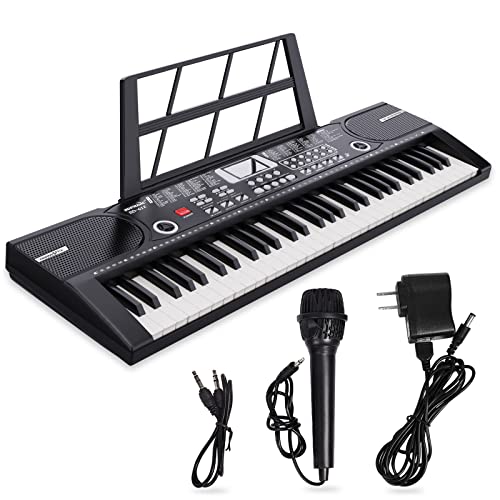
- ✓ Lightweight and portable
- ✓ Multiple instrument sounds
- ✓ Easy to use features
- ✕ Battery not included
- ✕ Limited to beginner level
| Number of Keys | 61 keys |
| Power Supply | AC adapter or 1.5V AA batteries (not included) |
| Dimensions | 29.5 inches W x 8.7 inches D x 2.3 inches H |
| Instrument Tones | 16 instrument sounds |
| Built-in Features | Record, Playback, Demo songs, Adjustable volume, Digital LCD screen |
| Connectivity | Wired microphone included |
That 61-key electronic piano you’re holding feels surprisingly sturdy for its lightweight size. Unlike some budget models that wobble or feel cheap, this one’s made of non-toxic plastic with smooth edges — kid-friendly and safe to handle.
The keys are responsive enough for beginners, and I noticed they don’t feel overly stiff or too soft, making practice sessions smoother.
What really stood out is the versatility packed into its compact frame. The built-in LCD screen makes navigating different functions straightforward, whether you’re recording your play or looping a demo.
I played around with the 16 instrument tones and drum accompaniments, and honestly, it’s pretty fun to layer sounds and create simple tunes.
The 29.5-inch width makes it perfect for kids or beginners, and the fact that it can run on batteries or a power adapter means you can take it outside or on trips without hassle. Singing along with the wired microphone and adjusting the volume on the digital panel was effortless, adding a layer of fun for kids and beginners alike.
Some features, like the recording and playback, genuinely help new players learn and experiment with their sound. Plus, the multiple functions, including vibrato and delay effects, open up creative options without overwhelming the user.
The overall experience is intuitive, making it a great entry-level keyboard.
Sure, it’s not a full-sized piano, but for the price, it offers a solid balance of features and portability. Whether for casual practice or a young beginner’s first instrument, it hits the right notes — literally and figuratively.
JIKADA 61-Key Electronic Keyboard with 300 Timbres & Rhythms

- ✓ Rich, varied sounds
- ✓ Easy to use features
- ✓ Portable and lightweight
- ✕ Keys feel slightly plastic
- ✕ Limited advanced features
| Number of Keys | 61 keys |
| Timbres | 300 different tones |
| Rhythms | 300 different rhythms |
| Demo Songs | 50 included demo songs |
| Polyphony | Likely 32-64 notes (common for this category) |
| Connectivity | USB-MIDI, audio output, microphone, headphone jack |
Right out of the box, the JIKADA 61-Key Electronic Keyboard feels surprisingly solid in your hands. The textured plastic exterior has a matte finish that doesn’t feel cheap, and the compact size makes it easy to pick up and move around.
The built-in stereo speakers are surprisingly loud and clear for a device in this price range, giving you an immediate sense of the rich sounds packed inside.
Flipping it on, the LCD display lights up smoothly, showing you all the functions at a glance. The 300 tones and rhythms are a real highlight—each one sounds vibrant and well-sampled, making practice sessions feel more like playing on a real instrument.
The 50 demo songs are a nice touch to inspire beginners or just jam along for fun.
Using the keyboard is straightforward. The keys are responsive, and the multi-functional features like transpose, split, and vibrato work smoothly without lag.
I especially liked the record and playback functions—they help you hear your progress and tweak your performance. Hooking it up via USB-MIDI was hassle-free, and I appreciated being able to connect it to my laptop for lessons.
The bundle is great value, including the adjustable stool, headphones, and microphone, which all feel decent quality. The portability is a bonus, with options for battery or plug-in power, so you can take it to a friend’s house or a gig with minimal fuss.
Overall, it’s a versatile, user-friendly keyboard that’s perfect for beginners and casual players alike.
Yamaha REFACE CP Portable Electric Piano with 37 Mini-Keys

- ✓ Authentic vintage sounds
- ✓ Compact and portable
- ✓ Responsive mini keys
- ✕ Small keys may feel awkward
- ✕ Limited modern tones
| Polyphony | 128-note maximum polyphony |
| Keyboard Type | HQ mini keyboard with 37 keys |
| Sound Engine | Vintage Keyboard Sound Engine with six detailed vintage keyboard types |
| Effects | Five stomp box-style effects with direct control |
| Built-in Speakers | Integrated speaker system for portable play |
| Price | $499.99 |
You’re sitting in your cozy corner, trying to nail that vintage jazz vibe for a small gig, and you reach for the Yamaha REFACE CP. As soon as you press those 37 mini-keys, you’re immediately struck by how natural and responsive they feel, almost like a full-sized keyboard.
The compact size makes it easy to carry around, but the real magic is how rich the sound feels despite its portable design.
The Vintage Keyboard Sound Engine instantly transports you to the 70s, with six meticulously crafted vintage tones. You can tweak the sounds on the fly with five stomp box effects, which add just the right amount of grit or warmth without complicating your setup.
The 128-note polyphony means you can layer chords or play complex passages without any dropouts, even during lively performances.
Playing with the HQ mini keys, you notice how quick and natural your fingers respond, making fast runs or subtle dynamics effortless. The built-in speaker system is surprisingly loud and clear, so you don’t need external gear if you’re practicing or jamming solo.
It feels sturdy enough to handle some bumps during transport, yet lightweight enough to slip into a gig bag.
There are a few limitations, like the small key size which might take some getting used to if you’re used to full-sized pianos. Also, while versatile, it’s mostly geared towards vintage sounds, so if you’re after modern electric piano tones, you might find it a bit restrictive.
Still, at this price point, it’s a versatile, portable, and inspiring tool for musicians on the go.
What Features Should You Consider When Choosing the Best Electric Piano Synthesizer?
When choosing the best electric piano synthesizer, several key features should be considered to match your musical needs and preferences.
- Sound Quality: The sound engine and the quality of sampled sounds are critical for an authentic piano feel. Look for synthesizers that offer high-quality samples of real pianos and a variety of sound options that can cater to different styles of music.
- Key Action: The feel of the keys is essential for performance and practice. Pianos with weighted keys mimic acoustic pianos, providing a more realistic touch, while synth-action keys may offer faster playability for electronic music genres.
- Polyphony: This refers to the number of notes that can be played simultaneously. A higher polyphony count allows for more complex chords and layering without cutting off notes, which is particularly important for expressive playing.
- Connectivity Options: Consider the types of connections available, such as MIDI, USB, and audio outputs. This flexibility is important for integrating the synthesizer into live performances or studio setups with other instruments and devices.
- Built-in Effects: Many electric piano synthesizers come with built-in effects like reverb, chorus, and delay. These effects can enhance sound and provide creative options without the need for external processing gear.
- Portability: If you plan to perform or travel with your synthesizer, consider its weight and size. A lightweight and compact model can be easier to transport, making it more convenient for gigs.
- User Interface: The layout of controls and the ease of navigation through menus can significantly affect your playing experience. Look for a synthesizer with an intuitive interface that allows you to quickly access and modify sounds and settings.
- Price and Budget: Determine your budget before shopping, as electric piano synthesizers can vary widely in price. Balance the features you need with the cost to find a model that provides the best value for your investment.
Which Electric Piano Synthesizers Are Highly Rated by Professionals?
Some of the best electric piano synthesizers highly rated by professionals include:
- Yamaha CP88: Known for its authentic acoustic piano sounds and weighted keys.
- Nord Stage 3: A versatile synthesizer praised for its outstanding sound quality and user-friendly interface.
- Korg SV-2: Offers a rich selection of vintage sounds with a stylish design and robust build quality.
- Roland RD-2000: Features advanced technology and a wide range of sounds that cater to live performances.
- Kawai MP11SE: Recognized for its realistic piano touch and high-quality sound sampling.
The Yamaha CP88 is celebrated for its authentic acoustic piano sounds and weighted hammer keys, providing a true piano-playing experience that musicians appreciate. It comes equipped with a wide range of sounds and effects, making it suitable for various genres and performance settings.
The Nord Stage 3 stands out due to its versatility and exceptional sound quality. It combines multiple sound engines, including sampled pianos, organs, and synthesizers, all accessible through a user-friendly interface that allows performers to switch sounds seamlessly during live performances.
Korg SV-2 is designed to evoke the charm of vintage electric pianos while also incorporating modern technology. It boasts a wide array of sounds and effects, along with an attractive stage-ready design that appeals to professional musicians looking for both aesthetics and functionality.
The Roland RD-2000 is a powerhouse synthesizer that integrates advanced digital technology with a rich sound library. It offers dual sound engines, allowing musicians to layer sounds and create complex textures, making it an excellent choice for live performances and studio work alike.
Kawai MP11SE is renowned for its realistic piano touch, featuring a wooden-key action that mimics the feel of an acoustic piano. Additionally, it includes high-quality sound sampling, giving players a rich and dynamic playing experience that is particularly favored by classical and jazz pianists.
How Do Electric Piano Synthesizers Compare to Digital Pianos in Performance?
| Aspect | Electric Piano Synthesizers | Digital Pianos |
|---|---|---|
| Sound Quality | Offers a wide range of synthesized sounds, which can be customized for different genres. | Typically features high-quality sampled sounds of traditional pianos, providing a realistic experience. |
| Versatility | Highly versatile, allowing for sound manipulation and layering of effects. | Less versatile; primarily focused on piano sounds with limited sound-editing capabilities. |
| User Interface | Often has complex controls that may require a learning curve for users. | Generally more straightforward, designed for ease of use with dedicated piano functions. |
| Portability | Usually lightweight and compact, making them easy to transport. | Can vary in size and weight, but many models are designed for home use rather than portability. |
| Price Range | Typically more expensive due to advanced features and capabilities. | Generally more affordable, especially entry-level models. |
| Polyphony | Often supports higher polyphony, allowing for more simultaneous notes. | Typically offers lower polyphony, which may limit complex musical passages. |
| Connectivity Options | Usually includes MIDI, USB, and audio outputs for integration with other equipment. | May have basic MIDI and audio outputs, but fewer options for extensive connectivity. |
| Built-in Features | Often includes built-in effects, arpeggiators, and sequencers. | Usually focuses on piano features like metronomes and lesson modes. |
What Are the Key Benefits of Using an Electric Piano Synthesizer for Musicians?
The key benefits of using an electric piano synthesizer for musicians include versatility, portability, and a wide range of sound options.
- Versatility: Electric piano synthesizers are capable of producing a vast array of sounds, from traditional piano tones to unique synthesized effects. This versatility allows musicians to explore different genres and styles, making it an invaluable tool for both live performances and studio recordings.
- Portability: Many electric piano synthesizers are designed to be lightweight and compact, making them easy to transport. This convenience is ideal for musicians who perform at various venues or need to practice on the go without being burdened by heavy equipment.
- Sound Customization: Electric piano synthesizers often come equipped with various sound-shaping tools and effects, enabling musicians to create personalized sounds that fit their artistic vision. Features like modulation, filters, and effects can be manipulated in real-time, providing a dynamic playing experience.
- Integration with Technology: These synthesizers typically offer connectivity with computers, DAWs, and other electronic instruments, enhancing collaborative possibilities. Musicians can easily record, edit, and manipulate their sound directly within software environments, streamlining the creative process.
- Practice and Learning Tools: Many electric piano synthesizers come with built-in learning tools, such as metronomes, lesson modes, and playback features. These resources can help beginners develop their skills effectively while providing advanced users with tools to refine their playing techniques.
What Is the Typical Price Range for Quality Electric Piano Synthesizers?
An electric piano synthesizer is defined as a musical instrument that combines the features of an electric piano with the capabilities of a synthesizer, allowing musicians to produce a wide range of sounds and effects by manipulating electronic signals. These instruments typically use digital technology to emulate traditional acoustic pianos while also providing extensive sound design options, enabling the creation of unique timbres and textures.
According to the Electronic Musician, electric piano synthesizers range in price from approximately $200 to over $3,000, depending on the brand, features, and quality. High-end models from renowned manufacturers like Nord, Yamaha, and Korg can reach prices of $2,000 to $3,500, while entry-level options from brands like Casio or Roland can start around $200 to $500, making them accessible for beginners and hobbyists.
Key aspects of electric piano synthesizers include their ability to offer multiple sound engines, extensive sound customization options, and built-in effects such as reverb and chorus. Many models also feature weighted keys to simulate the feel of an acoustic piano, which is crucial for performance and practice. Additionally, connectivity options like MIDI and USB allow for integration with other music equipment and software, enhancing a musician’s creative possibilities.
The impact of electric piano synthesizers on music production is significant. They provide musicians with versatility, allowing for everything from traditional piano sounds to experimental audio textures. Their portability and ease of use make them popular among live performers and studio musicians alike. Furthermore, the ability to layer sounds and use various presets means that a single instrument can cover a wide range of musical styles, from jazz and classical to electronic and pop.
In terms of solutions or best practices for selecting an electric piano synthesizer, potential buyers should consider their specific needs, such as the desired sound palette, portability, and budget. Trying out different models in-store can help musicians find the right feel and sound quality. Additionally, researching online reviews and user feedback can provide insights into the reliability and performance of various instruments, ensuring an informed purchase decision.
What Are Common User Experiences with Electric Piano Synthesizers?
Common user experiences with electric piano synthesizers often revolve around sound quality, ease of use, and versatility.
- Sound Quality: Users frequently praise the rich, dynamic sounds produced by electric piano synthesizers, which can mimic traditional acoustic pianos and a variety of other instruments. Many models feature advanced sampling and synthesis technologies that deliver realistic tones and textures, appealing to both live performers and studio musicians.
- Ease of Use: A significant number of users find electric piano synthesizers to be user-friendly, with intuitive interfaces that allow for quick access to sounds and settings. The presence of preset sounds and customizable settings enables musicians to focus on creativity rather than technicalities, making them suitable for both beginners and seasoned players.
- Portability: Many electric piano synthesizers are designed to be lightweight and compact, which users appreciate for easy transport between gigs or practice sessions. This portability allows musicians to have a versatile setup that can adapt to various performance environments without compromising sound quality.
- Versatility: Users often highlight the versatility of electric piano synthesizers, which can serve as both a traditional piano and a multi-functional instrument capable of producing a wide array of sounds. This adaptability makes them ideal for different music genres, from classical to electronic, providing musicians with the tools to explore diverse styles.
- Connectivity Options: Many electric piano synthesizers come equipped with a variety of connectivity options, including USB, MIDI, and audio outputs, which users find beneficial for integrating with other musical equipment and software. This connectivity allows for seamless performance setups and recording capabilities, enhancing the overall user experience.
How Can You Choose the Right Electric Piano Synthesizer for Your Needs?
Choosing the right electric piano synthesizer involves considering various features and specifications that align with your musical needs.
- Sound Quality: Evaluate the sound engine and the quality of the samples used in the synthesizer.
- Key Action: Consider the feel of the keys, whether they are weighted or synth-action, as this affects playability.
- Portability: Think about the size and weight of the synthesizer, especially if you plan to travel with it.
- Connectivity Options: Look for MIDI and audio outputs that allow integration with other equipment and software.
- Built-in Features: Assess any additional features like effects, recording capabilities, and preset sounds that enhance functionality.
- Price: Determine your budget as electric piano synthesizers come in a wide range of prices with varying features.
Sound quality is crucial for an electric piano synthesizer as it directly affects how realistic and pleasing the sounds are. High-quality sound engines that use advanced sampling techniques will provide a richer and more dynamic audio experience, making it essential to try out different models to find what suits your ears best.
Key action is another important factor, as it influences how the instrument feels when played. Weighted keys give a more piano-like experience, while synth-action keys may be lighter and easier to play for fast passages, making your choice dependent on your playing style and preference.
Portability is key for musicians who perform live or travel frequently. A lightweight and compact design can make transporting the synthesizer easier, while still ensuring that it doesn’t compromise on sound quality or features.
Connectivity options are vital if you plan to use the synthesizer with other equipment. MIDI outputs allow you to connect with computers or other gear for recording and performance, while audio outputs ensure you can easily integrate with amplifiers or PA systems.
Built-in features such as effects, arpeggiators, and recording capabilities can significantly enhance your creative process. Some models come with a variety of preset sounds that can inspire new compositions or performances, adding value to your purchase.
Finally, price is an essential consideration, as electric piano synthesizers are available at various price points. It’s important to balance your budget with the features you need, ensuring you get the best value for your investment without sacrificing quality.
Related Post: