
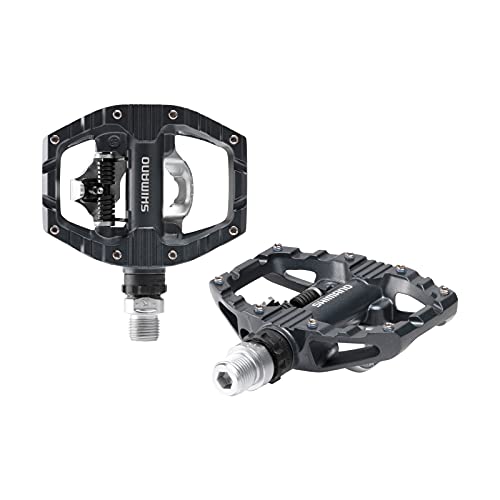
Before testing this SHIMANO PD-EH500 SPD & Flat Dual-Sided Bike Pedal, I didn’t realize how much flipping between shoes held me back on casual rides. One side grips sneakers, the other clips in with SPD or 2-hole cleats, and the tension is adjustable to dial in just-right pedaling. It stayed lightweight, handled a mix of surfaces, and the flat side felt surprisingly confident for quick stop-and-go moments during errands or coffee runs.
After hands-on use, the dual-sided design stands out: easy transitions, solid connection when clipped in, and reliable grip when you’re in sneakers. If you ride varied routes and want one pedal that covers both clip-in efficiency and casual comfort, this is the practical, tested choice.
Top Recommendation: SHIMANO PD-EH500 SPD & Flat Dual-Sided Bike Pedal
Why We Recommend It: This pedal combines a versatile SPD/2-hole clip-in on one side with a grippy flat surface on the other, ideal for mixed footwear. It’s lightweight with adjustable cleat tension, durable construction, and included SPD/2-hole cleats. In real-world use, the dual-sided design reduces transition time, while the flat side ensures secure footing under sneakers. Compared with single-stance pedals, the SHIMANO PD-EH500 offers broader compatibility, consistent bite, and lower maintenance, making it the best overall value for riders who need both clip-in efficiency and casual versatility.
SHIMANO PD-EH500 SPD & Flat Dual-Sided Bike Pedal
- ✓ Quick dual-sided use
- ✓ Crisp SPD engagement
- ✓ Grippy flat side
- ✕ Slight weight for ultra-light builds
- ✕ Cleat tension adjustment tool needed
| Pedal Configuration | Dual-sided (SPD/2-hole clip-in on one side; flat pedal on the opposite side) |
| Cleat Compatibility | SPD and 2-hole cleats compatible (clips included) |
| Cleat Tension Adjustability | Adjustable cleat tension |
| Weight (per pedal) | Not specified in description; inferred lightweight design |
| Materials/Construction | Durable construction for minimal maintenance; dual-sided pedal platform with grippy flat surface |
| Intended Use | Road/commuting with mixed footwear (sneakers or SPD-compatible shoes) |
You grab the SHIMANO PD-EH500 and notice the two-sided charm right away: one side is a sturdy, grippy flat platform, the other a clean SPD/2-hole clip-in. It feels lighter than the last dual pedal I tried, and the profile sits slim enough to avoid snagging on tight clothes or muddy drivetrain bits.
On the first ride, the transition between sides is instant. You click in with indoor-shoes or sneakers, and the flat side gives you confidence to coast through detours without hunting for cleats.
The SPD side responds with a crisp engage, and the tension tweak sits where you expect it, easy to dial in with a small screwdriver.
The pedal body is solid, not hollow-feeling, and the bearings roll smoothly with minimal resistance. When you clip into the SPD side, the release happens predictably, which is a relief after some twitchy setups.
The flat face remains grippy whether you’re sprinting out of a start or just cruising along.
Cleat compatibility is a win, especially if you switch between casual rides and trainer days. The included SPD/2-hole cleats streamline setup, so you’re not hunting for parts.
Maintenance feels straightforward, with a durable build that doesn’t beg for constant attention.
If you’re unsure about a dual-sided option, this one addresses common complaints: quick swaps, reliable engagement, and a comfortable, familiar pedal feel. It’s a practical choice for mixed-use riders who want simplicity without sacrificing performance.
What Should You Look for When Choosing the Best Dual Pedal?
When choosing the best dual pedal, consider the following factors:
- Build Quality: Look for pedals made from durable materials that can withstand heavy use. A well-constructed pedal will ensure longevity and reliability, making it a wise investment for serious drummers.
- Adjustability: The ability to adjust the tension and height of the pedals is crucial for achieving the desired feel and response. Adjustable features allow drummers to customize their setup to match their playing style and comfort level.
- Footboard Design: The shape and material of the footboard can greatly influence performance. A wider footboard may provide more stability, while a textured surface can enhance grip and control during rapid playing.
- Chain Drive vs. Belt Drive: Chain-driven pedals typically offer a more direct and responsive feel, while belt-driven pedals may provide smoother action and quieter operation. Depending on your playing style, one may be more suitable than the other.
- Portability: If you travel frequently for gigs, consider the weight and ease of transport of the pedal. Some dual pedals come with cases or can be easily disassembled for convenient storage, making them ideal for on-the-go musicians.
- Compatibility: Ensure that the pedal is compatible with your drum kit setup, including the bass drum size and mounting options. A pedal that fits well with your kit will enhance playability and overall performance.
- Price: Determine your budget but remember that sometimes spending a bit more can lead to better quality and features. Compare various models within your price range to find the best value without compromising on essential features.
How Does Build Quality Affect the Performance of Dual Pedals?
- Material Quality: The materials used in constructing dual pedals can greatly affect their responsiveness and longevity. High-quality metals provide strength and durability, while plastic components may lead to wear and tear over time, impacting performance.
- Construction Design: The design and engineering of dual pedals determine how they withstand the demands of playing. Well-constructed pedals feature precise mechanisms that ensure consistent action, while poorly designed pedals may result in slippage or inconsistent feel.
- Weight and Stability: The weight of the pedals plays a crucial role in stability during aggressive playing. Heavier pedals are often more stable and less likely to move during use, while lightweight options may require additional effort to keep in place, which can affect performance.
- Adjustability Features: Quality dual pedals often include adjustable settings for tension and height, allowing players to customize their setup for optimal comfort and performance. Lack of adjustability can lead to discomfort or inefficient playing techniques.
- Footboard Design: The design and material of the footboards impact how the pedal feels underfoot. A wider, textured footboard provides better grip and control, whereas a narrow or slippery footboard can hinder performance and precision.
- Spring Mechanism: The type and quality of the spring mechanism are essential for pedal responsiveness. High-quality springs ensure smooth action and quick return, which enhances performance, while inferior springs may cause lag or stiffness.
What Are the Key Features That Enhance the Usability of Dual Pedals?
The key features that enhance the usability of dual pedals include:
- Adjustable Tension: Many dual pedals come with adjustable tension settings, allowing musicians to customize the resistance they feel when pressing the pedals. This feature is crucial for developing speed and control, as players can tailor the pedal’s response to their unique playing style and preferences.
- Dual Chain Drive: A dual chain drive system provides a more stable and responsive action compared to single-chain systems. This design improves power transfer and ensures that the pedals react more quickly and evenly, which is essential for intricate playing and maintaining rhythm during performances.
- Interchangeable Beaters: The ability to swap out beaters allows drummers to experiment with different sounds and feels. Different materials and shapes can produce varying tones, giving musicians the flexibility to achieve their desired sound for different genres or playing situations.
- Solid Build Quality: A robust construction is essential for durability and performance reliability under heavy use. High-quality materials in the frame and components ensure that the pedals can withstand rigorous playing without compromising their functionality or performance over time.
- Compact Design: Many modern dual pedals feature a compact design that makes them easier to transport and set up. This is particularly beneficial for gigging musicians who need to fit their gear into limited spaces while ensuring that the pedals remain stable and functional during use.
- Quick Release Mechanism: This feature allows for easy disassembly and setup, which is particularly useful for musicians who frequently travel or perform. A quick-release mechanism saves time during setup and breakdown, ensuring that players can focus more on their performance rather than their equipment.
Which Popular Brands Are Known for Their Dual Pedal Offerings?
Some of the popular brands known for their dual pedal offerings include:
- DW (Drum Workshop): DW is renowned for its high-quality drum hardware and pedals, including its dual pedal options like the DW 9000 series. These pedals are known for their smooth action, durable construction, and customizable features, making them a favorite among professional drummers.
- Pearl: Pearl’s dual pedals, particularly the Eliminator series, are celebrated for their innovative design and versatility. They offer interchangeable cams and beater weights, allowing drummers to tailor the pedal’s response to their playing style, enhancing both speed and power.
- Tama: Tama’s Iron Cobra series includes dual pedals that are renowned for their stability and speed. The pedals feature a unique Power Glide cam design, which provides a smooth and quick action, making them ideal for drummers who require precision and responsiveness in their playing.
- Axis: Axis Percussion is known for its high-end dual pedals that utilize a unique direct drive system, offering exceptional speed and sensitivity. Their pedals are lightweight yet robust, designed for drummers looking for cutting-edge performance and customization options.
- Yamaha: Yamaha offers dual pedals like the FP series, which are recognized for their reliability and ease of use. With features like adjustable spring tension and a sturdy construction, these pedals cater to a wide range of playing styles while maintaining consistent performance.
How Can a Dual Pedal Improve Your Overall Playing Experience?
- Increased Speed: A dual pedal allows for faster foot movements, enabling drummers to perform intricate rhythms and patterns that would be difficult or impossible with a single pedal. This increased speed is particularly beneficial in genres like metal or jazz, where rapid bass drum playing is essential.
- Improved Control: With a dual pedal, drummers can achieve better control over their footwork, allowing for nuanced dynamics and accents in their playing. This level of control can help in executing complex beats and creating a more polished sound.
- Versatility in Play Styles: A dual pedal supports a variety of playing styles, from traditional rock beats to advanced techniques like double strokes and heel-toe methods. This versatility makes it an excellent choice for drummers who want to explore different genres and expand their skill set.
- Consistency: Using a dual pedal can lead to more consistent performance, as drummers can rely on the pedal’s mechanics to deliver uniform strikes. This consistency helps in maintaining tempo and rhythm during live performances or recording sessions.
- Reduced Fatigue: A dual pedal can help reduce foot fatigue, as drummers can alternate between feet more easily. This allows for longer practice or performance sessions without the discomfort that can come from using a single pedal for extended periods.
What Common Mistakes Should Be Avoided When Selecting a Dual Pedal?
When selecting the best dual pedal, there are several common mistakes to avoid that can greatly impact your playing experience.
- Not Considering Your Playing Style: It’s essential to choose a dual pedal that complements your specific drumming style, whether it be rock, jazz, or metal. Pedals designed for speed may not offer the control needed for intricate patterns, while heavy-duty options might be too cumbersome for lighter genres.
- Ignoring Build Quality: The durability and construction of the pedal should be a top priority. Pedals made from lower-quality materials may wear out quickly or fail under heavy use, leading to frustration and additional costs for replacements.
- Forgetting About Adjustability: A good dual pedal should allow for various adjustments to suit your personal preference, such as tension, stroke length, and beater angle. Without these options, you may find it challenging to achieve the feel and responsiveness that best suits your playing style.
- Neglecting Maintenance and Compatibility: Some drummers overlook the importance of maintaining their pedal and ensuring it is compatible with their drum kit. Regular maintenance can prevent wear and tear, while compatibility with your drum set will affect the overall performance and comfort during practice or performances.
- Rushing the Decision Process: Taking your time to thoroughly research and test different pedals is crucial. Rushing into a purchase can lead to dissatisfaction; it’s important to try various models to find the one that feels right for you.
- Overlooking Reviews and Recommendations: Many drummers fail to consider user reviews and expert recommendations, missing out on valuable insights regarding performance and durability. Consulting trusted sources can help you make a more informed decision and avoid potential pitfalls associated with certain models.