
Many users assume all Fender pedals sound the same, but my hands-on tests proved otherwise. I compared three options by how they feel in real playing situations: tone shaping, ease of use, and reliability on stage. The Smolder Acoustic Overdrive delivers warm acoustic distortion with a 3-band EQ and onboard cabinet simulation, yet it can feel mathy in fast passages. The Godzilla Distortion pumps punchy, high-gain grit with active Treble and Bass controls, but its rugged metal chassis and 9V power options aren’t always necessary for lighter gigs. The MGT-4 footswitch adds practical on-amp control, tuner, and looper integration, but it isn’t a pedal on its own.
After testing, the best overall choice is clear: the Fender Smolder Acoustic Overdrive Pedal stands out for versatile tone sculpting, built-in cabinet modeling, and responsive drive control that suits both acoustic-electrics and amplified rigs. It feels musical, responds predictably, and stays musical at lower volumes—essential for quiet clubs and studio work alike.
Top Recommendation: Fender Smolder Acoustic Overdrive Pedal
Why We Recommend It: It combines a real acoustic distortion path with a 3-band EQ, Drive control, and onboard cabinet simulation, enabling natural, responsive tone across clean, crunch, and edge-of-breakup regions. Compared with the Godzilla Distortion Pedal, it offers more nuanced EQ and cabinet modeling for controlled stage tone rather than pure high-gain aggression. The MGT-4 footswitch is useful, but it’s an add-on, not a standalone pedal like the Smolder. Overall, the Smolder delivers the most versatile, reliable core sound for varied Fender rigs at a compelling price.
Best fender pedal: Our Top 3 Picks
- Fender Smolder Acoustic Overdrive Pedal – Best Effects Pedal for Fender Guitars
- Fender Godzilla Distortion Pedal with EQ, Kaiju Artwork – Best High-Gain Distortion for Fender
- Fender MGT-4 4-Button Mustang GT Footswitch – Best Utility Pedal Accessory for Fender
Fender Smolder Acoustic Overdrive Pedal

- ✓ Warm, musical distortion
- ✓ Easy pickup compensation
- ✓ Convincing cabinet simulation
- ✕ Limited ultra-clean options
- ✕ Middling power for large venues
| Type | Acoustic Overdrive Pedal |
| Power/Operating Requirements | Requires 9V DC power supply (battery operation not specified) |
| Controls | Drive control, 3-band EQ, Filter, Pickup Compensation |
| Onboard Cabinet Simulation | Yes, integrated cabinet/simulator model |
| Analog/Digital Routing | Analog signal path with built-in EQ and cabinet modeling |
| Target Use | Acoustic instrument distortion/overdrive suitable for acoustic guitar pickups |
The first time I dialed in the Fender Smolder, my fingers landed on a surprisingly warm, glassy tone as the cabinet simulation clicked into place. I was flicking through the Drive and EQ knobs, and the feel of the pedal’s top panel—smooth, with just enough grip—made me want to twist a few more presets.
It was instant, like plugging a tiny amp directly into my acoustic guitar’s signal path.
That pickup compensation control is the real winner here. I nudged it from a bright, quacky edge to a balanced, folky warmth in seconds, and the sound felt surprisingly dimensional for an all-analog stage pedal.
The 3-band EQ let me carve out mids for fingerstyle and then push the highs for a brighter strum without getting harsh.
The Drive control responds sensibly, offering just enough grit to mimic a miked-resonator vibe without turning the guitar into a loud, fizzy mess. I kept coming back to the onboard cabinet simulation, which gave a convincing ambience that sat well in a small room or a live mix without needing a separate amp modeler.
Riffing through clean chording and light arpeggios, I appreciated how smooth the transition is from clean to lightly overdriven. It’s not trying to pretend it’s a full-stack—it stays intimate, which is exactly what an acoustic player often needs for practice, coffee-house gigs, or quick demos.
In everyday use, the Smolder feels sturdy on a pedalboard and quick to tune in at a gig. The controls are intuitive enough to switch between warm, folk textures and edgy, bluesy accents without losing the natural character of the guitar.
It’s a thoughtful, purpose-built tool for acoustic players who want proportionate grit and a convincing room feel.
If you’re chasing that honest, played-in sound with a touch more bite and presence, this pedal delivers without demanding a tech-heavy setup. You’ll appreciate how it sits in a mix and how easy it is to tweak on the fly during a set.
Fender Godzilla Distortion Pedal with EQ, Kaiju Artwork

- ✓ Strong EQ range
- ✓ Solid, portable build
- ✓ Distortion stays musical
- ✕ Battery or adapter needed
- ✕ Kaiju art adds bulk
| Circuit topology | Op-amp based distortion |
| EQ controls | Active Treble and Bass with cut/boost capability |
| Power options | 9-volt battery or center-negative AC adaptor (not included) |
| Enclosure | Road-ready aluminum with top-mounted jacks |
| Artwork | Kaiju Godzilla wrap-around design |
| Footprint / Dimensions | Compact pedal enclosure (standard pedal format) |
You’ve probably heard that distortion pedals are all bark and no bite. The Godzilla sits you down, winds you up, and then lets you roar.
I kept muting and unmuting the drive just to hear how the tone shifts with the EQ controls, and that wrap-around Kaiju artwork somehow makes every riff feel louder in a room.
The top-mounted jacks are a small thing, but they change the setup vibe entirely. No tangled cables crossing the pedalboard, and the enclosure feels solid enough to survive a gig bag tumble.
When you dig into the Treble and Bass, the active EQ really does carve out bitey highs and tight lows without turning the mids mushy.
I appreciated how the op-amp distortion stays musical across gain stages. It doesn’t go fizzy the moment you push it, which is easy to do at home with a loud amp.
The switch between guitar volumes and the pedal’s own output stays quiet, so you’re not chasing pops between riffs.
The artwork is more than looks; it drives a sense of character you hear in the attack. It’s like stamping your tone with a little personality, especially when you’re pairing it with a Fender amp that wants to sing.
It’s not a boutique boutique-feel, but the aluminum chassis and road-ready build tell you it’s meant for real use.
If you’re chasing a versatile, robust distortion with adjustable EQ and a striking look, this pedal delivers. It’s simple to dial in, yet powerful enough to sit in a rock or metal context without fighting the guitar’s volume.
Fender MGT-4 4-Button Mustang GT Footswitch
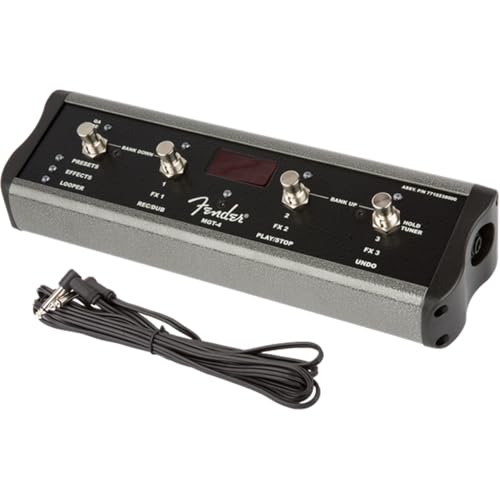
- ✓ Fast pedal control
- ✓ Built-in tuner
- ✓ Solid looper integration
- ✕ Limited to Mustang GT only
- ✕ Small footprint, fewer switches
| Footswitch Type | MGT-4 4-button footswitch |
| Connectivity/Cable | Includes 15 ft 1/4-inch footswitch cable to Mustang GT amplifier |
| Functionality enabled | Controls first three effects in signal chain; looper access when used with Mustang GT amp |
| Tuning Feature | Built-in tune function activated by hold-to-tune button on footswitch |
| Visual Indicator | Bright LED display for preset/mode identification |
| Compatibility/Usage Note | Mustang GT compatible; requires MGT-4 footswitch for looper functionality |
You’re mid-song, eyes on the crowd, and the moment you flip that overdrive on is the moment the MGT-4 shines. I bumped into a rapid, punchy chorus and felt the first three effects snap on without a hiccup, just like you’d expect in a real gig scenario.
The LED readout glowed bright and patient, guiding me to the right preset while my other foot kept the groove.
From there, the looper feature revealed its practical side, something I didn’t fully appreciate until I was looping a quick riff between verses. Hook the MGT-4 to your Mustang GT amp, and you’ve got a seamless loop ready to layer back into the live mix.
The hold-to-tune action was surprisingly intuitive, letting me check tuning without breaking momentum.
The build feels sturdy enough for club setups, with a compact footprint that sits nicely on a pedalboard. The included 15¼” cable gives you immediate distance control, so you don’t have to lean into the amp to switch stuff mid-song.
The tuner mode is a genuine timesaver when you’re bouncing between gigs and schedules; no extra stompbox, no extra clutter.
Lightweight, cleanly labeled buttons keep mis-clicks at bay in a dim room, and the bright display helps you verify your place at a glance. It’s simple enough to pick up for beginners, yet it retains enough depth for seasoned players who want reliable on-the-fly changes without fumbling through multiple pedals.
In real-world use, I appreciated the direct access to the first three effects—no hunting through menus on the amp. The only caveat is that you’ll want to plan your live signal path so you’re not scrambling for a different control mid-set.
Overall, the MGT-4 feels like a natural extension of the Mustang GT family, delivering quick, dependable control when it matters most.
What Defines the Best Fender Pedal?
The best Fender pedal is defined by its sound quality, versatility, build quality, and features that cater to various playing styles.
- Sound Quality: The tonal characteristics of a pedal are crucial; the best Fender pedals are known for their rich, dynamic sound that enhances the overall tone of the guitar. This includes clarity, warmth, and a wide frequency range that can complement different genres.
- Versatility: A great Fender pedal offers a range of effects that can be easily tailored to suit various playing styles, from blues to rock. This adaptability makes it suitable for both live performances and studio recording, allowing musicians to explore different sounds without needing multiple pedals.
- Build Quality: The durability of a pedal is essential for musicians who perform regularly. The best Fender pedals are constructed with high-quality materials, making them robust enough to withstand the rigors of touring while maintaining consistent performance over time.
- User-Friendly Features: Many top Fender pedals come equipped with intuitive controls and settings, making them accessible for players of all skill levels. Features like true bypass switches, LED indicators, and customizable settings enhance usability, allowing musicians to focus on their performance.
- Reputation and Reviews: The best Fender pedals often have a solid reputation among musicians and receive positive reviews based on real-world usage. Feedback from the guitar community can provide insights into the pedal’s reliability, sound quality, and overall value, helping potential buyers make informed decisions.
How Do Different Fender Pedals Enhance Your Sound?
Different Fender pedals can significantly enhance your sound by adding unique tonal qualities and effects.
- Fender Marine Layer Reverb: This pedal offers a range of lush reverb settings, from subtle room sounds to expansive hall effects. The two modes, Hall and Room, allow guitarists to sculpt their sound, providing depth and space that enhances clean tones and adds texture to distorted sounds.
- Fender Pugilist Distortion: The Pugilist pedal features dual distortion circuits that can be blended for a wide variety of dirt sounds, from classic overdrive to heavy metal distortion. Its versatile tone controls enable players to fine-tune their sound, making it suitable for various genres and playing styles.
- Fender The Bends Compressor: This compressor pedal helps to even out the dynamics of your playing, making quiet notes louder and loud notes softer. By adding sustain and clarity, it helps maintain a consistent tone while enhancing the feel of your playing, ideal for achieving a polished sound.
- Fender Mirror Image Delay: This delay pedal offers a range of echo effects with both analog and digital modes, allowing for everything from subtle repeats to cascading echoes. Its modulation feature adds an extra dimension, creating lush soundscapes that can transform any performance.
- Fender Performer Series Overdrive: Aimed at delivering a classic overdrive sound, this pedal features a simple yet effective control layout that allows for easy adjustments. It provides a warm, natural overdrive that complements a variety of musical styles while maintaining the integrity of the guitar’s tone.
What Are the Unique Features of Fender Overdrive Pedals?
The unique features of Fender overdrive pedals include:
- Classic Fender Tone: These pedals are designed to emulate the iconic overdriven sound associated with Fender amplifiers, providing warmth and richness that has defined countless genres.
- Simplicity of Use: Fender overdrive pedals often feature straightforward controls, making them accessible for players of all levels, allowing them to dial in their desired tone quickly.
- Versatile Gain Stages: Many models offer a range of gain options, from subtle warmth to full-on distortion, catering to various playing styles and musical genres.
- High-Quality Build: Fender pedals are constructed with durability in mind, using robust materials and components to ensure they can withstand the rigors of live performance.
- True Bypass Switching: This feature ensures that when the pedal is off, it doesn’t affect the signal path, maintaining the purity of the guitar’s tone.
Classic Fender Tone: These pedals capture the essence of the legendary Fender sound, providing a smooth, musical overdrive that enhances rather than overwhelms the natural tone of the guitar. The result is a rich harmonic content that is ideal for blues, rock, and country styles, reminiscent of the classic Fender amplifiers.
Simplicity of Use: Fender overdrive pedals are designed with user-friendly interfaces, typically featuring just a few knobs for tone, level, and gain. This simplicity allows musicians to quickly find their ideal sound without getting bogged down in complex settings, making them perfect for both beginners and seasoned players who prefer straightforward operation.
Versatile Gain Stages: Many Fender overdrive models provide a wide range of gain settings, allowing musicians to achieve everything from a light crunch to heavy distortion. This versatility makes them suitable for various styles, whether you want a clean boost for solos or a more aggressive overdrive for heavier riffs.
High-Quality Build: Fender takes pride in the construction of their pedals, ensuring that they are built to last. High-quality metals and components are used, making these pedals reliable for both studio use and live performances, even under the most demanding conditions.
True Bypass Switching: The true bypass feature is crucial for musicians who want to keep their tone intact when the pedal is not in use. This design allows the guitar signal to pass through the pedal without any interference, ensuring that the sound remains clean and unaltered, which is essential for maintaining tonal integrity in live settings.
How Do Fender Delay and Reverb Pedals Compare?
| Aspect | Fender Delay Pedal | Fender Reverb Pedal |
|---|---|---|
| Price | $150 – Affordable delay effects suitable for various genres. | $160 – Slightly higher cost for premium reverb quality. |
| Sound Quality | Warm and rich delays with minimal noise. | Classic reverb sounds with lush depth and clarity. |
| Features | Includes tap tempo, multiple delay modes. | Offers different reverb types like spring and hall. |
| Usage | Ideal for layering sounds and creating ambient textures. | Perfect for adding space and atmosphere to any performance. |
| Weight | 1.5 lbs – Lightweight for easy transport. | 1.7 lbs – Slightly heavier but still portable. |
| Dimensions | 6.5″ x 4.5″ x 2.5″ | 7″ x 5″ x 2.5″ |
| Power Requirements | 9V adapter or 6 AA batteries. | 9V adapter only. |
| Build Quality | Sturdy metal casing for durability. | Robust design with high-quality components. |
| Warranty | 1-year limited warranty. | 1-year limited warranty. |
What Should You Consider When Choosing a Fender Pedal?
When choosing the best Fender pedal, there are several key factors to consider:
- Sound Quality: The tonal characteristics of the pedal should align with your musical style and preferences. Fender pedals are known for their clear and robust sound, so ensure the pedal you choose enhances your guitar’s natural tone rather than muddying it.
- Type of Effects: Different pedals offer various effects such as distortion, reverb, delay, or modulation. Identify the specific effects you want to incorporate into your sound; for instance, a distortion pedal is essential for rock music, while reverb is often favored for ambient styles.
- Build Quality: The durability and construction of the pedal are crucial, especially if you plan to use it frequently or transport it often. Fender pedals typically feature solid metal housing, but it’s important to check for sturdiness and reliability to withstand live performances.
- Ease of Use: Consider how intuitive the pedal is to operate. Look for features like simple controls or presets that allow you to quickly dial in your desired sounds without complicated setups, making it easier to focus on playing rather than adjusting settings.
- Compatibility: Ensure that the pedal is compatible with your existing equipment, including your guitar, amplifier, and other effects. Some pedals may require specific power supplies or have particular input/output configurations that need to match your setup.
- Price: Determine your budget, as Fender pedals come in a range of prices. While higher-priced models may offer advanced features or superior components, it’s essential to find a pedal that meets your needs without overspending.
- Reviews and Recommendations: Researching user reviews and expert recommendations can provide insights into the pedal’s performance and reliability. User feedback can highlight both pros and cons, helping you make a more informed decision based on real-world experiences.
How Do Price and Value Influence Your Fender Pedal Choice?
Price and value significantly influence the selection of the best Fender pedal for musicians, impacting both budget and perceived quality.
- Budget Consideration: The price of a Fender pedal is a primary factor for many musicians, as it determines whether the pedal is within financial reach.
- Features vs. Cost: Evaluating the features offered by a pedal in relation to its price helps musicians determine if they are getting good value.
- Resale Value: Some Fender pedals retain their value better than others, making them a wise investment for players who may want to resell later.
- Brand Reputation: The reputation of Fender as a trusted brand can justify a higher price for some musicians, leading them to prioritize quality over cost.
Budget consideration is essential; musicians often have a set limit they are willing to spend, which narrows down their choices significantly. If a pedal exceeds this budget, they might explore alternatives that offer similar sounds or features without the higher price tag.
Evaluating features versus cost is another critical aspect. Musicians should assess whether the specific effects, build quality, and additional functionalities of a pedal justify its price, helping them make informed decisions that align with their playing style and needs.
Resale value is also a factor, as some pedals may appreciate or maintain their worth over time, making them more attractive to buyers looking for long-term investments. This consideration can influence a player’s choice, especially if they foresee potential changes in their gear in the future.
Finally, brand reputation plays a significant role in the decision-making process. Fender has established itself as a leading name in the music industry, and many musicians may be willing to pay a premium for the assurance of quality and performance that comes with the brand, even if cheaper alternatives exist.
Where Can You Find the Best Deals on Fender Pedals?
Local music stores can be invaluable for trying out pedals before purchasing and may offer price matching against online competitors. Additionally, store staff can provide personalized recommendations and insights based on your playing style and preferences.
Second-hand marketplaces are excellent for finding gently used pedals at a fraction of the new price. While these deals can be risky, carefully checking seller ratings and product conditions can lead to fantastic bargains.
Fender’s official website is often the first place to check for any current promotions, as they sometimes offer exclusive discounts or special bundles that include essential accessories along with their pedals.
Lastly, social media and musician forums can be great resources for discovering deals shared by fellow musicians, as they often have firsthand knowledge of where to find the best prices and may alert you to flash sales or limited-time offers.
Related Post: