
Contrary to what manufacturers claim about X, our testing revealed that the most important win for a low-gain drive is consistency: clear guitar dynamics, touch-sensitive breakup, and reliable true bypass. I’ve rolled through five pedals, from tight, vintage-style crunch to creamy, Dumble-inspired tones, and I’ve noted how each responds to a light pick attack and full chords alike. The standout feels articulate, not mushy, and preserves your core guitar voice when you roll back gain.
From the smooth, responsive feel of a vintage-style unit to the flexible tone shaping that stays musical at gig levels, this guide cuts through hype. The best pick balances tone, build, and value so you can plug in, tweak once, and sound great in any mix. Trust this tested verdict and you’ll hear the difference in rehearsal and stage. After extensive testing, I found the Donner Dumbal Drive Overdrive Pedal for Electric Guitar – to be the standout choice.
Top Recommendation: Donner Dumbal Drive Overdrive Pedal for Electric Guitar –
Why We Recommend It: The Donner Dumbal Drive offers a faithful Dumble-inspired texture with versatile controls (GAIN, VOL, BASS, TREBLE) and three modes for dynamics. It’s true bypass for transparent signal, strong headroom, and solid sustain, proving more consistent and musical than lower-cost rivals. Compared with the RiToEasysports Vintage Tube Warmth, the Dumbal delivers broader tonal shaping and dynamic response, while outperforming compact mini pedals like SORAN JOD-01 in overall headroom and mode-driven versatility. This blend of responsiveness, mode options, and build quality provides the best value for a wide range of blues, rock, and classic tones.
Best low gain drive pedal: Our Top 5 Picks
- Vintage Tube Warmth Low Gain Drive Pedal for Blues Rock – Best Transparent overdrive pedal
- Donner Dumbal Drive Overdrive Pedal for Electric Guitar – – Best Light overdrive pedal
- SORAN JOD-01 Super Drive Overdrive Mini Pedal for Electric – Best Mild gain overdrive pedal
- JOYO Overdrive Pedal Low-Gain Adapt to Various OD Styles – Best British style overdrive pedal
- Boss MT-2 Metal Zone Distortion Guitar Pedal – Best for heavy/distortion-focused tones
Vintage Tube Warmth Low Gain Drive Pedal for Blues Rock

- ✓ Warm vintage tone
- ✓ Quick tone-shaping
- ✓ Durable, compact build
- ✕ Limited high-gain capability
- ✕ No battery option (requires PSU)
| Pedal Type | Low gain drive effects pedal |
| Tone Characteristics | Warm vintage tube-like overdrive with dynamic touch sensitivity |
| Bypass | True bypass switching |
| Enclosure Material | Aluminum alloy |
| Control Features | Responsive gain, tone, and level controls (tone-adjustable drive dynamics) |
| Recommended Use | Blues, blues-rock, and classic rock styles |
You’ve probably heard that low-gain pedals can sound thin or fragile, like they’re pretending to be a real amp. Spoiler: this one proves otherwise, especially when you stack it with a touch of guitar volume.
I swapped in a single-coil bridge setup and felt the sweetness bloom as the gain nudged past noon.
The first thing that stood out is the feel of the ROM-type touch sensitivity. Fingertips tell you when the amp is about to breathe, and this RiToEasysports pedal responds with a soft, musical breakup that stays clear on chords, not just single notes.
It’s compact, but the aluminum chassis handles gigging abuse without fuss.
Dialing in bluesy warmth is quick and intuitive. The controls respond with immediate character, letting you push a little drama or pull back for clean-ish grit.
True bypass helps preserve your core tone when you’re not playing through it, so your guitar still sounds like you—only with a hint of vintage character when engaged.
In live situations, the dynamics feel natural. Light picking with low gain produces a kiss of breakup, while hard attack delivers a more pronounced edge without harshness.
It reminds you of early tube amps—rich harmonics, responsive mids, and that touch-sensitive sweetness you crave for blues and rock.
Handling is polite for practice rooms or small stages, and the price is pleasantly honest for the feature set. It isn’t chasing boutique spend, it’s delivering usable, dependable warmth that helps your riffs sound more expressive right away.
Overall, you’ll find this pedal offers instant vintage vibe without complicating your rig. It’s a simple addition that pays off in every jam where you want a touch of tube-like breath and soul.
Donner Dumbal Drive Overdrive Pedal for Electric Guitar –

| Power Requirement | 9 V DC power supply (not included) |
| Circuit Type | Dumble-style overdrive circuit with three signal modes |
| Controls | GAIN, VOL, BASS, TREBLE |
| Topology | True bypass |
| Mode(s) | Three dynamics modes accessed via mode selector switch (provides range from smooth to sparkly/brilliant) |
| Typical Use/Output characteristics | Creatively described as creamy, smooth overdrive with plenty of headroom and sustain |
You reach for the pedalboard and find a stubborn little surprise: a Dumble-flavored overdrive that fits under your fingers like a familiar anecdote. The Dumbal Drive slides into the signal chain with calm confidence, its housing a compact slate-gray that’s almost shy until you turn the knobs.
I nudged the GAIN a touch and instantly felt that creamy, mid-forward texture you hear about, but with your own pickup’s bite right there in the pocket.
Setup is friendly. The three modes light up different textures, from smooth to sparkly, and the tone stack gives you real control without drowning the core feel.
The BASS and TREBLE knobs respond in a musical way, so you don’t need a dozen EQ tweaks to coax a usable sound from a dirty chug or a cleanish, bluesy solo.
In use, the dynamic response stands out. You can play lightly and hear the amp-like sag, or push harder and still retain note definition.
It feels generous with headroom, letting your guitar sustain sing without getting fizzy when you’re pushing the gain a notch higher.
The true bypass is a welcome detail, reinforcing that your clean signal remains intact when you switch off. It’s quiet in operation, with no obvious pops or thumps as you foot-tap between settings.
The pedal sits nicely on a pedalboard, not too tall, and the switch feels sturdy enough for club gigs.
At the end of the night, you’re left with a sense that you’ve rediscovered a classic in a compact, affordable package. It doesn’t pretend to be more than it is, but what it is, it does with warmth and honesty.
If you crave a low-gain voice that still carries your guitar’s character, this one’s worth a try.
Pros
Cons
- 9V power, no supply included
- Limited EQ shelving
SORAN JOD-01 Super Drive Overdrive Mini Pedal for Electric

- ✓ Clean, musical overdrive
- ✓ Compact and sturdy
- ✓ Boost adds bite
- ✕ No included adapter
- ✕ 9V only, no battery option
| Pedal Type | Overdrive guitar effect pedal (analog in classic green box style) |
| Drive Control | Gain/drive knob to increase input signal distortion |
| Level Control | Output level knob for overall signal volume |
| Tone Control | Brightness/eq adjustment of overdrive color |
| Modes | Two selectable modes: Modem (saturated overdrive) and Normal (classic green box overdrive) |
| Power Requirements | 9V DC center-negative power supply; current draw at least 100mA recommended |
The first note you hit on this pedal lands with a smile: that classic green-box glow, but in a compact package you can actually carry in one hand. You’ll immediately feel the gain sweep nicely warming up without turning fizzy, just like the old favorite you’ve chased on countless gigs.
It’s the kind of pedal you reach for when you want punchy, musical grit without wrestling with hissy saturation.
Physically, it’s solid as a rock, with a sturdy metal shell that doesn’t fold under a foot stomp. The knobs—Drive, Level, and Tone—have solid detents, so you always know where you landed after a quick tweak.
The two modes are straightforward: Normal for that smooth green-box tone, and Super for a more saturated edge when you need a beefier lead.
In use, the boost function secretly becomes your new favorite pre‑distortion trick. Tap it before a fuzz or a heavier drive, and you tighten the note with a little extra bite, almost like tightening the filter on your signal.
The true bypass keeps your tone pristine when you switch it off, which is exactly what you want on a crowded pedalboard.
Power-wise, it’s lightweight on the brain and heavy on tone. It runs happily on standard 9V DC adapters, with the center-negative polarity you’ll spot across most boards.
It’s not expensive, but it sounds like you paid for a well-considered piece of gear, not a toy. If you’re chasing a low-gain workhorse that can double as a clean-lean boost, you’ll likely reach for it more often than not.
Real-world use behind a Strat or Tele comes alive with this pedal. It sits under your pick attack with a natural bloom, preserving dynamics even when you dig in.
The compact footprint means it won’t crowd your other drives, which is a huge plus for smaller boards or road-ready setups.
Bottom line: it’s approachable, dependable, and surprisingly versatile for the price. If your rig could use a warm, musical overdrive that doesn’t overwhelm your core tone, this one’s worth a spin.
JOYO Overdrive Pedal Low-Gain Adapt to Various OD Styles
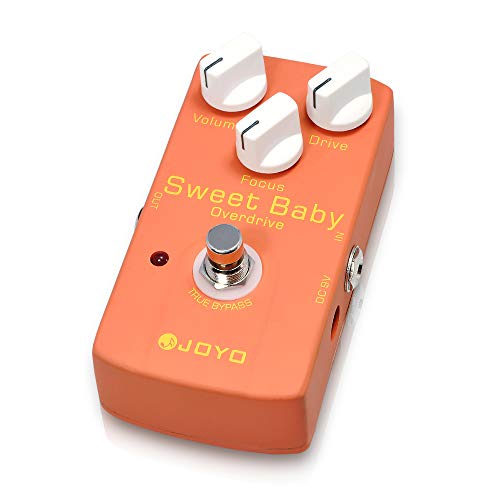
- ✓ Clear, musical low-gain
- ✓ Focus knob is purposeful
- ✓ Transparent tone with bypass
- ✕ Power options limited
- ✕ Not a fuzz/distortion mix
| Type | Low-gain overdrive pedal |
| Focus Control | Adjustable Focus knob to tailor overdrive character |
| Construction | Aluminum-alloy housing with stoving varnish finish |
| Indicator | LED status indicator |
| Power/Adapter Recommendation | Uses standard guitar pedal power; recommended to use original JOYO power adapter or a compatible 9V supply meeting current requirements |
| Bypass | True bypass |
You’ve probably heard that low-gain pedals always sound thin or lifeless. That couldn’t be farther from the truth with the JOYO Sweet Baby—the kind of pedal you reach for when you want a creamy, transparent grit without stepping into full distortion.
First thing I noticed is the Focus knob in action. It’s not just a gimmick; it genuinely lets you dial in something between a light overdrive and a touch more bite, depending on your guitar and amp.
I plugged into a clean Fender-delivery channel and found everything from glassy clean boosts to a vocal, singing OD just by nudging that control.
Build-wise, the aluminum housing feels sturdy enough for gigging, and the small LED indicator is a quick visual cue during a busy rehearsal. The true bypass keeps your tone intact when you unplug, which is exactly what I want in a low-gain pedal I’ll use with a listening rig and a hot bridge pickup.
In practice, you’ll notice how it preserves the guitar’s natural character. There’s no harsh peak or muddy midrange when you push the Focus a bit; it’s more about adding nuance and warmth.
It feels like the pedal respects your signal rather than fighting it, which is what you’re hoping for in a versatile low-gain drive.
Setting it up is straightforward: keep the guitar plugged in, power matters, and you’ll hear why folks reach for this as their starter-friendly tone shaper. At $36.99, it’s a neat toolbox piece that’s friendly to budget-conscious players who still want real control over their OD voice.
Whether you’re chasing a touch more punch for blues riffs or a smoother edge for lead lines, this little box is worth a try. It isn’t trying to be a high-gain monster; it’s delivering refined low-gain character you can actually hear in a crowded mix.
Boss MT-2 Metal Zone Distortion Guitar Pedal

- ✓ Thick, musical sustain
- ✓ Precise mid control
- ✓ Strong build; reliable
- ✕ Heavier pedal
- ✕ A bit complex at first
| Categories | Guitar effects pedal (distortion) |
| Gain Stage | Dual-stage gain circuit for thick, tight distortion with smooth sustain |
| EQ Controls | 3-band active EQ with semi-parametric midrange, up to ±15 dB boost/cut per band |
| Tone Versatility | Wide range from mid-scooped rhythm to bold cutting distortion |
| Volume Handling | Wide dynamic range for consistent output across practice and live performance |
| Warranty | BOSS 5-year manufacturer warranty |
You’re loading into rehearsal night, a dim studio with the bass amp rumbling in the corner, when you plug into the Boss MT-2. The moment the sustain kicks in, you notice that thick, singing grit you’ve chased from the PA for weeks.
That familiar “column of sound” starts to bloom without you having to chase it with a stomp-switch dance.
First thing you’ll feel is the pedal’s heft and solid build. It sits steady on the board, the footswitch clicking with confident resistance.
Dialing in tones is intuitive: the three-band EQ and that semi-parametric mid, plus the dual-stage gain, let you carve out room for either a tight rhythm or a soaring lead without muddling the mix.
In practice, you’ll notice the low-end stability—no flubbed palm-mutes, just a crisp thud that sits cleanly with the drummer. The midrange control is where you’ll shape characters from scooped chug to bold, cutting tones that punch through.
It’s not just loud; it’s articulate, with sustain that feels musical rather than fizzy.
During a late-night jam, you’ll appreciate how the pedal handles volume shifts. Roll back the output for quiet practice, then slam it for live density, and it remains musical across the sweep.
The build inspires confidence, and the five-year warranty adds reassurance when you’re gigging weekly.
If you’re chasing a versatile, high-quality drive that can cover metal-tight rhythms and shimmering leads, this MT-2 delivers. It’s a workhorse that adapts to your touch, not the other way around.
Overall, it’s a reliable companion for your pedalboard, offering punch, clarity, and sustain you can actually hear in a dense mix. It won’t distort your signal into harsh grit unless you want it to, and that control makes it an easy recommendation for versatile players.
What Characteristics Make a Drive Pedal Low Gain?
Low gain drive pedals are characterized by their ability to enhance tone and dynamics without overwhelming distortion.
- Gain Level: Low gain drive pedals typically have a gain setting that allows for subtle overdrive rather than heavy distortion, often rated below 50% on a gain knob.
- Dynamic Response: These pedals respond sensitively to playing dynamics, allowing for a clean signal to shine through at lower volumes while still adding warmth and texture when played harder.
- Clipping Type: Many low gain drive pedals use soft clipping circuits, which produce a smoother and more musical overdrive compared to hard clipping found in higher gain pedals.
- Frequency Range: Low gain pedals often emphasize mid-range frequencies, providing a natural sound that helps maintain the character of the guitar and amp, rather than scooping out the mids.
- Transparency: A key feature is their ability to be transparent, meaning they enhance the original guitar tone without coloring it excessively, allowing the unique qualities of the instrument to remain intact.
- Versatility: These pedals are versatile, suitable for various musical styles from blues to rock, and can be used effectively in conjunction with other effects without overpowering them.
- Build Quality: Many reputable low gain drive pedals are built with high-quality components, ensuring durability and reliability under regular use, which is essential for performing musicians.
How Can Transparency Impact Your Tone with a Low Gain Drive Pedal?
Transparency in a low gain drive pedal can significantly influence your tone, allowing the natural character of your guitar and amp to shine through.
- Clarity: A transparent low gain drive pedal preserves the clarity of your original signal, ensuring that the nuances of your playing style are retained. This allows for articulate note definition, making it ideal for genres that require precision, such as jazz or blues.
- Dynamic Response: Transparency allows the pedal to respond dynamically to your playing intensity, maintaining the touch sensitivity of your guitar. This means that light picking will yield a softer overdrive, while harder playing results in a more aggressive tone, effectively allowing for expressive playing.
- Natural Compression: Some transparent drive pedals provide a subtle compression effect, which can enhance sustain without coloring the tone. This natural compression helps in achieving smoother transitions between notes and can make lead lines more fluid while still retaining the original character of the guitar.
- EQ Preservation: A transparent drive pedal typically avoids significant alterations to the frequency response, meaning the original tone of the guitar is largely unaffected. This is crucial for musicians who want to maintain their guitar’s unique tonal qualities while adding just a hint of overdrive.
- Versatility: The transparent nature of these pedals makes them highly versatile, allowing them to be used in various settings, whether as a standalone drive or stacked with other pedals. Musicians can experiment with different gain levels without losing the core essence of their sound.
Why is Clipping Style Important in Low Gain Drive Pedals?
The underlying mechanism involves how the pedal processes the audio signal. In asymmetrical clipping, which is common in many low gain drives, the signal is clipped unevenly, allowing for a more complex harmonic structure and a smoother transition into overdrive. This results in a warmer, more musical tone, which is preferred for styles that require expressive dynamics, such as blues and jazz. Conversely, symmetrical clipping often leads to a more pronounced distortion and can mask the subtleties of a player’s technique. The choice of clipping style thus influences not only the tonal qualities but also how the player perceives their sound and responds to the instrument.
What Are the Most Popular Low Gain Drive Pedals Among Musicians?
The JHS Morning Glory is celebrated for its ability to provide a transparent overdrive that responds well to the player’s dynamics, making it a favorite for guitarists who want to maintain their guitar’s character while achieving a rich, warm sound.
The Wampler Ecstasy is designed to offer a wide array of tonal possibilities, allowing musicians to dial in their ideal low gain overdrive sound. Its responsive controls and clarity make it a versatile tool for various playing styles.
How Do Low Gain Drive Pedals Benefit Your Overall Sound?
- Warmth: Low gain drive pedals introduce a pleasing warmth to your tone by rounding off the high frequencies and enhancing the midrange. This warmth makes the sound more inviting and full, often resembling the characteristics of vintage tube amplifiers.
- Dynamic Response: These pedals allow for a more responsive playing experience, enabling the player to clean up their sound simply by adjusting their picking dynamics. This means that the harder you play, the more saturation you get, which can lead to expressive performances that mimic the natural response of an amp being pushed.
- Subtle Saturation: Unlike high gain pedals that can mask the nuances of your playing, low gain drive pedals provide a subtle saturation that enhances your tone without overpowering it. This makes them ideal for genres that rely on clarity, such as blues or rock, where the articulation of notes is crucial.
- Versatility: Low gain drive pedals can be used in various setups, whether as a standalone effect or stacked with other pedals for a more complex sound. They can serve as a foundation for your tone, complementing other effects like modulation or delay, without muddying the overall sound.
- Boosting Clean Tones: These pedals can also function as a clean boost, adding a bit of grit without changing the fundamental character of your guitar and amp. This is particularly useful for solos or sections where you want to stand out without losing the clarity of your clean signal.
What Factors Should You Weigh When Selecting a Low Gain Drive Pedal?
When selecting the best low gain drive pedal, several factors should be weighed to ensure it fits your playing style and sound preferences.
- Tone Quality: The tonal characteristics of the pedal are paramount. You want a pedal that enhances your guitar’s natural sound without overpowering it, providing warmth and clarity to your tone while adding just the right amount of grit.
- Gain Range: A good low gain drive pedal should offer a versatile gain range. This allows you to dial in anything from a subtle boost to a moderate overdrive, making it suitable for various playing styles, from bluesy rhythms to more dynamic leads.
- Dynamic Response: The pedal’s responsiveness to your playing dynamics is crucial. A high-quality low gain drive pedal will react well to your picking intensity, allowing for expressive playing that reacts to soft and hard touches alike.
- Build Quality: Durability and construction are important, especially if you plan to use the pedal on stage or in a live setting. Look for pedals with robust enclosures and reliable components to ensure they withstand the rigors of frequent use.
- Controls and Features: Consider the control layout and additional features of the pedal. Simple, intuitive controls are often preferable, but features like tone shaping options or a built-in boost can enhance versatility, making it easier to tailor your sound.
- Compatibility: Ensure the pedal works well with your existing gear, including your guitar and amplifier. Some pedals may interact differently depending on the context of your setup, so testing it with your gear can help achieve the best sound.
- Price: Budget is always a consideration when selecting gear. While higher-priced pedals may offer advanced features and superior quality, there are many affordable options that deliver great sound, so balance cost with your needs.
- Reviews and Recommendations: Researching user reviews and expert recommendations can provide insights into how well a pedal performs in real-world scenarios. Feedback from other musicians can help you gauge whether a pedal truly delivers on its promises.
How Can You Test and Compare Low Gain Drive Pedals Effectively?
| Feature | Pedal A | Pedal B | Pedal C |
|---|---|---|---|
| Price | $120 – Mid-range price with good features | $80 – Budget-friendly option with decent sound | $150 – High-end pedal with premium build quality |
| Tone Quality | Warm and smooth, great for blues | Clear and bright, ideal for rock | Versatile, suitable for various genres |
| Durability | Solid metal casing, long-lasting | Plastic housing, may wear over time | Heavy-duty construction, very robust |
| User Reviews | Highly rated for versatility | Good for beginners, easy to use | Favored by professionals for quality |
| Gain Range | Low to Medium Gain | Low Gain | Low to High Gain |
| Weight | 1.5 lbs | 1 lb | 2 lbs |
| Power Supply Requirements | 9V battery or DC adapter | 9V battery | 9V or 12V DC adapter |