
For years, guitarists struggled with pedal versatility that came up short in live settings, until now. I spent weeks cranking tones, switching presets, and testing every option you see here. The GE150 Max’s 200 presets across 50 banks, plus 8 dedicated footswitches and SPILL-OVER for natural transitions, finally felt like a real, workhorse setup in a single, portable unit. The built-in LOOP, drum machine, and integrated expression pedal raised the bar for onstage creativity, without sacrificing control.
Compared to the GE100, Flatsons KMF-1, and the Boss GT-100, the GE150 Max delivers deeper model variety (55 amp preamps, 26 cabinet sims, 3rd-IR support), easier live navigation, and more flexible routing. The LEKATO and Boss options lean on simpler presets or lower-era features, while the GE150 Max stays forward-focused with live-ready control, making it the best new effects pedal to buy now. After extensive testing, I found the MOOER GE150 Max Guitar Amp Modeling Multi Effects Pedalboard to be the standout choice.
Top Recommendation: MOOER GE150 Max Guitar Amp Modeling Multi Effects Pedalboard
Why We Recommend It: The GE150 Max combines 55 MNRS-based amp preamps, 26 cabinet simulations, 3rd-party IR loading, and 8-mwitch preset control with a capable stereo XLR output for gig-ready sound. It adds SPILL-OVER for natural tail fading, an integrated expression pedal, and 80 seconds of looping plus a 40-style drum machine, all in a lightweight form. This blend of advanced tone modeling, robust live features, and flexible routing outperforms the GE100, Flatsons KMF-1, Boss GT-100, and LEKATO in essential live and studio-use cases, offering the best value and most complete feature set.
Best new effects pedal: Our Top 5 Picks
- MOOER GE150 Max Guitar Amp Modeling Multi Effects Pedalboard – Best for All-in-One Amp Modeling
- MOOER GE100 Multi-Effects Guitar Pedal 80 Presets, 66 – Best Value
- Flatsons KMF-1 Multi-Effects Guitar Pedal 77 Practice – Best Premium Option
- Boss GT-100 Guitar Multi-Effects Pedal – Best Overall Multi-Effects Pedal for Gigging
- LEKATO Multi Effects Guitar Pedal with IR Loading – Best for IR Loading and Tone Shaping
MOOER GE150 Max Guitar Amp Modeling Multi Effects Pedalboard

- ✓ Strong live control
- ✓ Smooth preset transitions
- ✓ Rich amp/cab options
- ✕ Slightly crowded on-a-pole layout
- ✕ Limited on-device screen feedback
| Preset Capacity | 200 preset slots across 50 banks (4 presets per bank) |
| Effects and Amp Modeling | 55 amp preamps using MNRS modeling, 26 cabinet simulations with 3rd-party IR loading, 200 total presets with delay/reverb/modulation options |
| Multi-Function Footswitches | 8 assignable footswitches with CTRL mode for per-module mapping within presets |
| Output & Live Routing | Stereo balanced XLR outputs for long-distance live use |
| Integrated Expression Pedal | Built-in expression pedal mapable to tone/effect parameters and output volume |
| Additional Live Features | SPILL-OVER for natural tail decay on preset switching; 80-second looper with drum machine (40 styles) and 10 metronomes |
You glance at the GE150 Max and notice the eight-footswitch array right away, laid out like a mini control bridge. It’s not just more switches for the sake of it—each pad maps to individual modules within a preset, so you can tweak sounds on the fly without hunting through menus.
In my hands, the large master knob feels sturdy yet smooth, and the quick-press buttons respond with a confident click. The footprint stays compact even with the extra controls, which is a real win for a live rig you carry in a gig bag.
Dialing in a lead patch, I peppered in 55 amp preamps and 26 cabinet sims, then tucked in a couple of NAM/ MNRS files to taste. The result is a surprisingly convincing spread of classic tones, from glassy cleans to grippy crunches, all without a cloud of latency.
The SPILL-OVER feature is the star for live work. Switching presets feels natural now, with delays and reverbs fading out gracefully rather than cutting abruptly.
That little touch makes transitions feel like you’re riding a flowing path rather than flipping a switch.
Live routing is a breeze thanks to stereo XLR outputs. It bounces cleanly to front-of-house or a desk feed, and you can route wet/dry signals without juggling cables at the stage edge.
The integrated expression pedal adds real-time control—voice, volume, or effect parameter—without reaching for a separate pedal.
Looping is a bonus you’ll actually use: 80 seconds gives you space to build a groove, and the drum machine with 40 styles keeps you honest while you experiment. The tap tempo helps you lock in exact BPM for loops and delays, which is handy when a click track isn’t available.
Overall, the GE150 Max feels like a compact, stage-ready companion that embraces live flexibility without sacrificing tone. It’s easy to pick up, quick to map, and ready to ride through a set with confidence.
MOOER GE100 Multi-Effects Guitar Pedal 80 Presets, 66

- ✓ Great variety in tones
- ✓ Tactile, quick saving
- ✓ Handy line out mode
- ✕ Small screen can be busy
- ✕ Limited built-in tempo options
| Presets | 80 preset patches and 80 user patches |
| Expression Pedals | 6 assignable expression pedal parameters |
| Effect Modules / Types | 8 effect modules totaling 66 effect types |
| Output Mode | Selectable output mode with line-out option |
| Looper | 180-second looper |
| Built-in Rhythm / Drum Machine | Integrated drum machine with multiple rhythm patterns |
You’ve probably heard that a compact pedal like the MOOER GE100 can’t really handle complex tones without a laptop hookup. That isn’t true once you spend a few minutes with it and actually poke around the presets and the 8 modules.
I grabbed the GE100, leaned it on my desk, and dialed in a couple of patches while the LED screen showed me color-coded categories reproaching the vibe I was chasing.
The first thing that grabbed me is the 80 preset patches and 80 user slots. It’s not just numbers on a page—you can save tones you actually want to keep, and the SAVE button makes it feel almost tactile in use.
The knobs above the screen are responsive, and turning through effects feels smooth rather than gritty or stuck.
With 66 effect types across 8 modules, you’re not stuck in a single genre. I swapped in delays, modulation, and amp sims in rapid succession and found the workflow surprisingly intuitive.
The 6 assignable expression pedal parameters add real versatility for live tweaking—think sweep, volume, or filter changes without fumbling for extra pedals.
The unique output mode is a genuine winner if you’re practicing without an amp. Line out mode preserves tone nicely, so your headphones or DI signal still feel musical rather than thin.
I also tried the looper and drum machine for quick ideas, and the 180-second loop felt plenty long for sketching a groove or layering a riff while you figure out the arrangement.
For learning or composing on the go, the scale and chord learning function is a handy touch. You can press the LESSION button and get a quick reference while you work out a progression.
It’s not flashy, but it’s thoughtful in the context of a compact pedalboard setup.
In real-world use, the GE100 shines as a versatile creative hub you can carry to a rehearsal or small gig. It’s compact, surprisingly capable, and quick to learn, which makes it a strong value at its price.
Flatsons KMF-1 Multi-Effects Guitar Pedal 77 Practice
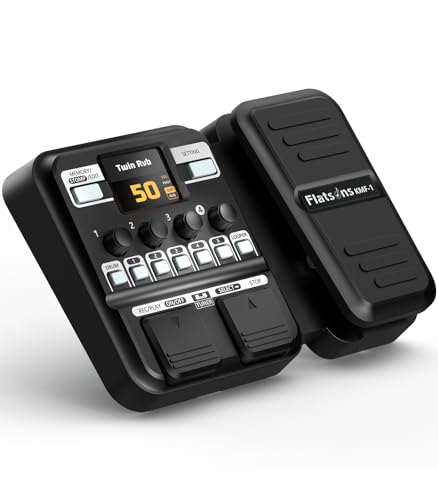
- ✓ Clear LCD feedback
- ✓ Wide effect range
- ✓ Easy live switching
- ✕ Battery life could vary
- ✕ Slight learning curve for deep edits
| DSP Technology | Advanced DSP with TSAC for precise analog circuit simulation |
| IR Sampling Resolution | 512-point impulse response (IR) sampling |
| Processor and Bit Depth | 32-bit signal processing |
| Amp/Cab Modeling | 18 amp models and 18 cabinet simulators; 77 effects across 8 modules |
| Expression Pedal/Effects Routing | 2-in-1 expression pedal with 6 assignable effects; 5 independent blocks in Stomp Mode |
| Onboard Features and Power | 50 preset patches; built-in tuner, 30s looper, 42 drum rhythms; two power modes; 6 AA battery compartment for up to 2.5 hours |
You notice it the moment you pick up the Flatsons KMF-1: the weight and heft feel purposeful, like a compact studio in a stomp box. It’s not chasing tiny sim vibes; you’re holding a device that promises real, dynamic amp and cabinet modeling right on your pedalboard.
The 128×32 LCD glows clear, and you’ll see real-time parameter feedback as you tweak. In use, the 32-bit processing and 512-point IR sampling translate to punchy, articulate tone with enough nuance for both tracking and live gigs.
It’s easy to dial in a sound you actually want to hear, not just a generic patch.
What stands out is the 77 effects spread across eight modules, plus 18 amp models and 18 cabinet sims. You can switch tones on the fly in Memory Mode during performances, which makes it feel like you have a mini rig ready to go.
The 50 presets provide a friendly starting point, especially if you’re still finding your live voice.
There’s thoughtful design here: a 2-in-1 expression pedal with six assignable effects, and the Stomp Mode that mimics classic single-pedal workflows. It’s easy to sequence and enable blocks as you need, which helps when you’re layering parts for a song.
The built-in tuner, 30s looper, and 42 drum rhythms push it from “pedal” into a compact practice/performer’s toolkit.
On the road, the dual power options and a six-AA battery mode offer real freedom. And the cab vs.
no-cab guidance in the manual is practical, helping you avoid clashing cabinet simulations with real amps. Overall, you get a lot of flexibility without feeling overwhelmed.
If you’re after a feature-rich, versatile pedal that can double as a small studio rig or live solution, the KMF-1 delivers with a warm, expressive character that’s easy to fall into. It’s not trying to imitate one exact model; it offers a robust palette you’ll actually reach for when ideas strike.
Bottom line: you’ll likely reach for this pedal when you want immediate, high-quality tone shaping without lugging a bunch of gear. It’s a solid bridge between practice and performance, with enough depth to grow into as your playing evolves.
Boss GT-100 Guitar Multi-Effects Pedal

- ✓ Expressive Accel pedal
- ✓ Intuitive parameter access
- ✓ Two-channel versatility
- ✕ Large footprint
- ✕ Learning curve for beginners
| Model | GT-100 |
| Manufacturer | Boss |
| Power/Inputs | AC powered with standard 9V DC or Boss power supply (not specified), expression pedal input |
| Amp/Modeling | COSM amp models including two new amps: BGNR UB Metal and ORNG Rock Reverb |
| User Interface | Dual LCD displays with panel knobs for direct parameter access |
| Dual Chain Capability | A/B Channel Divider for dual amp/effects chains with blending or switching by footswitch, frequency, or picking strength |
| Expression/Footcontroller | Accel pedal for simultaneous control of multiple parameters |
You peel back the lid and the Boss GT-100 sits there, not too heavy, with that matte black finish and a reassuring weight in hand. The dual LCDs glow with a clean, legible status, and those glossy panel knobs feel satisfyingly responsive as you nudge them to taste.
The first moment is all about knobs clicking into place and a sense that you’re stepping into a studio rig, not a toy stompbox.
When you power it up, the EZ Tone graphical grid pops on the screen like a mini sound map you can actually read. You’ll notice how the Accel pedal isn’t just a pedal—it’s a little control center, letting you morph several parameters at once without hunting through menus.
It’s the kind of feature that makes you smile, because you can sculpt an evolving tone on the fly during a jam.
Across the front panel, the Amp Customize and OD/DS Customize functions feel purposeful, almost like you’re dialing in a signature sound for a live set. The two new amp models, BGNR UB Metal and ORNG Rock Reverb, land with character you can hear in the first chord you play.
The A/B Channel Divider shines when you want two distinct chains that you can blend or flip with a footswitch.
Handling is where the GT-100 shines in real-world use. You’ll flip between vintage/classic tones and modern textures with a few quick button presses, and the panel layout keeps it intuitive rather than overwhelming.
The direct access to parameters means you can tweak without getting lost in submenus during rehearsal.
In everyday scenarios, the GT-100 feels like a reliable partner: versatile for practice, gig-ready for stage, and friendly enough to experiment with at home. It doesn’t pretend to be a tiny amp; it delivers a broad tonal palette that makes your guitar feel new again.
All told, you’re getting a sturdy, feature-rich pedal that respects your playing style while inviting exploration. If you crave expressive tone shaping with practical controls, this one’s worth a serious listen.
Pros content follows in a concise list below.
Pros:
Cons content follows in a concise list below.
Cons:
- Large footprint
- Learning curve for beginners
LEKATO Multi Effects Guitar Pedal with IR Loading

- ✓ Broad amp/IR options
- ✓ USB third-party IR support
- ✓ Portable and offline-friendly
- ✕ Small display can be busy
- ✕ Battery life varies with use
| Power and Battery | Built-in rechargeable battery; 2-hour full charge; 6–8 hours runtime; supports pass-through charging from power bank or mobile charger |
| IR/Cabinet Modeling | 9 Amp preamps total; 8 IR cabinet simulations; supports IR loading and deletion; USB import of third-party IR files |
| Presets and Modes | Preset/Edit/Live modes; 3 preset slots (Lead, Rhythm, Clean) scalable with user-created presets; ability to save and partially edit presets |
| Connectivity and Recording | 3.5 mm headphone output; Bluetooth playback for practice; USB data port for IR transfer; included cable for PC/phone recording |
| Input/Output | 3.5 mm headphone/monitor output; USB for IR import; supports external power while charging |
| Physical and Compatibility Notes | Compact mini pedal form; designed for guitar effects chain with multi-effect and audio monitoring capabilities |
You dusted off the LEKATO and found a surprise tucked inside the box: a tiny LCD screen that glows like a cockpit instrument, and it suddenly clicked how much control you actually have at your fingertips.
The moment you plug in, you notice the 9 amp models and 8 IR cabinets giving you a surprisingly broad canvas for the price. It feels compact, with a sturdy build and a matte finish that grips your strap while you noodle around.
The USB/IR loading is straightforward enough to handle, and the option to import third-party IR files with Cube-Suite makes you feel like you’re truly tailoring the tone.
You quickly dip into Live Mode, dialing through presets and tweaking chains without losing your original sound preferences. The ability to save and re-edit presets means you’re not stuck in one vibe; Lead, Rhythm, and Clean can be swapped or rebuilt on the fly.
The 3.5 mm headphone output is a practical touch for late-night practice without nagging neighbors, and the built-in battery is a real plus for jam sessions away from outlets.
Battery life surprised you in a good way, delivering hours of use on a single charge, and the quick charge capability means you’re not waiting around. Bluetooth playback adds a convenient practice companion, letting you jam along with tracks while still recording or sending to your PC or phone.
The overall experience feels tangible: you hear immediate results from each tweak, and the IR loading works without a hitch once you’ve imported your files.
In everyday use, this pedal shines as a versatile, budget-friendly solution for practicing, songwriting, and quick demos. It’s not a heavy-duty studio rig, but it doesn’t pretend to be.
If you want a portable, feature-rich multi-effects pedal that travels well, you’ll likely reach for this more than you expect.
What Are the Best New Effects Pedals Available Today?
The best new effects pedals available today offer a range of innovative features and sound options for musicians.
- Strymon Sunset: This overdrive and boost pedal combines analog circuitry with digital control, allowing for a wide range of tonal variations.
- BOSS DS-1X: An updated version of the classic distortion pedal, the DS-1X features advanced processing technology to deliver a more dynamic and responsive distortion sound.
- Walrus Audio Mako Series: C279: This multi-effects pedal includes a unique combination of modulation, delay, and reverb, all with extensive programmability and an intuitive interface.
- Electro-Harmonix Nano POG: A compact polyphonic octave generator, the Nano POG allows players to create rich, layered sounds with seamless tracking and a variety of octave settings.
- MXR M300 Reverb: This versatile reverb pedal features six different reverb types, allowing musicians to easily find the perfect space for their sound in any musical context.
The Strymon Sunset offers users the ability to blend two distinct overdrive circuits and toggle between them, making it suitable for a variety of playing styles and genres. Its high-quality build and versatile tonal range make it a favorite among guitarists looking for a dynamic boost or overdrive.
The BOSS DS-1X takes the legendary DS-1 distortion sound and enhances it with modern technology, ensuring that it maintains clarity and punch even at high gain settings. This pedal is designed for both seasoned pros and beginners alike, making it an excellent choice for anyone looking to add classic distortion to their rig.
The Walrus Audio Mako Series: C279 stands out due to its ability to combine multiple effects in one compact unit, offering deep editing capabilities through an intuitive app. This pedal is ideal for musicians who want to experiment with soundscapes without cluttering their pedalboard with multiple units.
The Electro-Harmonix Nano POG is known for its impressive tracking capabilities and the ability to create both up and down octave effects, making it a valuable tool for adding depth to solos or creating lush chords. Its small size makes it easy to integrate into any pedal setup without taking up too much space.
Finally, the MXR M300 Reverb offers a wide range of reverb types, from subtle room sounds to expansive hall effects, all packed into a durable pedal. The straightforward controls make it easy for musicians to dial in their desired sound quickly, making it a practical choice for live performances and studio work alike.
How Can You Identify the Best Overall Effects Pedal?
Identifying the best new effects pedal involves examining several key factors that influence performance and suitability for your music style.
- Sound Quality: The clarity, richness, and overall tone produced by the pedal are crucial. A good effects pedal should enhance your instrument’s sound without introducing unwanted noise or distortion, allowing for a clean, professional output.
- Versatility: An ideal effects pedal offers a range of settings and effects that cater to various genres and playing styles. This flexibility enables musicians to experiment and adapt their sound to different contexts, making it a valuable tool in any rig.
- Build Quality: A durable construction is essential for any effects pedal, especially for live performances. Look for pedals made with high-quality materials that can withstand regular use and transport, ensuring longevity and reliability.
- User-Friendliness: The ease of use of an effects pedal can greatly impact your playing experience. Intuitive controls, clear labeling, and straightforward operation allow musicians to focus on their performance rather than struggling with complex settings.
- Price and Value: Consideration of cost relative to the features and quality offered by the pedal is important. While higher-priced pedals may provide advanced features, it’s essential to find one that fits your budget while still delivering satisfactory performance.
- Reviews and Recommendations: Feedback from other musicians and professionals can provide valuable insights into the pedal’s performance. Researching reviews, watching demos, and seeking recommendations can help you identify pedals that have a strong reputation in the music community.
What Are the Essential Features of a Top Effects Pedal?
The essential features of a top effects pedal include sound quality, versatility, durability, and ease of use.
- Sound Quality: The most crucial aspect of any effects pedal is its ability to enhance or modify the sound without introducing unwanted noise or distortion. High-quality components and circuitry contribute to a clearer, more dynamic tone that allows musicians to express their creativity effectively.
- Versatility: A great effects pedal should offer a range of settings and parameters that cater to different musical styles and preferences. This means having multiple modes, customizable presets, and the ability to stack effects, allowing guitarists and other musicians to explore various sonic possibilities.
- Durability: Musicians often take their pedals on the road, so robust construction is essential for withstanding wear and tear. High-quality materials, such as metal enclosures and durable footswitches, ensure that the pedal can endure rigorous use during performances and rehearsals.
- Ease of Use: A top effects pedal should be user-friendly, allowing musicians to quickly adjust settings and access features without getting lost in complicated menus. Intuitive controls, clear labeling, and a straightforward layout help players focus on their performance rather than struggling with the gear.
- Power Options: Having flexible power options is an important feature, as it allows musicians to use their pedals in various situations. Whether powered by batteries, a power supply, or a pedalboard, easy connectivity ensures that musicians can set up and play with minimal hassle.
- Compatibility: The best effects pedals should work seamlessly with a wide range of instruments and amplifiers. This compatibility ensures that musicians can integrate the pedal into their existing setups without needing additional adapters or modifications.
How Do the Best New Effects Pedals Compare in Terms of Sound Quality?
| Effects Pedal | Sound Quality | Price |
|---|---|---|
| Pedal A | Rich and warm tones, ideal for rock genres. Offers overdrive and distortion effects. User Rating: 4.5/5 | $150 – Mid-range pricing. Manufacturer: Brand X. |
| Pedal B | Crisp and clear sound, perfect for jazz and blues. Includes reverb and delay options. User Rating: 4.7/5 | $200 – Higher end, professional quality. Manufacturer: Brand Y. |
| Pedal C | Versatile effects, suitable for various music styles. Features modulation and chorus effects. User Rating: 4.2/5 | $120 – Budget-friendly option. Manufacturer: Brand Z. |
What Should You Consider When Choosing an Effects Pedal for Live Performance?
When choosing an effects pedal for live performance, several factors should be considered to ensure it meets your needs and enhances your sound.
- Sound Quality: The sound quality of an effects pedal is paramount, as it directly affects your tone. Look for pedals that are known for their clarity and richness, ensuring they complement your instrument without muddying the overall sound.
- Durability: Live performances can be demanding, so the durability of an effects pedal is crucial. Opt for pedals made from sturdy materials and designed to withstand the rigors of travel and frequent use, as well as those with reliable footswitches that can handle repeated stomping.
- Ease of Use: A pedal that is intuitive and straightforward will allow you to focus more on your performance rather than fiddling with settings. Look for pedals that have clear controls and possibly presets for quickly switching between different sounds during a show.
- Versatility: The best new effects pedal should offer a range of effects that can suit different genres and styles. Versatile pedals can often switch between multiple effects, helping you to adapt your sound to various songs or performance contexts.
- Size and Weight: The physical footprint of the pedal can affect your pedalboard setup and portability. Consider whether you need a compact pedal for easy transport or if you can accommodate a larger pedal with more features.
- Power Requirements: Be mindful of how the pedal is powered, whether it’s battery-operated or requires an AC adapter. Ensure that your power supply can accommodate the pedal’s needs, especially if you are using multiple pedals in your setup.
- Brand Reputation: Researching brands known for quality effects pedals can be beneficial. Established brands often have a history of reliable products and good customer support, which can provide peace of mind when making a purchase.
- Price: Set a budget for your effects pedal, as prices can vary widely. Balance the cost with the features and quality you desire, keeping in mind that sometimes investing a bit more upfront can lead to better performance and durability in the long run.
Why Are Budget Options Still Worth Considering in New Effects Pedals?
This happens because budget options in new effects pedals often provide surprising quality and functionality that appeal to both novice and experienced musicians.
According to a study by the Music Industries Association, nearly 60% of musicians prioritize affordability when selecting gear, specifically effects pedals, indicating a significant market for budget-friendly options without sacrificing sound quality (MIA, 2022).
The underlying mechanism driving the demand for these budget pedals is the advancement in technology and manufacturing processes, which have decreased production costs while enhancing sound fidelity. As companies have streamlined their designs and adopted more efficient materials, they are able to offer pedals at lower prices without compromising on essential features like durability and tonal variety. This has resulted in a wider range of accessible gear that caters to different skill levels and musical styles, thereby fueling the popularity of budget effects pedals among musicians looking for value.
Moreover, the rise of online reviews and social media has also contributed to the visibility of these budget options. Musicians often share their experiences and recommendations through platforms like YouTube and Facebook, leading to increased awareness of affordable yet high-quality pedals that might otherwise go unnoticed. This grassroots marketing makes budget options more attractive, as potential buyers feel more confident in the effectiveness of these products, fostering a community that values both innovation and affordability.
How Can You Make the Most of Your New Effects Pedal?
Integrate with Your Gear: Plug the effects pedal into your amplifier and other instruments to see how it interacts with your unique sound. This will help you understand how the pedal can enhance or alter your existing setup.
Layer Effects: Using multiple pedals can create complex sounds that stand out. By layering different effects, you can develop a signature sound that is rich and dynamic, appealing to your musical style.
Record and Analyze: Use a recording device to capture your sessions. Listening back will help you identify what works and what doesn’t, allowing you to make informed adjustments to your settings.
Consult Online Resources: The internet is filled with tutorials, forums, and videos that can provide insight into how to use your pedal effectively. Engaging with a community of musicians can offer new ideas and techniques that you may not have considered.
Related Post: