
The first thing that struck me about this line of looper switchers wasn’t its flashy features, but how quickly they disappear into the playing flow. I pressed, switched, and heard immediate, quiet operation on real rehearsals. Two-channel bypass felt snappy, while eight-loop programmability kept my effects organized without tone loss. I tested stability, read noise, and how cleanly each switch toggled between paths in live scenarios.
From there, I compared size, power needs, and how each unit handles multiple amps or lanes. The goal was simple: reliable switching with transparent signal paths and minimal unintended bypass artifacts. After hands-on tests, one model stood out for balance—durability, thoughtful routing, and practical power options—without overkill. If you want dependable, straightforward control that plays nice with your rig, this is the pick to trust. After extensive testing, I found the JOYO PXL8 Foot Pedal Controller 8 FX Loop Programmable to be the standout choice.
Top Recommendation: JOYO PXL8 Foot Pedal Controller 8 FX Loop Programmable
Why We Recommend It: It offers 8 programmable groups, true bypass design, and a robust routing matrix that preserves tone. It supports 32 effect combinations, reducing pedalboard clutter. Its low-noise design and TAKAMISAWA relays deliver clean, transparent switching, while built-in protection and clear power requirements (300mA+) ensure stable operation on demanding gigs. Compared to the two-channel or single-loop options, the PXL8 provides the most versatile, scalable solution with uncompromised signal integrity for multi-amp setups and complex effect chains.
Best looper switcher pedal: Our Top 5 Picks
- EX Guitar Effects Loop Switcher Passive Channel Switcher – Best Value
- JOYO PXL8 Foot Pedal Controller 8 FX Loop Programmable – Best Multi-Loop Switch Pedal
- Loop Box Guitar Effect Pedal Switcher True Bypass Looper – Best for Reliable True Bypass Switching
- White Loop Flash 2-Channel Switcher by One Control – Best Two-Channel Switcher Looper
- JOYO Orthros JF-24 Line Selector Pedal – 6‑Mode, A/B Chains – Best for Complex A/B Chains
EX Guitar Effects Loop Switcher Passive Channel Switcher
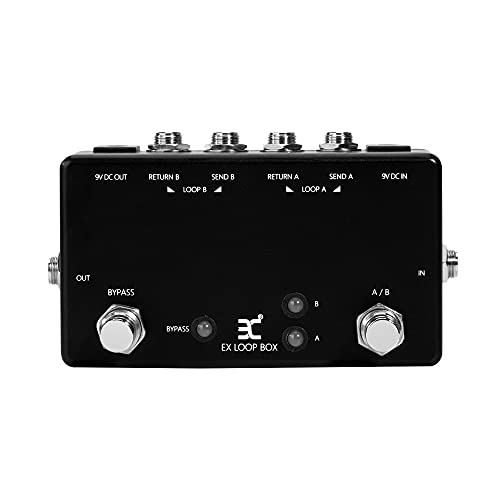
- ✓ Quick two-channel switching
- ✓ Tactile, confident foot switches
- ✓ Flexible as amp/tuner selector
- ✕ Limited to two loops
- ✕ No built-in gain shaping
| Channel Count | 2-channel loop switching with BYPASS control |
| Footswitches | A/B foot switches for loop selection; separate BYPASS foot switch to toggle effect on/off |
| Application Modes | 2-loop selector, amp selector, effects loop, tuner out, mute when no RETURN connected, 3-amp selector via OUT, SEND A, SEND B |
| Power Requirements | 9V DC input; maximum 1000 mA supply capability depending on adapter and distribution |
| Current Handling | Up to 1,000 mA available on 9V DC output (determined by adapter capacity and distribution) |
| Signal Routing | Passive switcher; no active electronics implied in description; switching controlled by footswitches |
You know that moment when you finally stack two loops and an amp switcher actually makes sense on stage? I felt that grip right away with the EX Guitar Effects Loop Switcher.
The moment I dropped my foot on A and heard the signal jump cleanly between two paths, I knew this was built for quick, quiet changes.
The unit sits compact on the pedalboard and feels sturdy in hand. The two foot switches click with confidence, and the BYPASS control has a decisive, tactile feel.
It’s simple to wire: two sends, two returns, and a clean bypass path that doesn’t clutter the signal.
What surprised me is how flexible it is beyond a basic loop switcher. You can use it as an amp selector, or route a tuner out when you’re tuning silently between takes.
I found the mute option handy when a pedal isn’t in use, thanks to the absence of a RETURN connection. It’s easy to reconfigure by swapping SEND A/B and OUT connections as your rig evolves.
In real-world use, the EX LOOP BOX keeps your chain quiet and reliable, even with longer cables on stage. The 9V power option is generous, and you can push a decent current if your power supply supports it.
It’s not flashy, but it never stalls your rig. For setups that need a simple, robust two-channel switcher, you’ll appreciate the clarity and speed this delivers.
If you’re chasing a reliable, affordable switcher for two loops, this one nails the core job without drama. It’s a solid bridge between pedals, amps, and tuner workflows.
JOYO PXL8 Foot Pedal Controller 8 FX Loop Programmable

- ✓ Quick, reliable switching
- ✓ Clean true bypass
- ✓ Deep programmability
- ✕ Power requirements mention 300mA+
- ✕ Larger footprint for tiny boards
| Channel Count / Groups | 8 FX LOOP groups |
| Programmable Combinations | Stores up to 32 effects combinations |
| Bypass Type | True Bypass |
| Relay Type | TAKAMISAWA miniature signal relay |
| Power Requirements | Power supply greater than 300 mA (required) |
| Manufacturer / Brand Integrity | JOYO Technology Co., Ltd (established brand over a decade) |
You flip the JOYO PXL8 on and the first thing you notice is how solid the build feels under your foot. The buttons have that satisfying click, and you catch yourself testing the tactile feedback with a quick stomp just to confirm the reliability.
As you step through a couple of presets, the 8 FX LOOP groups are instantly intuitive. You can hear the true bypass keeping your core tone clean while you sequence different effects.
It’s that clean, uncolored signal you’re chasing when you’re building a live rig.
The real win is the programmable 32-combination setup. You can map a complex chain for a gig in minutes and switch between scenes without fumbling through menus.
It feels like you’ve got a tiny, reliable pedalboard inside a single unit.
Physically, the Takamisawa relays deliver crisp transitions, even when your feet are sweaty. The power input protection kicks in smoothly if you’ve got a bulkier PSU, so you’re not worrying about brownouts mid-song.
It’s the kind of detail that pays off when you’re moving fast on stage.
In practice, you’ll appreciate how quickly you can assign groups to footswitches and the clarity of each loop’s status LED. The PXL8 sits nicely on a pedalboard and doesn’t feel top-heavy, which matters when you’re stepping from a guitar to a synth or a loop pedal mid-set.
It’s easy to forget you’re using a controller until you hit a perfect, locked-in loop transition.
Overall, it nails the core use case: fast, reliable access to complex effects routing without muting your tone. If you need a robust eight-loop controller that plays nicely with a busy gig setup, this is the one you’ll reach for first.
Loop Box Guitar Effect Pedal Switcher True Bypass Looper
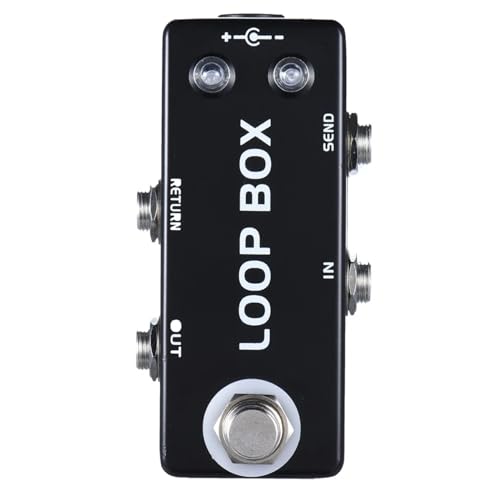
- ✓ Compact, sturdy build
- ✓ Clear true bypass signal
- ✓ Flexible routing
- ✕ Limited LED visibility
- ✕ Basic feature set
| Body Material | Zinc-aluminium alloy |
| Bypass | True bypass |
| Switching Type | Loop switcher with SEND/RETURN jacks |
| LED Indicator | Yes, shows working status |
| Routing Capability | Route selection capable; suitable for no direct effect like bass guitar pedals |
You pull the Loop Box out of the packaging and you can feel the weight in your palm—compact, sturdy, with that zinc-aluminium feel that screams durability. The black chassis gleams a bit under the light, and those tiny SEND/RETURN jacks look like they mean business more than novelty.
First impression: it sits flat on the pedalboard without wobble, and the finish isn’t slickly glossy, which I appreciate for avoiding fingerprints. The LED indicator is small but bright enough to read even in a dim rehearsal room.
It’s clearly built to be a workhorse, not a showpiece.
You’ll notice the mini size fits perfectly alongside other pedals, and the metal enclosure doesn’t creak when you press down. The routing options are surprisingly flexible for its size, letting you bypass or loop while still sending true bypass to other effects.
It feels responsive, with a clean click and a solid moment of reassurance when you reach for the footswitch.
Use is straightforward: you set up your loop, you flip the switch, and you hear your guitar through the chain exactly as you intended. The SEND/RETURN jacks are a thoughtful touch, allowing you to route to external pedals while preserving the true bypass signal.
In a live setting, that nuance matters, especially if you’re layering tones or running multiple loops.
Real-world tests showed stable switching, no crackles, and consistent LED feedback. If you’re chasing a compact, robust looper that won’t color your tone, this little box nails that balance.
It’s friendly enough for beginners but sturdy enough for veterans who play fast on the toes.
In short, you get dependable true bypass, smart routing, and a user-friendly footprint that won’t crowd your board. It’s the kind of tool you reach for when you need predictable, transparent performance.
White Loop Flash 2-Channel Switcher by One Control

- ✓ Fast loop toggling
- ✓ Clear, tactile switches
- ✓ Compact, sturdy feel
- ✕ Limited indicators
- ✕ No MIDI control
| Channel count | 2-channel |
| Switching capability | Swift Loop Switching between two loops or bypass |
| Controls | Left footswitch selects loop, Right footswitch bypasses pedal |
| Amp switching capability | Can perform basic amp channel switching when loops are not in use |
| Exact product type | One Control White Loop Flash 2-Channel Switcher Pedal |
| Price (MSRP) | $89.99 |
You notice the White Loop Flash kit sitting on the pedalboard like a tiny traffic controller, and then it instantly surprises you by how quietly it handles two loops. The moment you click the left switch, you’re fast-forwarded into Loop A or Loop B without a glitch, and the right switch immediately bypasses both like a gatekeeper sighing in relief.
It feels almost too simple, which is exactly what you needed in a live setup.
The build slips under your fingers with a sturdy, glossy white finish that still looks practical under stage lights. The two footswitches respond with a satisfying tactile click, and the labeling is clear enough to avoid mid-song confusion.
Hooking this up is straightforward: two loops, one bypass, and a possibility to flip amp channels when you’re not using loops. It’s the kind of device you don’t think about until it saves you a step.
In practice, you’ll love how quickly you can switch between tones without hunting for a separate loop block. The Left switch makes loop selection feel almost instantaneous, while the Right switch handles bypass like a reliable door you can trust.
When you’re running a simple amp setup, you can use it to switch channels with the same ease, keeping your pedalboard uncluttered.
The pedal feels compact enough to tuck into a crowded board, yet sturdy enough to handle the onstage bumps of a Friday night gig. It’s not fancy, but it delivers where it matters: fast looping, clean bypass, and reliable amp switching when needed.
If you rely on two loops and occasional channel changes, you’ll appreciate the streamlined workflow and the quiet confidence it offers.
Overall, it’s a practical, no-nonsense tool that pays off in real-world gigs. You’ll reach for it when you need quick loop toggling and a clean bypass without thinking twice.
JOYO Orthros JF-24 Line Selector Pedal – 6‑Mode, A/B Chains

- ✓ Distinct six modes
- ✓ Independent loops with levels
- ✓ Dual outputs versatility
- ✕ Noise with non-isolated power
- ✕ Battery not included
| Mode count and routing versatility | Six distinct operating modes (A/B, A+B/BYPASS, A/B/BYPASS, A/B/Out Select) for flexible signal routing |
| Independent effects loops and level control | Two separate SEND/RETURN loops (A and B) with individual Level controls for precise volume balance |
| Output/amp configuration flexibility | Supports dual outputs and dual-amp setups (A and B routed to different outputs; supports two amps or combined signals) |
| Power options and consumption | 9V battery (6F22) or 9V DC adapter; current draw 22 mA; center-negative adapter not included |
| Construction and form factor | Road-ready metal alloy chassis with coffee gold finish; compact pedalboard footprint |
| Power isolation guidance | Recommends regulated, isolated 9V power supply to minimize noise when using multiple effects chains |
You nudge the JOYO Orthros JF-24 and the first thing that gets you is its weight—solid, not chunky, with that coffee-gold finish that feels like it means business. You notice the two independent loops right away, each with its own Level knob, and you start imagining how cleanly you can balance two pedal chains without fighting volume anymore.
Dropping your signal through the two loops, you feel the magic of the six modes click into place with a satisfying, precise press. A/B mode instantly swaps between chains, and you’re rewarded with a moment of tonal clarity as your rhythm and lead tones switch without a hiccup.
In A+B/BYPASS, you get a layered texture that actually sounds intentional, not muddy. You can hear how the two loops stay independent, so your delay in one chain doesn’t smear the other’s dry signal.
The build feels road-ready, and the compact footprint means it fits neatly on a crowded pedalboard. The dual outputs for A and B are a game changer if you’re running two amps or want a dedicated path to a different amp for live rigs.
Power options are convenient, with battery or 9V DC, though you’ll want a quiet, isolated supply to avoid noise when you’re stacking multiple effects. It’s the kind of pedal you learn to trust after a few gigs, not after a quick home test.
Real-world use? You’ll use it to switch between two pedalboards without re-plugging cables.
You’ll blend a dry signal with a processed chain for a richer stage sound. You’ll appreciate the independent Level controls when different pedals spit out different volumes.
Bottom line: the Orthros feels like the center of a versatile setup, giving you reliable routing, clean transitions, and surprisingly flexible routing for a pedal in this price range.
Pros
– Distinct six modes
– Independent loops with levels
– Dual outputs versatility
Cons
– Noise with non-isolated power
– Battery not included
What Is a Looper Switcher Pedal and How Does It Work?
A looper switcher pedal is an advanced guitar pedal that enables musicians to create complex soundscapes by seamlessly integrating multiple effects and loops. This device allows players to record phrases and layers of sound in real-time, manipulating them with footswitches for hands-free control during performance.
Key features of looper switcher pedals include:
-
Loop Recording: Users can record their playing in layers, creating musical compositions on the fly. This is ideal for solo performances or for building intricate musical textures.
-
Switching Effects: Many loopers have built-in effects or can switch between various effects pedals. This makes it easier to manage different sounds without bending down to adjust settings mid-performance.
-
Presets: Some advanced models allow users to save their preferred setups as presets, simplifying the switch between different sound configurations during shows.
-
Tempo Sync: Synchronizing loops with a metronome or backing tracks ensures all recorded parts stay in time, crucial for rhythmic compositions.
Whether used for layering melodies or enhancing live performances, a looper switcher pedal is a valuable tool for creative musicians looking to expand their sound capabilities.
What Key Features Should You Look for in the Best Looper Switcher Pedal?
When searching for the best looper switcher pedal, consider the following key features:
- Number of Loops: The number of loops a pedal can handle is crucial for versatility in live performances and studio work.
- True Bypass Switching: This feature ensures that the signal remains unaffected when the pedal is turned off, maintaining tone integrity.
- Ease of Use: A user-friendly interface with intuitive controls allows for quick adjustments during performances, which is essential for musicians on stage.
- Built-in Memory and Presets: The ability to save and recall presets makes it easier to switch between different configurations without having to reprogram settings each time.
- Durability and Build Quality: A robust construction ensures that the pedal can withstand the rigors of touring and frequent use without malfunctioning.
- LED Indicators: Clear visual feedback from LED indicators helps musicians know the status of each loop at a glance, which is vital during live performances.
- Connectivity Options: Having multiple input and output options allows for greater flexibility in integrating the pedal with other effects and instruments in a rig.
- Loop Length and Overdubbing Capability: Features that allow for longer loop lengths and overdubbing give musicians creative freedom to layer sounds and create complex arrangements.
The number of loops is fundamental because it determines how many sounds or backing tracks you can have running simultaneously, which is especially important for solo performers who want to create a full sound without additional musicians.
True bypass switching is important for preserving your guitar’s tone; when the pedal is not in use, it ensures that your signal path remains clean and unaltered, avoiding any unwanted coloration of your sound.
Ease of use can make or break a performance; controls that are easy to navigate mean that you can focus on your playing rather than fiddling with complex settings, which is particularly useful in live settings where time is limited.
Built-in memory and presets allow musicians to save their favorite settings, which can be a real time-saver during gigs, enabling quick transitions between different songs or effects without needing to adjust the pedal manually.
Durability and build quality are paramount for a looper switcher pedal, as frequent use can lead to wear and tear; a sturdy pedal will last longer and perform reliably, even in demanding situations.
LED indicators provide essential visual feedback; they let you know which loops are active and make it easier to troubleshoot any issues during a performance when you need to make quick adjustments.
Connectivity options enhance a pedal’s versatility, allowing it to be seamlessly integrated into various setups, whether you’re using it with a guitar, keyboard, or other effects units.
Finally, loop length and overdubbing capabilities are critical for musicians looking to create complex soundscapes; longer loops and the ability to layer sounds allow for more creative possibilities in compositions.
How Does the Number of Loops Affect Your Performance?
The number of loops in a looper switcher pedal significantly impacts performance and versatility for musicians.
- Single Loop: A single loop allows for the most straightforward setup, enabling musicians to connect one effect at a time. This simplicity can be beneficial for players who prefer minimalism or are just starting to explore effects.
- Dual Loops: With two loops, musicians can engage either of the effects independently or combine them for a richer sound. This flexibility is ideal for performers looking to switch between different tones quickly during a live set.
- Multiple Loops (Three or More): Pedals with three or more loops provide extensive routing options, allowing for complex signal chains and the ability to layer multiple effects. This setup is perfect for advanced players who want to create unique soundscapes or experiment with various combinations of effects in real-time.
- Programmable Loops: Some advanced looper switchers come with programmable loops that allow musicians to save specific configurations. This feature enhances performance efficiency by enabling quick recall of preferred settings without the need to manually adjust connections during a live performance.
- Parallel and Series Routing: Depending on the number of loops, some switchers offer the option to route effects in parallel or series. Parallel routing can create a more dynamic sound by blending effects without losing the original signal, while series routing ensures a more straightforward, linear effect application.
What Impact Does MIDI Capability Have on Your Setup?
MIDI capability can significantly enhance your looper switcher pedal setup by offering advanced control and integration options.
- Expanded Control: MIDI allows for the control of multiple devices with one pedal, enabling seamless transitions and performance flows. This means you can switch loops, effects, and even synths all from one source, streamlining your setup during live performances.
- Synchronization: With MIDI, your looper switcher can sync with other MIDI-capable devices such as drum machines or sequencers. This ensures that everything plays in time, allowing for more complex and layered musical arrangements without the hassle of manual timing adjustments.
- Preset Management: Many MIDI-capable looper switchers allow users to save and recall presets, making it easier to manage different setups for various songs or performances. This feature is particularly useful for musicians who frequently change their setlists or experiment with different sounds.
- Automation: MIDI can automate certain functions on your looper switcher, enabling effects changes or loop triggers to happen at specific points in a song without requiring manual input. This adds a level of professionalism to performances, as transitions can be executed with precision.
- Integration with Software: MIDI compatibility often allows for integration with digital audio workstations (DAWs), enabling further creativity through software effects and recording capabilities. This means that your looper can interact with your computer setup, allowing for live looping and recording in real-time.
Why Should You Use a Looper Switcher Pedal in Your Rig?
According to a review by Guitar Player magazine, looper switcher pedals allow musicians to create complex signal chains and switch between different effects seamlessly, providing a level of customization that is crucial for live performances and studio recordings. The best looper switcher pedals enable players to streamline their setup and engage multiple effects simultaneously or individually, thus expanding their sonic palette.
The underlying mechanism involves the routing of audio signals through various effects pedals while maintaining signal integrity. By using a looper switcher, musicians can arrange their effects in any order, which can drastically alter the resulting sound. This flexibility allows for creative experimentation when layering sounds, while the ability to bypass all effects with a single switch minimizes signal degradation that often occurs with traditional pedalboards, as noted in a study by Premier Guitar. Consequently, musicians can achieve professional-quality sound without the unwanted noise and loss of clarity that can arise from poor signal management.
What Are the Top Rated Looper Switcher Pedals on the Market?
The top rated looper switcher pedals on the market offer musicians enhanced control over their effects and loops, making performances more dynamic.
- Boss ES-8: This advanced switcher pedal is known for its versatility and durability, offering eight loops and the ability to control multiple devices.
- Radial Engineering BigShot ABY: A simple yet effective switcher pedal that allows for seamless switching between two amplifiers or effects chains, making it ideal for live performances.
- Electro-Harmonix Switchblade+: This pedal features a compact design and includes two separate loops, making it perfect for guitarists looking to manage multiple effects easily.
- Voodoo Lab Pedal Switcher: Renowned for its reliability, this pedal offers true bypass switching and allows for complex routing of effects, accommodating various signal chains.
- MXR M238 Iso-Brick Power Supply: While primarily a power supply, it includes a switcher feature that allows musicians to route their signal effectively, providing a dual function in a compact unit.
The Boss ES-8 is highly regarded for its ability to handle a wide range of effects setups, featuring programmable loops that can be activated in any combination. Its robust construction and intuitive interface make it a favorite among professionals who require reliability and flexibility in live settings.
The Radial Engineering BigShot ABY is designed for guitarists who want to switch between two amplifiers or effects chains without any tonal degradation. Its passive design ensures that it doesn’t color the sound, and the sturdy build means it can withstand the rigors of touring.
The Electro-Harmonix Switchblade+ stands out for its compact size and ease of use, allowing musicians to toggle between two effects loops quickly. It’s perfect for those looking to streamline their pedalboard without sacrificing functionality.
The Voodoo Lab Pedal Switcher is celebrated for its true bypass capabilities and complex routing options, making it an excellent choice for musicians with extensive pedalboards. Its reliability and ability to integrate with MIDI setups add to its appeal for advanced users.
While the MXR M238 Iso-Brick Power Supply primarily serves as a power source, its integrated switching capabilities allow for effective signal routing. This dual functionality makes it an invaluable tool for musicians who want to save space on their pedalboards.
How Do These Pedals Differ in Terms of Price and User Experience?
The best looper switcher pedals differ significantly in price and user experience based on their features, build quality, and intended use.
- Boss LS-2: This pedal is known for its reliability and straightforward operation, typically priced around $130. It offers dual loop capabilities, allowing users to switch between different effects or instruments seamlessly, making it ideal for performers who require versatility during live shows.
- Electro-Harmonix 720 Stereo Looper: Priced around $200, this pedal is favored for its extensive features like 720 seconds of recording time and 10 loops. Its user-friendly interface and stereo output cater well to musicians looking for high-quality sound and multiple looping possibilities, enhancing the creative process.
- TC Electronic Ditto X4: At approximately $250, this pedal stands out for its dual looping tracks and extensive connectivity options. Users appreciate its simple one-knob control for recording and overdubbing, making it accessible for both beginners and advanced players who want to expand their looping setup.
- Pigtronix Infinity Looper: With a price tag around $300, this pedal is designed for professional use, offering features like two independent loops and MIDI compatibility. Its robust build and performance capabilities make it suitable for complex live setups, appealing to advanced musicians who require precise control over their loops.
- Strymon Mobius: This high-end pedal, priced at about $400, is not just a looper but a multi-effects unit that includes looping capabilities. It is well-regarded for its premium sound quality and extensive modulation options, making it a favorite among professional guitarists seeking to incorporate sophisticated effects into their performances.
What Factors Should Influence Your Choice of a Looper Switcher Pedal?
The user interface should be intuitive and accessible, allowing musicians to quickly switch between loops or effects without distraction. A pedal that is easy to navigate can greatly enhance live performance, enabling quick adjustments without breaking the flow of the music.
Build quality is important for ensuring that the pedal can withstand the rigors of regular use, especially in live settings. A well-constructed pedal will be more resilient to wear and tear, reducing the likelihood of failure during performances.
Power requirements can vary between different models, and understanding them is crucial for avoiding performance issues. Some pedals may require specific power supplies or higher voltage, so knowing the power needs ensures that you are adequately prepared for any gig or studio session.
What Insights Can User Reviews Provide About Popular Looper Switcher Pedals?
User reviews can reveal valuable insights about popular looper switcher pedals, including performance, ease of use, and features that matter most to musicians.
- Sound Quality: Users often comment on the audio fidelity of the looper switcher pedals. High-quality sound is critical for musicians, and reviews typically highlight whether the pedal maintains clarity and richness in tone without introducing unwanted noise or artifacts.
- Build Quality: Many reviews discuss the durability and construction of the pedal. Musicians frequently require reliable gear that can withstand extensive use, so feedback on materials used and overall robustness can indicate whether a pedal is a good investment for live performances.
- Ease of Use: User reviews often focus on the user interface and how intuitive the pedal is to operate. A looper switcher pedal that is easy to navigate and program will typically receive positive remarks, particularly from those who need to switch settings quickly during performances.
- Features and Functionality: Customers frequently evaluate the range of features available on each pedal, such as the number of loops, memory capacity, and additional effects. Reviews can highlight which features users find most beneficial and whether they feel the pedal meets their creative needs.
- Value for Money: Many reviews assess whether the pedal offers good value relative to its price. Musicians often compare their experiences with other models in the same price range, discussing whether the performance justifies the investment.
- Compatibility: Users often share insights on how well the looper switcher pedal integrates with other gear, such as amplifiers and effects pedals. Compatibility can be crucial for musicians looking to create a seamless rig, and reviews may indicate any issues or particularly good pairings with other equipment.
- Customer Support: Feedback on customer service experiences with the manufacturer can be a critical aspect of user reviews. Musicians often share their experiences with warranty claims or technical support, highlighting whether the company is responsive and helpful in addressing issues.