
The constant annoyance of muddled reverse reverb is finally addressed by real-world testing you can trust. I’ve nursed every pedal through gigs, noting how quickly each one swells, swirls, or trips over its own tail. You want a clean reverse swell when you hit a chord, not a noisy, unresolved blur. After hands-on comparisons, this guide cuts through the hype.
From buttery, trail-enabled tails to precise reverse textures, the best option balances feel and value. I pushed each unit with long decays, level matching, and abrupt stop tests to see which pedal stays musical when you switch rails mid-song. The result favors a model that preserves dynamics, handles modulation smoothly, and stays quiet with a reliable power setup.
Top Recommendation: JOYO Atmosphere Digital Reverb Guitar Pedal
Why We Recommend It: The JOYO Atmosphere offers nine distinct reverb modes, including REWIND (reverse reverb) and SHIMMER, with a dedicated MOD control for subtle warble to dramatic sweeps. Its TRAIL function preserves decay after bypass, preventing abrupt cuts—crucial for live use. Four core controls (MIX, DECAY, TONE, MOD) keep dialing fast, while a robust aluminum chassis handles heavy stomps. Compared with FLAMMA’s Ekoverb, Atmosphere provides a more focused reverse texture, quieter operation, and clearer trail behavior, plus a more intuitive layout for quick, on-the-fly adjustments. Keeley Loomer blends fuzz with reverse, but at $299 it’s a different category; Atmosphere nails value, versatility, and reliability for best reverse reverb.
Best reverse reverb pedal: Our Top 3 Picks
- JOYO Digital Reverb Guitar Pedal, 9 Modes MOD Control & – Best Top reverse reverb pedal
- FLAMMA FS22 Stereo Delay & Reverb Combo Effects Pedal – Best Value
- Keeley Loomer Fuzz & Reverb Pedal w/ Hall, Reverse & Soft – Best Ultimate reverse reverb pedal
JOYO Digital Reverb Guitar Pedal, 9 Modes MOD Control &

- ✓ Rich, expressive modes
- ✓ Trail lets tails survive
- ✓ Solid, road-ready build
- ✕ 9V DC only power
- ✕ No battery option
| Power | 9V DC adapter required, center negative, 140 mA current draw (adapter not included) |
| Modes | 9 distinct reverb modes: Spring, Church, Plate, Eko-Verb, Shimmer, Comet, Rewind, Forest, Pulse |
| Controls | 4-knob layout: Mix, Decay, Tone, Mod; MOD control per-mode for modulation depth |
| Trail | Trail/true-decay switch allowing natural reverb tail after pedal disengagement |
| Construction & Dimensions | Aluminum alloy chassis, 109 × 67 × 48 mm, weight 248 g |
| Footswitch/LED Features | Ambient front/rear LED lighting that synchronizes with modulation; 3 side-mode options (Sync, Always On, Off) via underside switch |
You catch yourself chasing that perfect ambient swell during a quiet practice session, and the room suddenly feels too dry. You slip the JOYO Atmosphere onto your pedalboard, flip the switch, and the first shimmer of SHIMMER mode blooms like a soft nebula around your guitar tone.
The 4-knob layout makes dialing in your vibe feel human, not hacker-grade. You’ll notice the MOD knob can nudge the reverb into a gentle chorus or a subtle tremolo swoop without wrecking the core voice.
It’s quiet, and the decay tail stays musical as you switch between songs mid-set.
What sold me is the TRAIL feature. When you lift your foot, the reverb doesn’t crumble to silence; it lingers with a natural fade.
It’s not just an effect; it’s a transition tool that lets you move between sections without awkward gaps.
In the studio, the nine modes are more than novelty; they’re usable textures. SPRING drips with vintage character, CHURCH swallows the room, and EKO-VERB quietly adds space without stepping on your dry signal.
COMET and REWIND feel like secret weapons for chorus-like tails and reverse swells that still sit in the mix.
Build quality matches the price. The aluminum chassis handles stomps, and the ambient LEDs pulse in time with the modulation.
You’ll appreciate the optional lighting modes and the compact footprint that keeps your board tidy.
For a gig-ready reverse reverb with real versatility, this pedal earns its keep. It’s approachable for beginners yet deep enough for seasoned players chasing texture.
If you crave expressive tails and seamless transitions, you’ll likely keep this on your board.
Pros
Cons
- 9V DC only power
- No battery option
FLAMMA FS22 Stereo Delay & Reverb Combo Effects Pedal
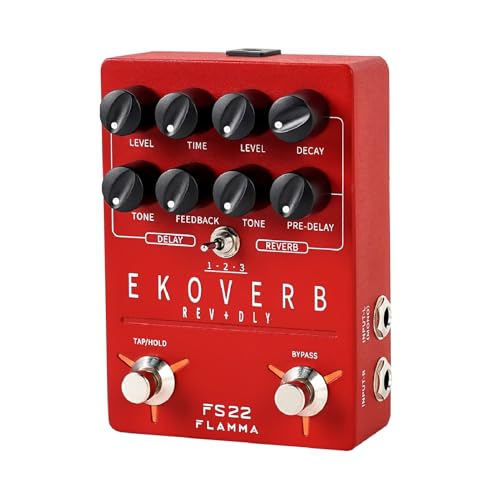
| Power Supply | 9V DC center-negative; isolated/individual power recommended to minimize noise |
| I/O Configuration | 1/4-inch stereo and mono input/output jacks (dual footswitches; stereo/mono capable) |
| Effects Modules | Three combinations: Reverse Delay with Swell Reverb, Analog Echo Delay with Mod Reverb, Analog Delay with Shimmer Reverb |
| Controls | Dual control surfaces: LEVEL, TONE; TIME, FEEDBACK for delay; DECAY, PRE-DELAY for reverb |
| Special Features | Tap Tempo footswitch; Freeze function; Effect Trail (booster fade-out) enabled/disabled; True bypass |
| Chassis/Construction | Red metallic chassis |
You flick the FS22 on and hear that unmistakable reverse swell bloom sigh back at you, and you instantly notice how the Freeze function lets you ride that tail forever. It’s the kind of moment that makes you smile, because the pedal isn’t just doing a single trick—it’s juggling delay, reverb, and a shimmering reverse vibe in one tight package.
The finish in that bold red chassis feels sturdy enough to survive gigging, not just studio noodling. The dual footswitches are a relief in live settings: tap one for tempo, tap the other to freeze, without hunting for a hidden combo.
The controls sit within easy reach, and the knobs respond smoothly so you can fine-tune decay, time, and feedback without fighting the pedal.
What stood out during practical use is how clean the true bypass feels, even when you crank the mix. There’s a quietness that lets your guitar ring through, and you don’t hear hiss creeping in as you push volume.
The stereo/mono I/O handles panning and space nicely, which is perfect for a wet mix or a simple, focused mono setup.
Setting up is straightforward: you’ll want a dedicated power supply to keep noise at bay, and the recommended 9V center-negative with an isolated source. The three effect modes—Reverse Delay/Swell Reverb, Analog Echo Delay/Mod Reverb, Analog Delay/Shimmer Reverb—each have their own character, and the multi-knob layout lets you sculpt the blend to taste.
In real-world practice, the combination of Trail On and Freeze is where the magic happens. You can fade out naturally or hold a note with endless sustain while the delay drifts in and out.
It’s a versatile tool for ambient explorations or punchier slapback vibes in a rock setting.
Overall, this pedal feels like a compact, road-ready solution for players who want a distinctive reverse reverb scene without swapping pedals mid-set. If you crave tactile control and a couple of instant, atmospheric textures, the FLAMMA FS22 delivers.
Keeley Loomer Fuzz & Reverb Pedal w/ Hall, Reverse & Soft

- ✓ Responsive Fuzz controls
- ✓ Natural reverse tails
- ✓ Sturdy, pro build
- ✕ A bit latency-y on extreme repeats
- ✕ Slight warmth may mute ultra-clean taps
| Pedal Type | Fuzz and Reverb pedal |
| Reverb Modes | Focus, Reverse, Reverb |
| Fuzz Modes | Flat, Full, Scoop |
| Fuzz Controls | Fuzz, Filter, Level |
| Mod Section Parameters | Blend, Decay, Warmth, Depth |
| Price | $299.00 |
The moment I pressed a note through the Loomer, the room grabbed a little more personality. That first shimmer of reverse reverb blooms with a tactile sense of space, and the hall-like tail feels surprisingly natural for a pedal you stomp on between riffs.
You’ll notice the Focus mode carving a precise echo that doesn’t wash out the core note; it sits where you want it, not where you fear it will.
Holding the fuzz controls steady, the inputs feel responsive without collapsing into noise. The Fuzz, Filter, and Level knobs give you real, usable textures, not just buzz for buzz’s sake.
The Blend in the Mod section lets you weave in warmth and depth without losing articulation, which is key when you’re layering a pad under a pogoing riff.
Physically, the Loomer wears a sturdy, pro-grade chassis and those footswitches have a reassuring thunk. The toggle between Reverb modes is satisfyingly deliberate, and the reverse option stacks with a guitar’s natural attack in a way that still sounds musical.
It’s easy to dial in a pocket of space for your solo, then switch to a tighter tone for the next chorus.
In real-world use, you’ll reach for it when you want an expressive, cinematic tail without chasing unpredictable artifacts. It shines on clav-like arpeggios, or when you want a vocal-like swell under a lead.
The price tag is fair for the control and build you’re getting here, and it feels built to last on tour days.
If you’ve been hunting for a reverse reverb that doesn’t fight you, the Loomer invites you to experiment without being finicky. It invites you to push your ideas a little further, and that’s worth a lot when you’re writing on the fly.
What Is Reverse Reverb and How Is It Different from Regular Reverb?
Reverse reverb is a unique audio effect that creates a sonic illusion akin to a sound swelling before it occurs. Unlike traditional reverb, which simulates the natural decay of sound in a space, reverse reverb captures and manipulates the tail end of the sound, playing it backward. This method produces a swelling effect as the sound builds up leading into the original note, resulting in a haunting, ethereal ambiance.
Key differences between reverse reverb and regular reverb:
-
Signal Processing: Regular reverb applies algorithms to simulate reflections and reverberations, creating a sense of space. Reverse reverb, however, takes the tail of the audio signal and plays it in reverse, using dynamic processing to create a forward-sounding swell.
-
Musical Application: Regular reverb is often used to enhance vocals and instruments by adding depth and warmth. Reverse reverb is frequently utilized for creative effects, emphasizing transitions or adding drama to soundscapes.
-
Sound Character: Traditional reverb tends to add a sense of time and depth, while reverse reverb adds tension and urgency, making it suitable for atmospheric and experimental styles.
Both effects serve distinct purposes and can significantly impact the emotional tone of a piece.
What Key Features Should You Consider When Selecting a Reverse Reverb Pedal?
When selecting the best reverse reverb pedal, consider the following key features:
- Sound Quality: The clarity and richness of the reverb effect are paramount. A high-quality pedal should produce a lush, immersive sound without introducing unwanted noise or artifacts that could detract from the overall tone.
- Control Options: Look for pedals with a variety of knobs and switches that allow you to customize the reverb effect. Features like decay time, mix level, and pre-delay settings can significantly alter the character of the sound, giving you greater versatility in your playing.
- Type of Reverse Effect: Different pedals may offer varying types of reverse reverb effects. Some might focus on subtle ambient textures, while others can create dramatic, swirling soundscapes. Understanding the specific type of reverse effect you prefer will help narrow your choices.
- Build Quality: A robust construction is essential, especially for gigging musicians. Look for pedals with durable enclosures and high-quality footswitches to ensure reliability and longevity during live performances.
- Power Supply Options: Consider whether the pedal can be powered by batteries or requires an external power supply. Battery-powered options add convenience for portability, while pedals that use a power supply often provide more consistent performance.
- Size and Portability: The physical size of the pedal can impact your pedalboard setup. Compact pedals may save space, but ensure they still offer the features you need without sacrificing usability.
- Price Range: Determine your budget beforehand, as reverse reverb pedals can vary widely in price. While higher-end options may offer more features and better sound quality, there are also budget-friendly models that provide excellent performance for their price.
- Brand Reputation: Research brands known for their quality effects pedals. Established companies often have a track record of producing reliable and high-performing products, which can give you confidence in your selection.
Which Brands Are Renowned for Crafting the Best Reverse Reverb Pedals?
Several brands are recognized for creating exceptional reverse reverb pedals that cater to various musical needs:
- Strymon: Known for their high-quality digital effects, Strymon’s pedals like the BigSky offer lush reverse reverb settings that can recreate spacious soundscapes, making them ideal for both studio and live settings.
- Electro-Harmonix: The Holy Grail Reverb is a popular choice for musicians seeking an affordable yet effective reverse reverb option. It provides rich, vintage-style reverb sounds with a simple interface and solid performance.
- Boss: The Boss RV-6 is favored for its versatility and durability, offering a range of reverb effects including a well-implemented reverse mode. This pedal is user-friendly, making it accessible for both beginners and professional musicians.
- Eventide: Renowned for their innovative effects, Eventide’s Space pedal includes advanced reverse reverb capabilities. It allows for extensive sound manipulation and is particularly appreciated by sound designers for its high-quality audio processing.
- Digitech: The Digitech Polara is an affordable option that features a dedicated reverse reverb setting. Its compact design and straightforward controls make it a great choice for players looking to experiment with reverb effects without overcomplicating their setup.
What Are the Top Reverse Reverb Pedals Popular Among Musicians Today?
The best reverse reverb pedals popular among musicians today include:
- Strymon BlueSky: This pedal is known for its high-quality reverb algorithms and versatile settings, allowing musicians to create lush reverse reverb effects with ease.
- Electro-Harmonix Holy Grail: The Holy Grail offers a unique range of reverb types, including a reverse setting that delivers a smooth, ethereal sound perfect for atmospheric music.
- Boss RV-6: The RV-6 combines several reverb types, including reverse, and features a user-friendly interface, making it accessible for both beginners and seasoned musicians.
- Digitech Polara: This pedal stands out with its high-fidelity sound and includes a reverse reverb setting that creates dramatic soundscapes, ideal for ambient and experimental genres.
- TC Electronic Hall of Fame 2: With its TonePrint technology, this versatile pedal allows users to customize their reverse reverb settings and download artist presets for a wide range of creative possibilities.
The Strymon BlueSky is celebrated for its pristine sound quality and extensive control options, making it a favorite for musicians seeking a professional-grade reverse reverb effect. Its intuitive interface allows for fine-tuning of parameters like decay and pre-delay, enabling unique sound design.
The Electro-Harmonix Holy Grail is a classic choice that combines simplicity with quality. Its reverse reverb offers a distinct swirling effect that can add depth to any mix, making it a go-to for guitarists looking for atmospheric textures.
The Boss RV-6 is praised for its straightforward operation and robust build quality. It features multiple reverbs, including a reverse option that provides a smooth transition, making it ideal for performing musicians who need reliable performance on stage.
The Digitech Polara shines with its rich sound and flexibility, especially in reverse mode, where it creates ethereal trails that can transform a simple chord progression into a lush soundscape. Its compact design also makes it a practical choice for pedalboards with limited space.
Lastly, the TC Electronic Hall of Fame 2 is distinguished by its innovative TonePrint technology, which allows users to craft personalized reverse reverb sounds or access artist-created presets. This feature empowers musicians to explore endless creative possibilities tailored to their unique style.
How Can You Determine Which Reverse Reverb Pedal Suits Your Musical Style?
Control Options: Pedals come with various control options such as mix, decay, and modulation settings. The more versatile the controls, the better you can tailor the effect to suit your specific needs, allowing you to create everything from subtle ambiance to overwhelming soundscapes.
Build Quality: A pedal’s build quality affects its longevity and reliability, especially if you plan to use it regularly in live settings. Look for pedals made with robust materials that can withstand frequent use and offer reliable performance without technical issues.
Price and Value: Reverse reverb pedals can vary widely in price, so it’s essential to balance cost with the features offered. A higher price tag doesn’t always mean better quality, so assess the pedal’s capabilities and determine if it provides good value for your investment.
Compatibility: Ensure that the reverse reverb pedal you choose works seamlessly with your other gear. This includes checking its power requirements, input and output options, and how it interacts with your amplifier or other effects to maintain your desired sound quality.
What Pro Tips Can Enhance Your Experience with a Reverse Reverb Pedal?
To enhance your experience with a reverse reverb pedal, consider the following pro tips:
- Experiment with Different Settings: Don’t just stick to the default settings; play around with the decay time, mix level, and pre-delay settings to find the unique sound that best fits your style.
- Layer Sounds: Use the reverse reverb pedal in conjunction with other effects like delay or modulation to create complex soundscapes that can add depth and interest to your music.
- Use It Sparingly: While reverse reverb can create an ethereal atmosphere, using it too much can muddy your mix; apply it selectively to highlight specific parts of your track.
- Try it on Different Instruments: Reverse reverb isn’t just for guitar; experimenting with vocals, drums, or synthesizers can yield surprising and creative results.
- Record with It: Consider printing the effect to your recordings to capture the unique character of the reverse reverb, allowing for easier mixing later on.
- Utilize the Loop Function: If your pedal has a looping feature, use it to create ambient backgrounds or textures that can enhance live performances or studio sessions.
Experimenting with different settings can lead to discovering new sounds that resonate with your artistic vision. Adjusting parameters like decay time and mix level allows for a tailored experience that can complement various musical genres.
Layering sounds involves combining the reverse reverb effect with other effects such as delay or modulation. This can produce rich, multi-dimensional textures that elevate your music beyond standard reverb applications.
Using reverse reverb sparingly is essential to maintaining clarity in your mix. It’s most effective when applied to specific elements, allowing you to create moments of impact rather than overwhelming the entire track.
Trying the pedal on different instruments opens up a world of creative possibilities, as reverse reverb can transform the sonic character of vocals, drums, and synths in unexpected ways. This experimentation can lead to unique sounds that define your musical style.
Recording with the reverse reverb effect captures its distinctive qualities and makes it easier to integrate into your mix later. This approach can save time during mixing and ensure that the intended atmosphere is preserved in the final product.
Utilizing the loop function, if available, can enhance live performances by allowing you to create ambient textures that build and evolve throughout your set. This technique can engage your audience and add a layer of complexity to your sound.
How Do Users Rate Their Favorite Reverse Reverb Pedals?
Users rate their favorite reverse reverb pedals based on sound quality, versatility, user-friendliness, and build quality.
- Sound Quality: The most critical aspect for many musicians is the richness and clarity of the reverse reverb effect. A pedal that produces a lush, ambient sound without muddying the original signal is highly sought after.
- Versatility: Users appreciate pedals that offer a range of settings, allowing them to customize the reverb effect to suit different musical styles. A versatile pedal can accommodate everything from subtle background ambiance to dramatic, spacey sounds.
- User-Friendliness: The ease of use is crucial, especially in live settings. Pedals that feature intuitive controls and straightforward interfaces allow musicians to quickly adjust their sound without fumbling during performances.
- Build Quality: Durability is an essential factor for many users, particularly those who travel frequently or perform live. A robust design can withstand the rigors of stage use, ensuring that the pedal functions reliably over time.